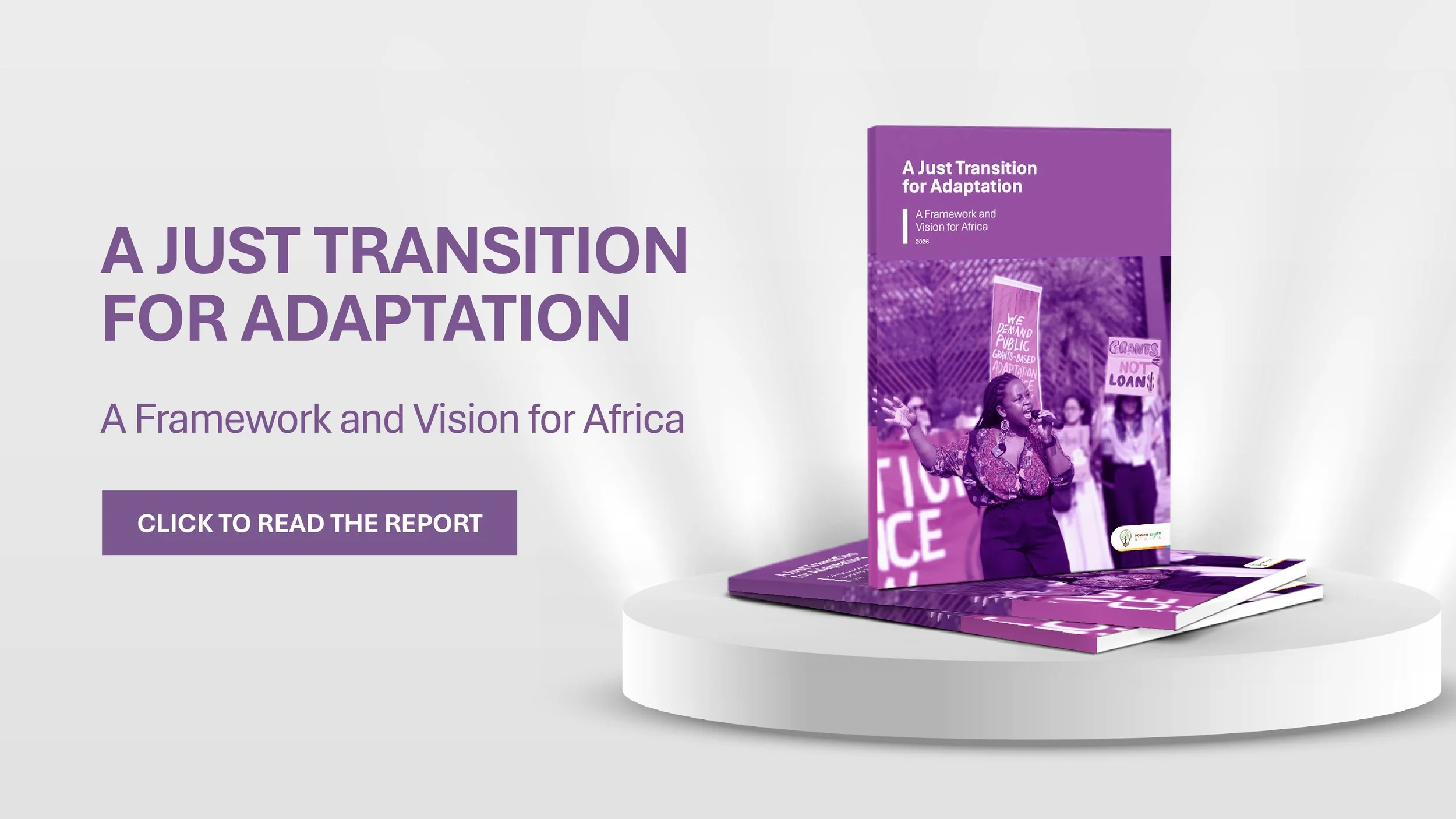
NEW REPORT: A JUST TRANSITION FOR ADAPTATION
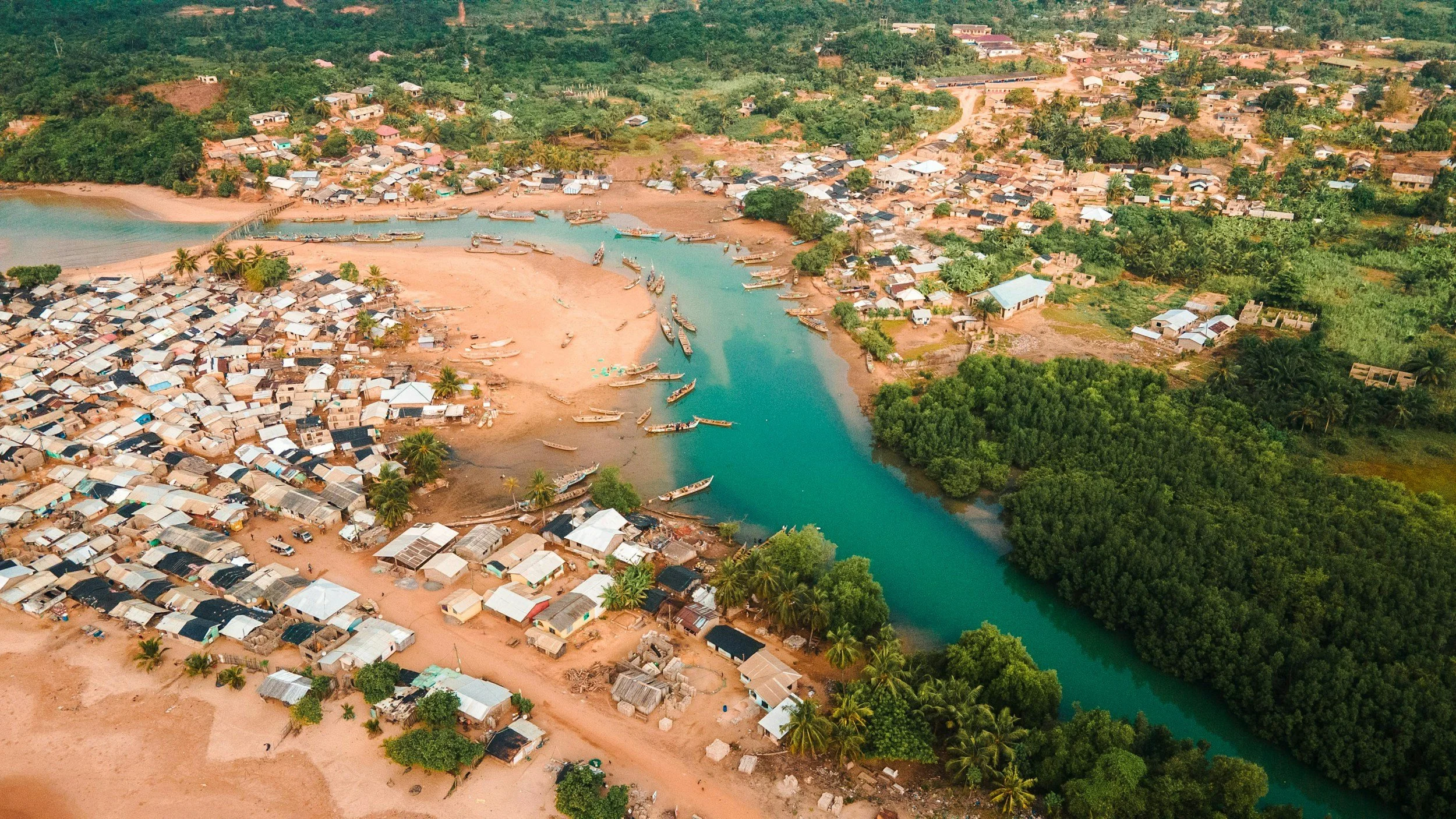
The African continent produces negligible global emissions. Yet, between 1970 and 2021, Africa suffered 35% of the world’s climate-related deaths amid increasingly frequent and severe climate impacts.
Deep structural injustices in the distribution of climate risks, resources, and decision-making power shape Africa’s climate vulnerability. These include unequal international legal regimes on trade and cooperation, disparate access to international courts or arbitration entities, and weak or non-binding climate obligations.
These injustices also intersect with colonial legacies, unequal development pathways, and global economic asymmetries that continually constrain Africa’s adaptive capacity.
Alongside these structural injustices, Africa’s weak adaptive capacity is a product of, and perpetuated by, the developed world’s ongoing failure to meet legally binding obligations to finance climate mitigation and adaptation initiatives in the developing world in line with the Paris Agreement.
Africa’s annual adaptation needs are near USD 70 billion, but annual flows only amount to around USD 14 billion, with a growing trend away from grants and toward commercial loans.
The continent is, therefore, spending more from its domestic budgets on adaptation than it receives in international support. This effectively means that Africa is subsidising the developed world’s climate inaction.
The Paris Agreement, and its legally binding commitments for the developed world to provide technology and capacity-building support to the developing world for mitigation and adaptation, are also not being met.
Meanwhile, Africa’s land, resources, and livelihoods are being absorbed into carbon markets and green industrialisation projects that predominantly serve external interests.
Climate adaptation action, thus, must be viewed as inherently political – inseparable from justice, power, and equity. This is because the framing of adaptation, vulnerability, and resilience ultimately shapes who is recognised, heard, and supported.
It also shapes how just outcomes are realised.
A ‘just transition’ – a framework that ensures a just and inclusive shift to sustainable and climate-resilient economies – should address adaptation gaps and vulnerabilities. However, mainstream discourse has largely ignored how such a transition applies to adaptation.
This neglect engenders fragmented, underfunded, and often technocratic adaptation responses that ignore the underlying drivers of vulnerability and fail to incorporate highly relevant African Indigenous Knowledge (IK).
In this report, we advance a Just Transition for Adaptation (JTfA) as a necessary shift.
We recognise the transition more broadly, moving beyond traditional or reductionist interpretations focused on emissions reductions towards a paradigm that includes adaptation justice.
In doing this, we reframe adaptation as a systemic, justice-centred transformation, rather than a set of technical interventions.
This report grounds justice in African realities and emphasises that adaptation must be defined from within, rooted in lived experience, and shaped by the continent’s historical, political, and socio-economic circumstances.
Therefore, adaptation is deeply connected to social, economic, political, governance, and behavioural contexts. This means a JTfA is not a simple, linear transition from one state to another. Rather, it entails redistributing finance, transforming knowledge and governance systems, and redressing historical damage.
We employ four interlinked dimensions of justice as anchors: recognitional, procedural, distributive, and restorative. From these perspectives, we examine the structural drivers of vulnerability and the equity of adaptation outcomes.
Finally, we present a JTfA framework for Africa developed from African perspectives and realities. Rather than offering a universal blueprint, our framework identifies the key principles, enabling factors, and policy changes necessary to deliver more effective, equitable, and just adaptation pathways.
We link the global, regional, and national scales, positioning adaptation as an opportunity for broader societal transformation supported by inclusive governance, knowledge justice, and fairly distributed resources and technologies.
This report provides a foundation for policymakers, practitioners, and civil society to advance adaptation pathways that are not only climate-resilient, but also equitable, restorative, and aligned with Africa’s development priorities.
READ AND DOWNLOAD the report here.