REPORT FOREWORD: THINKING DIFFERENTLY ABOUT HOW ADAPTATION IS PLANNED, FINANCED, AND GOVERNED
Africa is already living with the consequences of a climate crisis it did little to create. Across the continent, accelerating climate impacts threaten food and water security, livelihoods, health, infrastructure, and ecosystems.
Yet the resources available to respond to these crises remain far below what is needed. At the same time, many African countries are being pushed further into debt to protect their people, economies, and hard-won development gains.
Our new report, ‘‘A Just Transition for Adaptation’’, starts with an important truth: Africa’s climate vulnerability is not accidental. A long history of extraction, unequal development, debt, exclusion, and global systems continue to constrain the continent’s ability to adapt.
Responding to climate change, therefore, requires more than technical fixes or isolated adaptation projects. It requires confronting the inequalities and power imbalances that determine who is most vulnerable, who has access to resources, whose knowledge is valued and whose priorities shape the response.
A Just Transition for Adaptation: A Framework and Vision for Africa offers an African and justice-centred framing for adaptation. It calls for a shift from simply managing climate risks towards transforming the systems that produce and deepen vulnerability.
At its heart is a vision of adaptation that strengthens African agency, protects rights and livelihoods, and supports more resilient and prosperous societies.
This kind of transformative adaptation requires adequate, predictable, and grant-based finance; meaningful technology transfer and capacity building; inclusive and locally led governance; and recognition of Indigenous and local knowledge alongside scientific knowledge.
This framing is also important politically.
Adaptation has gained greater attention in recent years, but, unlike mitigation, it continues to be sidelined in global political priority, institutional attention and financial support.
“Greater visibility for adaptation must mean more than recognising its urgency. It must translate into political choices, resources and international cooperation at the scale required.”
Crucially, this visibility must ensure that African countries and communities have the power to define what effective and just adaptation looks like.
Importantly, the report challenges the persistent portrayal of Africa as simply a continent of vulnerability and need.
African communities, institutions and knowledge systems are already generating solutions. Africa must have the space, resources and agency to define and lead its own adaptation pathways, grounded in its development priorities, knowledge systems and lived realities.
This becomes even more important on the road to COP32 in Ethiopia.
An African COP offers a critical opportunity to place adaptation more firmly at the centre of the global climate agenda and to shape that agenda around justice, development and African leadership.
If COP32 is to become an adaptation COP, it should move beyond recognising adaptation needs towards delivering the finance, technology and capacity required for implementation, while advancing African-led adaptation that addresses the structural drivers of vulnerability and builds long-term resilience.
This report can help inform that narrative and provide a framework for African policymakers, negotiators and civil society as they shape their priorities.
This report is not intended as a single blueprint. It offers a framework for thinking differently about how adaptation is planned, financed, governed and implemented, and for moving from managing symptoms towards addressing the systems that create vulnerability in the first place.
“Ultimately, the question is not only how Africa adapts to a changing climate, but on whose terms, with whose resources and towards what future.”
Our ambition must be an adaptation agenda that does more than help Africa endure a worsening climate crisis: it must help build a fairer, more resilient and more self-determined future for the continent.
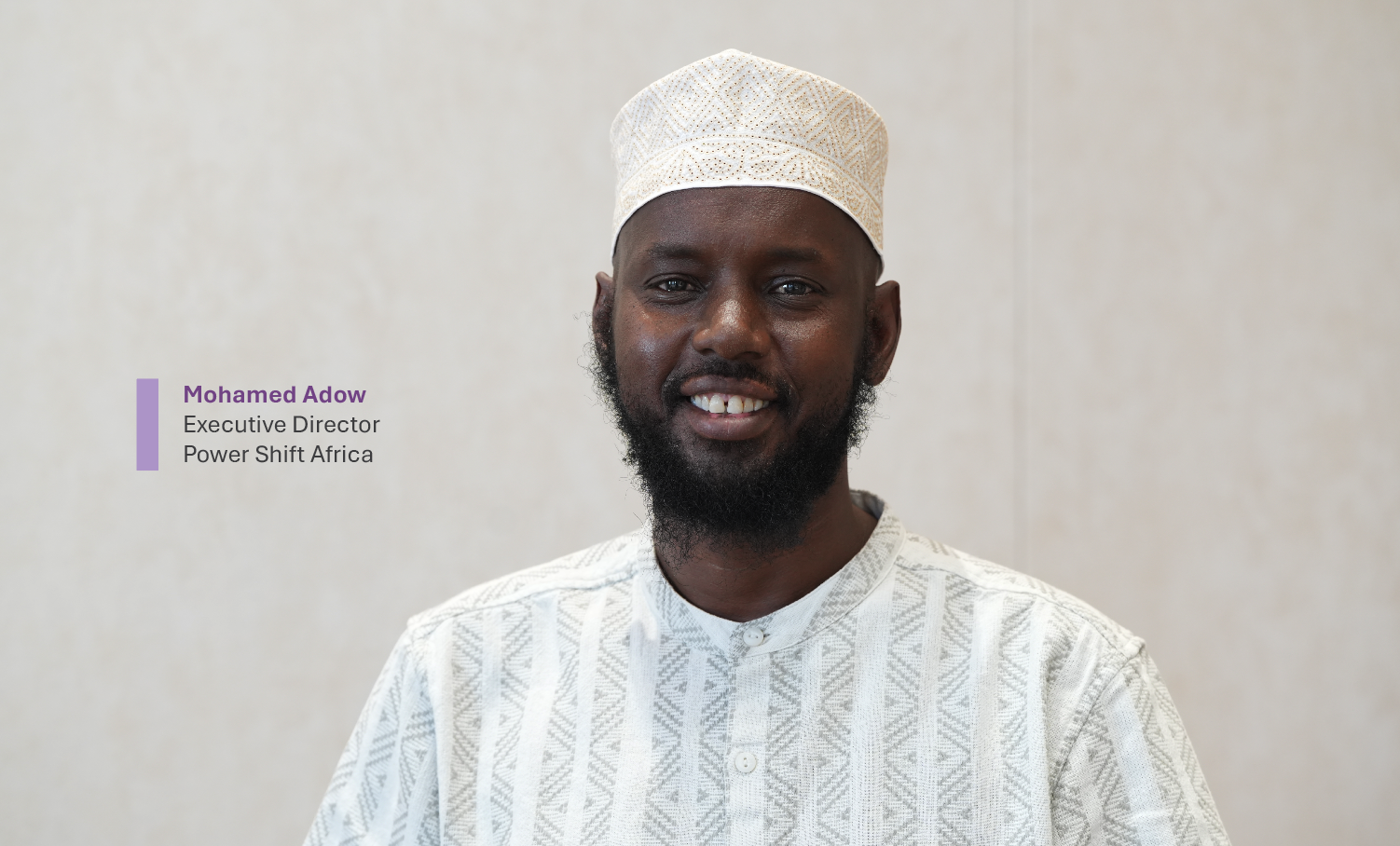
Mohamed Adow is the Founder and Director of Power Shift Africa