How DRC war undercuts local communities, threatens Congo Basin Forest ecosystem
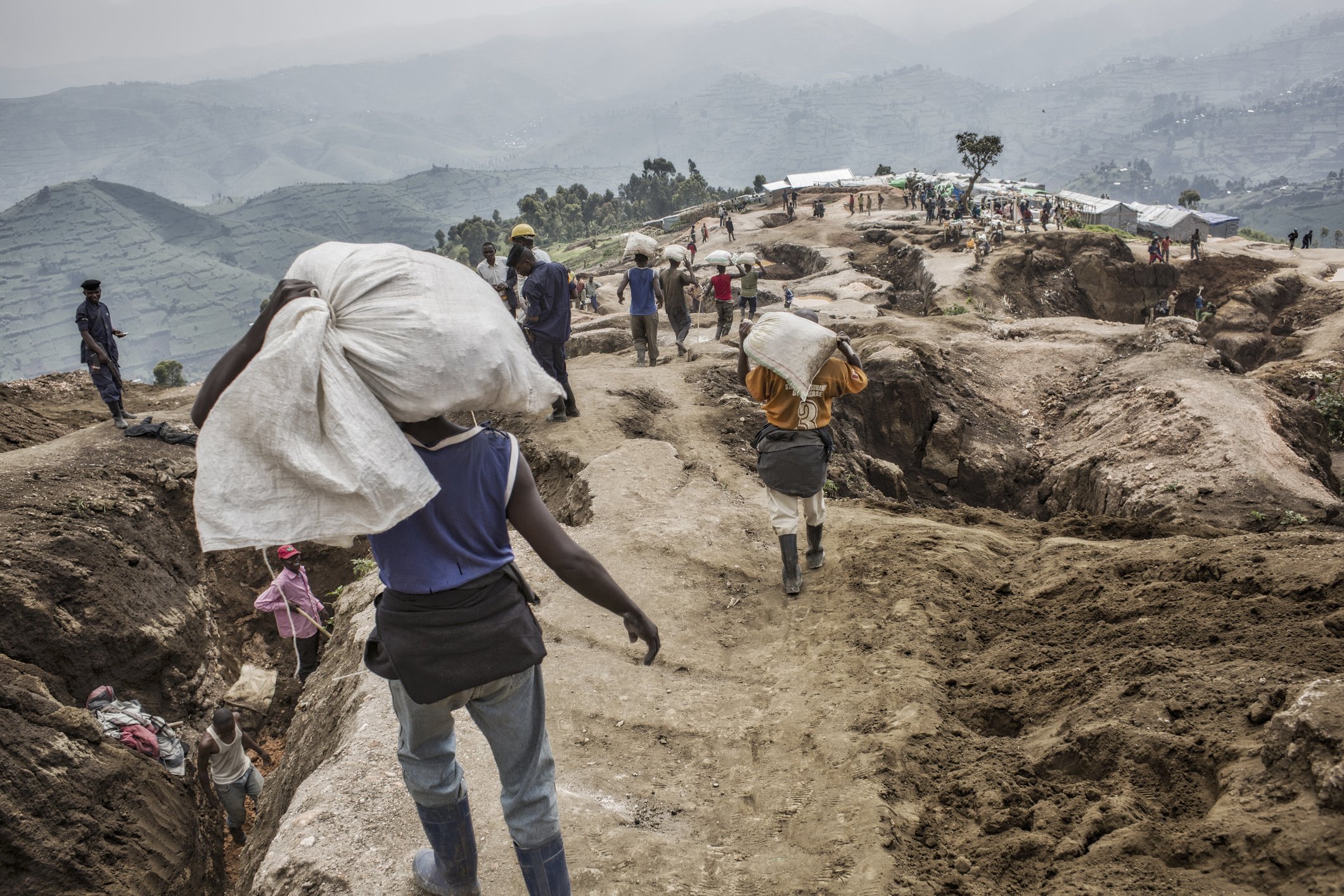
Resource-rich regions in the Democratic Republic of Congo (DRC) have been experiencing armed conflict for years. | STOCK
BY DAVID KITHI AND SUNDAY GEOFREY
For decades, armed conflict in Eastern Democratic Republic of Congo (DRC) has displaced millions of people, led to the destruction of infrastructure, and disrupted the relationship between people, their land, forests, and natural resources.
In North Kivu, South Kivu, and Ituri, the resurgence of armed conflict continues to deeply disrupt the way of life, with families forced to abandon their homes, agriculture stalling, and access to forests blocked.
In Bapakombe, located in the Beni territory of North Kivu, for instance, the forest is not just a backdrop. It is a living territory. It provides food, medicinal plants, and spaces that support the locals’ daily activities. To this community, the forest ecosystem represents memory, culture, and a deep connection with its past, present, and future generations.
But that connection cannot exist in the absence of peace. It cannot thrive if the forest is threatened. This was the rallying call when residents of Bapakombe recently gathered in their locale to demand peace.
‘‘There can be no real future without peace, and there can be no lasting peace without the protection of natural resources.’’
War breaches peace, resilience, and biodiversity
While the war in Eastern DRC is local, its consequences reach far beyond its national borders. At more than 300 million hectares, the Congo Basin is the second-largest tropical forest mass in the world after the Amazon. It extends across Cameroon, the Republic of Congo, Gabon, Equatorial Guinea, the Central African Republic, and the DRC. This forest ecosystem plays a vital role in regulating the climate, conserving biodiversity, and supporting the livelihoods of millions of people in the Central African region.
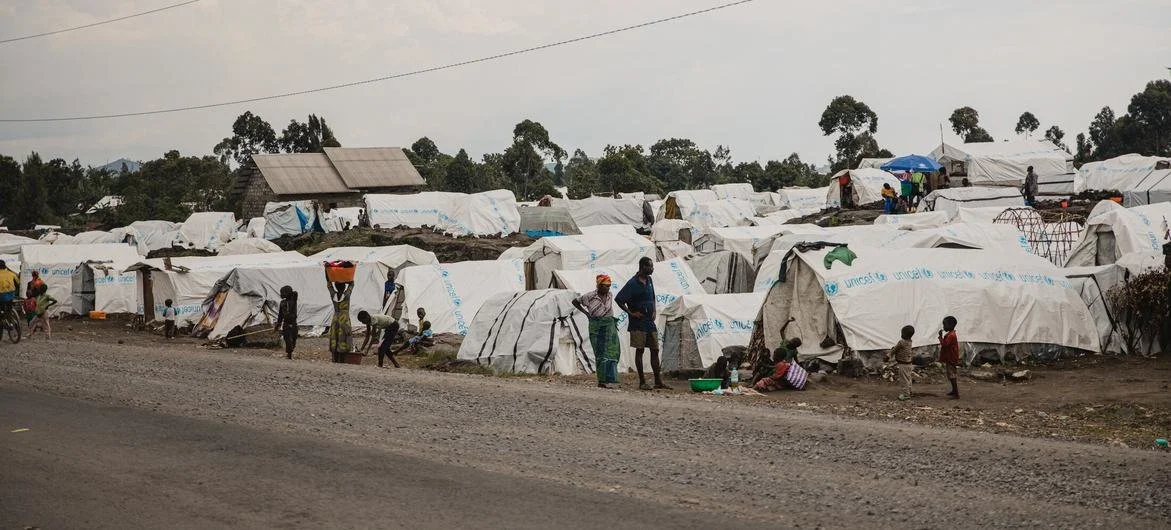
An internally displaced persons’ camp in Eastern DRC. | Unicef
When militias occupy resource-rich lands, it becomes harder to govern and exploit them for public good, forcing local populations to live in poverty amid considerable natural wealth. With war, illegal logging, uncontrolled hunting, unsustainable land occupation, and exploitation of minerals have flourished in remote areas of local forests controlled by armed groups. Protracted instability also turns natural resources into funding streams for war economies, while simultaneously increasing pressure on fragile ecosystems.
Peace and resilience are inseparable
When forests are destroyed or severely degraded, they lose their capacity to store carbon as climate change worsens. Meanwhile, vulnerable people suffer the most from conflict and climate fallout. In case of forced displacement, those who depend directly on the land and forests often pay the highest price. To hunter-gatherer communities, the loss of biodiversity means loss of food and livelihoods and the weakening or total erasure of territorial identity.
As impacts of climate change intensify, droughts are becoming longer, rainfall more unpredictable, and soils more degraded as crop yields decline. Across the continent, many rural communities are forced to adapt to a crisis they did not cause. But how can we ask communities to adapt to climate change when war strips them of their land, forests, and livelihoods?
Restoring peace must go hand in hand with restoring territories. This can be done through:
Securing forest territories for the long term - Protecting forests cannot be effective without ensuring safety for local populations, community agents, environmental defenders, and local authorities.
Centring communities in decisions - Local populations and Indigenous peoples must participate in the governance of local forests. They must also benefit from conservation resources and funding mechanisms.
Protecting land rights - Secure access to land could enable displaced communities to rebuild their livelihoods and reduce pressure on forest areas.
Funding local adaptation: The design of climate solutions, including resilient agriculture, soil restoration, agroforestry, access to clean energy, and diversified incomes, must be based on local land realities.
Making peace an environmental priority: Peace, security, development, and environmental protection policies can no longer be drafted in isolation. In Africa’s forest regions, they are inextricably linked.
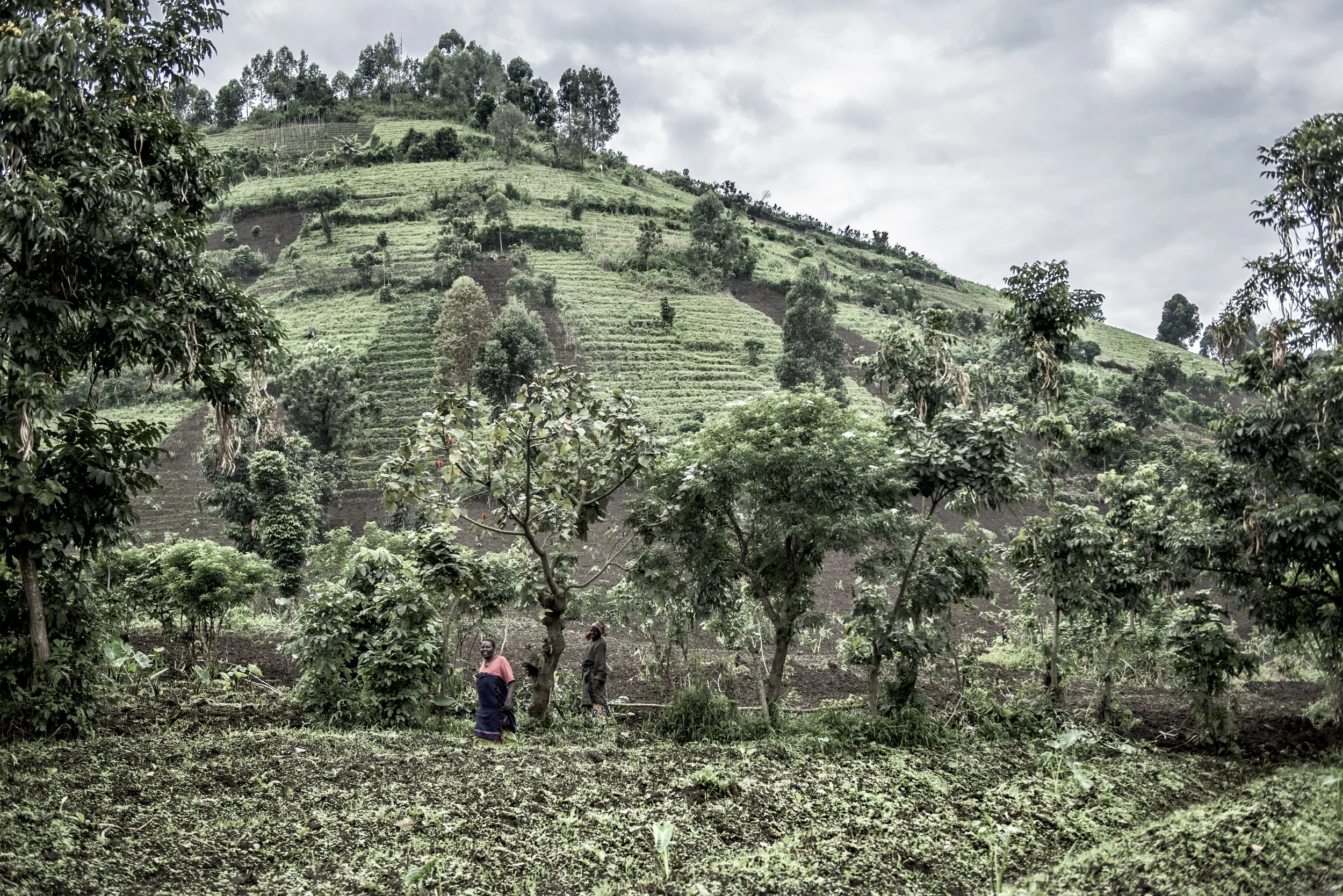
Cultivated terraced hillsides showing rural life and agricultural richness near the Virunga National Park in the Democratic Republic of Congo. | STOCK
Peace does not simply mean hushing the guns. It means allowing a mother to cultivate her field, a community to reclaim its territory, an Indigenous community to pass down knowledge to its younger generations, and a forest to continue fulfilling its ecological role.
The theme of the 2026 International Day of Peace - Invest in Peace: For Everyone, Everywhere, Every Day - couldn’t have been more fitting to communities in Eastern DRC, a region that represents both human suffering and wanton degradation of critical biodiversity. At a time when climate change is weakening rural communities, especially Indigenous Peoples, peace becomes a precondition for ecological survival.
The Congo Basin belongs to those who live in it. Its importance, however, transcends geography. Its preservation matters to Africa and, ultimately, to all of humanity. Its survival hinges on lasting peace.
David Kithi is the coordinator of Congolese Union for Nature Conservation and Sustainable Development (UCCND)
Sunday Geofrey is the Founder and Executive Director of Support Humanity Cameroon (SUHUCAM).