GLOBAL SOLAR REVOLUTION: THE SUN WILL POWER WORLD’S FUTURE
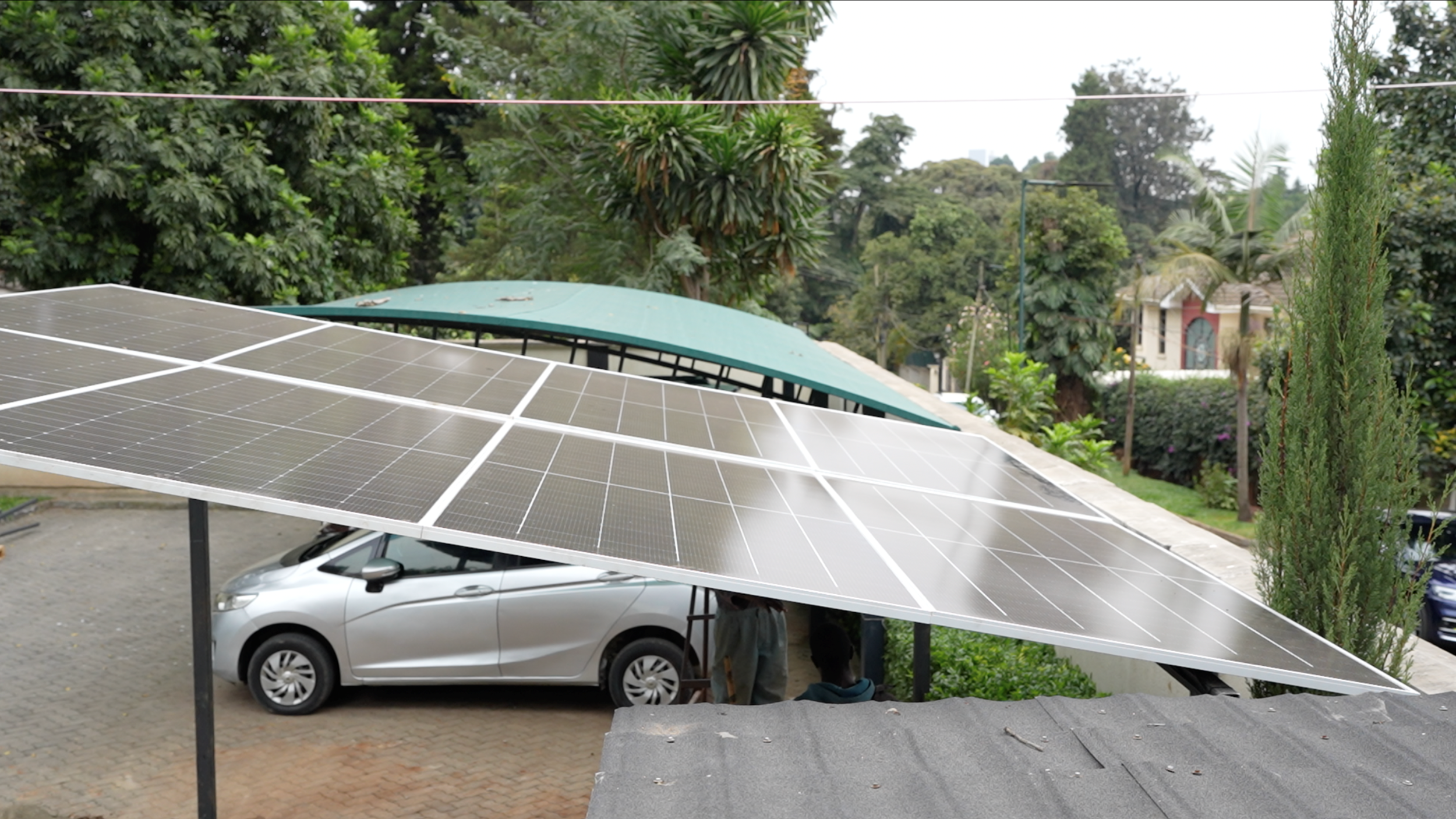
A car park with a canopy of solar panels at the Head Office of Power Shift Africa in Nairobi, Kenya. | PSA Media
If you’re reading this, you know the renewable energy takeover is like a freight train. The solar revolution, in particular, is here; it’s fast, and it’s inevitable.
From falling costs to climate goals, energy security, and job creation, solar power is seen by many as the future of electricity globally.
In Africa, 10 countries have solar power installation capacity exceeding 100 MW, with South Africa, Egypt, and Morocco leading the pack. At roughly 8.5 gigawatts (GW) of installed capacity, South Africa is the clear front-runner in the sector, with Egypt and Morocco second and third, respectively.
Elsewhere, solar accounted for 25 percent of power generated in the European Union in June this year. Germany, Poland, and Spain lead the race as the continent continues to diversify its energy sources.
Global solar capacity has already surpassed 3 terawatts (TW). Today, solar supplies approximately 9 percent of worldwide electricity demand.
But there’s more to come.
Projections indicate that solar power will drive nearly 80 percent of global renewable expansion, reaching up to 10000 GW (10 TW) by 2030.
China will continue to assert its dominance in the industry, accounting for a staggering 60 percent of total capacity expansion, with India in second.
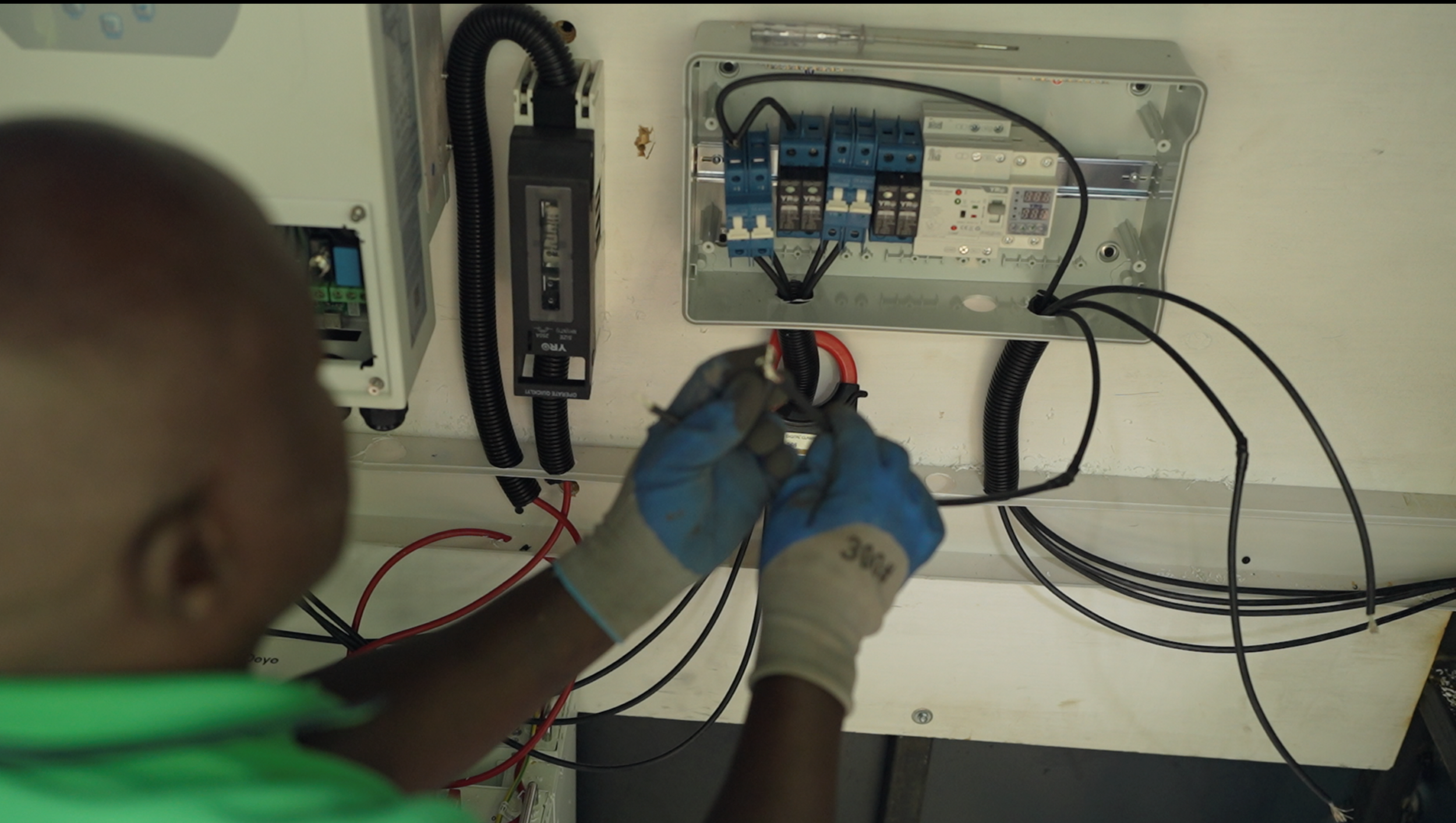
A technician installs an inverter unit for a solar project in Nairobi, Kenya | PSA Media
Technological Efficiency
Modern research and development have introduced high-yielding cells, bifacial panels, and better inverters that convert a much larger share of sunlight into usable power.
Scientists are mixing perovskite crystals with traditional silicon to make tandem cells that turn more sunlight into electricity. Bifacial panels now collect light from both the front and the back. Reflected light from the ground generates up to 30 percent more energy than standard single-sided panels.
At the same time, innovations in energy storage (batteries), smart grids, and Artificial Intelligence are growing, helping to overcome the agonising challenge of intermittency associated with solar and wind power. Intelligent grid management will help balance supply and demand in real time, predict demand surges, and manage distributed energy resources (DERs) such as rooftop solar and electric vehicles (EVs).
AI provides more accurate forecasts by analysing weather patterns and historical data, enabling grid operators to plan more effectively and integrate wind and solar power into the energy mix.
Advanced Battery and Storage Capacity
One of the biggest headaches for renewables is storage, owing to the intermittent nature of solar and wind power. Today, existing storage solutions are expensive, limited in scale, and often struggle with long-duration needs. This complicates the supply of reliable power, with the bulk of the energy produced going to waste.
But this is changing.
New technologies are allowing manufacturers to diversify battery chemistries. Integrating AI-powered energy management systems, for instance, is helping improve battery capacity. Experts had predicted that 2026 would be the year of increased deployment of long-duration storage (LDES) solutions to tackle a longstanding problem of short-duration needs, emblematic of the existing storage solutions.
This year, sodium-ion batteries, solid-state batteries, and flow batteries could finally start to compete with the more common lithium-ion batteries as the world responds to the demand for different battery performance needs.
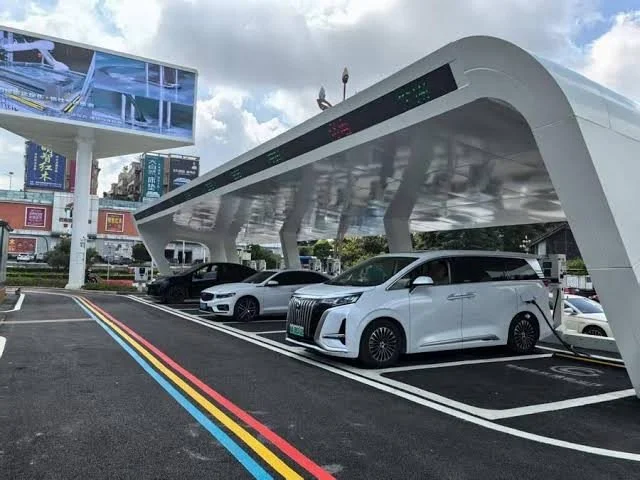
A solar-powered charging station for electric vehicles in China. | STOCK
Financing for Renewables is Growing
Funding for green energy projects is rising, driven by falling costs, growing demand, supportive policies such as tax credits, and a clean energy transition that’s gathering speed globally. Innovations in clean energy storage will also continue to attract new capital. For emerging markets in Africa and the Global South, more funding will continue to flow to support the establishment of foundational energy systems.
Deloitte’s 2026 Renewable Energy Industry Outlook reveals that developers will continue to tap into flexible financing to bridge construction costs and fast-track projects before credit expiration, bringing more resources into renewable energy.
Adoption for Energy Security, Economic Stability
From Africa to Europe, the deployment of renewable energy is accelerating as countries march towards energy security and sovereignty. At the heart of this increased adoption is strong economics, technological advancements, and a quest for energy independence. Today, new renewable energy projects are cheaper than fossil fuel alternatives, making them an attractive economic choice.
The steady decline in solar costs further fuels this global trend. Meanwhile, geopolitical tensions and volatile oil and gas prices are pushing countries toward localised solar generation to secure stable, independent power supplies.
The United States and Israel’s war in Iran has caused a dramatic upheaval in the global energy sector, with crude oil prices rising by up to 40 percent per barrel.
‘‘The current oil turmoil is a brutal reminder that dependence on fossil fuels leaves countries exposed to crises they cannot control. Nations that invest in renewable energy are far more resilient because the sun and wind cannot be blockaded, stockpiled or weaponised.’’
—Mohamed Adow, Director of Power Shift Africa
‘‘The lesson for governments everywhere is clear: accelerating the transition to clean energy is not just about climate — it’s about energy security and economic stability,’’ Mr Adow adds.
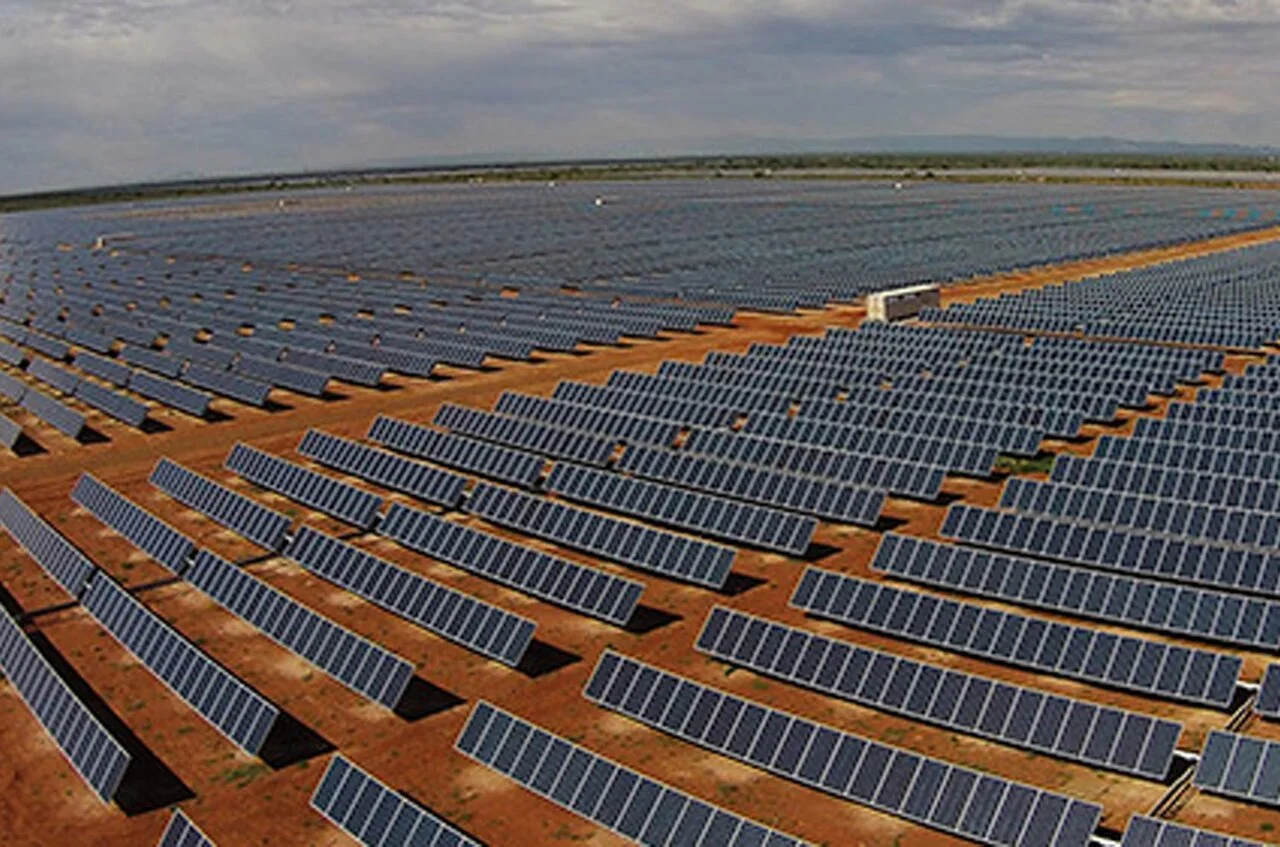
The Benban Solar Park in Egypt is one of the largest solar projects in the world. | STOCK
The Urgency of Climate Change
Burning fossil fuels is the primary trigger of the climate crisis, which has intensified floods, droughts, heat waves, and cyclones worldwide. By accelerating clean energy deployment, countries are slashing greenhouse gas emissions and combating the crisis.
Across Africa, rooftop installations and community solar farms are also allowing homes, businesses, farms, and remote rural villages to generate their own power independently without relying on central utility grids.
‘‘The oil and gas era has failed our continent. Through solar power, now the energy revolution is happening on our rooftops, not in the oilfields.”
—Amos Wemanya, Senior Climate Advisor, Power Shift Africa.
READ more. Subscribe to our Weekly Climate Bulletin for free.