A JUST TRANSITION FOR ADAPTATION: WHO ARE INDIGENOUS PEOPLE?
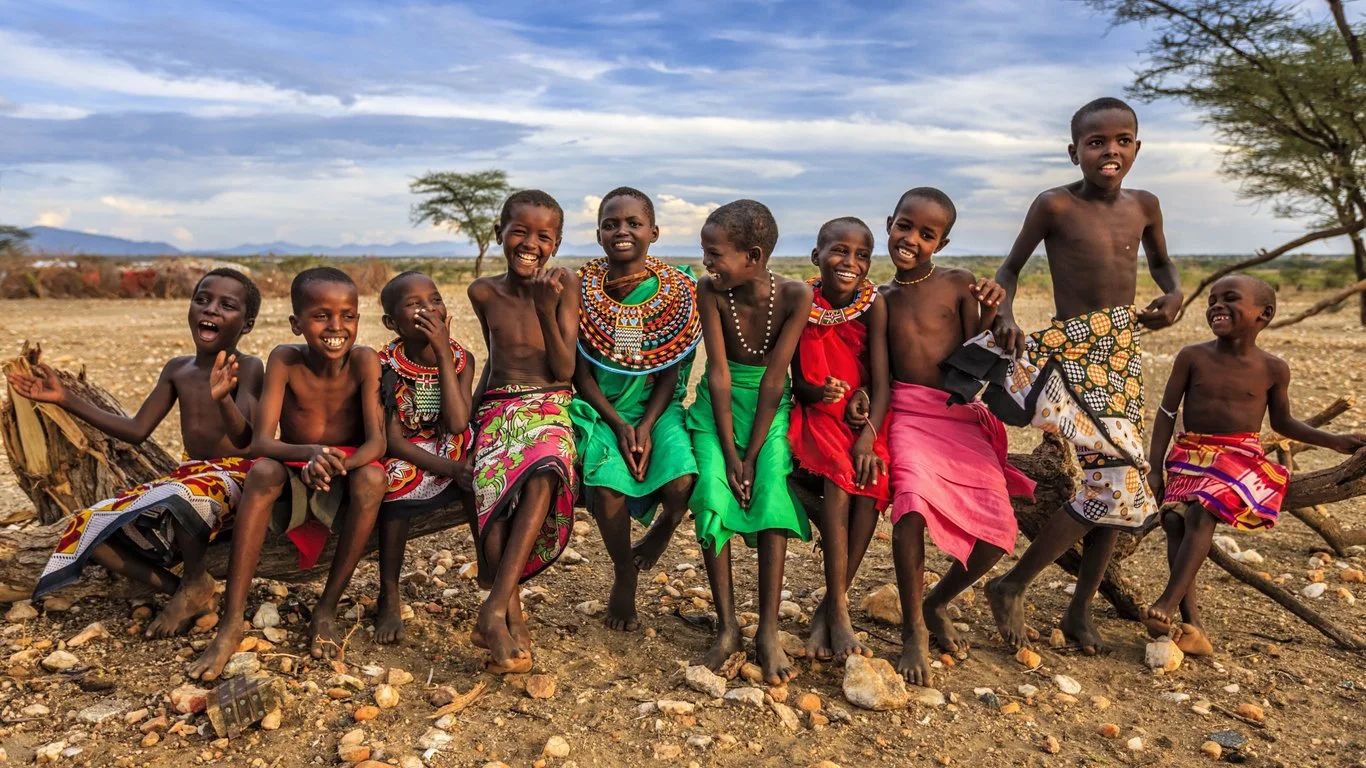
Children from the Maasai community in Kenya playing in their village. The Maasai people are one of the Indigenous groups of people in Africa. | STOCK
The discussion on African Indigenous knowledge (IK) requires asking a critical question: who and what knowledge counts as indigenous?
Our new report acknowledges this important conversation.
For years, the Indigenous Peoples concept has been a source of confusion and political contention on the continent, with the often-invoked reference to ‘first peoples’ or original descendants considered inapplicable given the continent’s long history of human civilisations that predate colonialism.
Many African governments have asserted that all their citizens are Indigenous or that no Indigenous groups exist in their country.
However, pressure from civil society persuaded the African Commission on Human and Peoples’ Rights to establish a Working Group of Experts on Indigenous Populations in the early 2000s.
Rather than providing a common definition, it identified three key characteristics that distinguish Indigenous Peoples across Africa, namely:
A history of being excluded and marginalised from development processes
Cultural distinctiveness
Self-identification
The Indigenous Peoples of Africa Coordinating Committee also indicates the term is relevant for acknowledging groups that primarily rely on natural resources, such as hunter-gatherers and nomadic pastoralists.
Distinguishing between Western scientific and Indigenous epistemologies
This report distinguishes between Western science and IK so we can examine inequalities in how different knowledge forms are produced, recognised, and used.
Western science is typically viewed as being analytical and using reductionist methods – essentially deconstructing complex phenomena to their most fundamental parts. As a result, Western science often separates itself from its object of study and, more broadly, tends to separate that object (including humans) from nature.
It is also objective, positivist, and rigorous, owing to its use of empirical evidence via quantitative or qualitative data collection methods. Western science relies on transmission and being recorded via text-based forms and academic studies.
IK has no single characterisation owing to its diversity.
The IPCC adopts UNESCO’s definition, thus:
‘The understandings, skills and philosophies developed by societies with long histories of interaction with their natural surroundings.’
UNESCO also defines Indigenous People as ‘‘the original inhabitants of a region, particularly those who maintain cultural, social, and historical ties to their ancestral lands.’’
This term, UNESCO says, is significant as it highlights the unique identities and traditions of Indigenous Peoples.
‘‘Understanding these perspectives is crucial in promoting cultural diversity and environmental stewardship,’’ adds the cultural body.
Many Ongoni people in Nigeria, for instance, have spent decades opposing oil exploration on their land because they believe that land and rivers are living and sacred beings in a deeply relational sense.
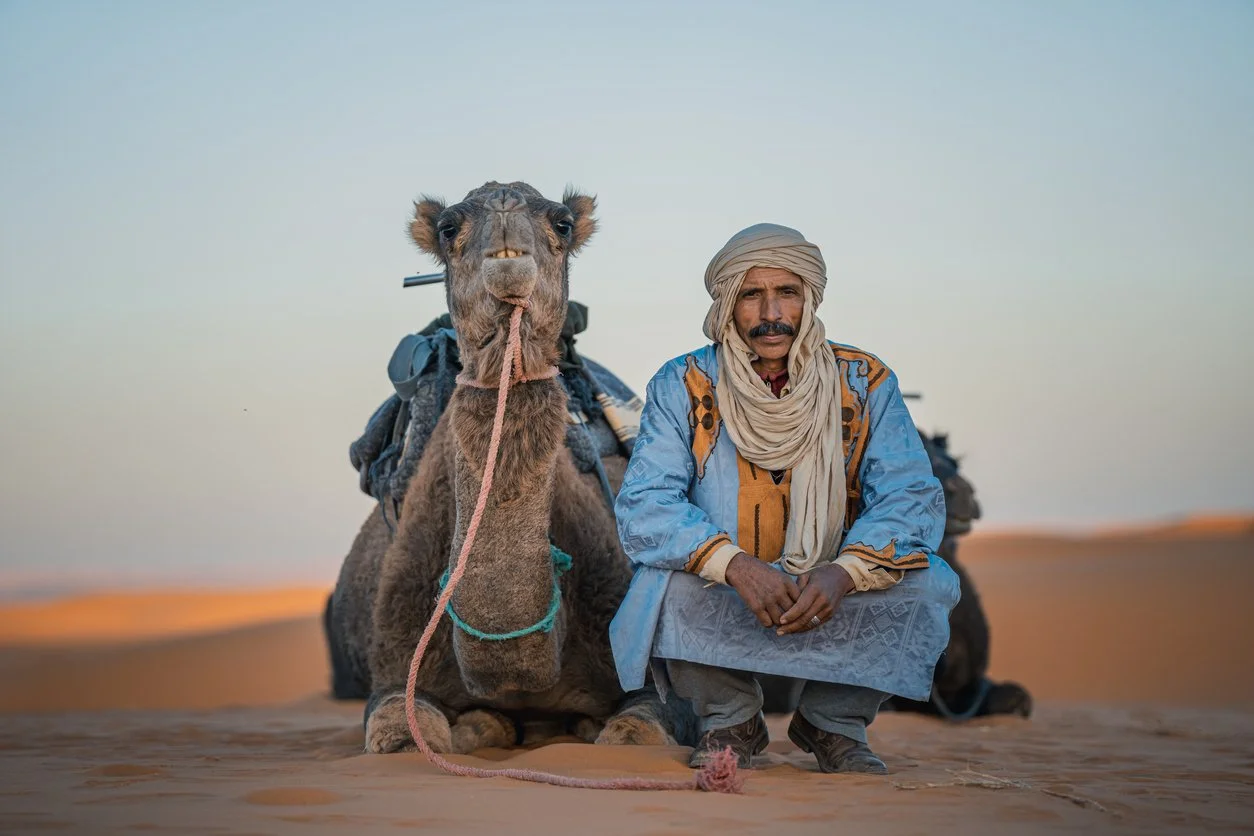
A member of the Moroccan berbers resting with his camel in the Sahara desert. | STOCK
Thus, these bodies must be preserved from harm for the survival of current and future generations. The Ongoni also believe that spirits and guardian animals live in the forests and must be protected.
IK is dynamic and constantly evolving to meet new challenges or contexts.
Therefore, it is generally considered to hold a comparatively greater holistic, intuitive perspective. It recognises the complexity of the world and the interdependence of its systems.
Indigenous worldviews do not separate nature and human society, as humans are part of a deeply interconnected web of life. Relationships with the environment are reciprocal, providing sustenance and autonomy while often fostering its conservation.
IK does not distinguish between spiritual, empirical, and sacred forms of knowledge. It is also considered largely subjective and qualitative in nature, informed by contexts and local conditions.
Unlike Western science, IK is predominantly passed down through generations orally.
It is necessary to critically engage with IK because, as with any knowledge system, IK can exhibit social ontologies – such as patriarchy – that are sometimes historically grounded or mobilised in contemporary society, even when lacking historical basis, to serve certain ends.
Indigenous environmental justice
Conceptualising forms of justice warrants acknowledging the existence of widespread and historically rooted Indigenous versions of environmental justice, including specific African versions.
These versions generally extend the right to justice beyond merely humans and to include Earth and all its living inhabitants in deeply relational and intergenerational ways.
This de-centring of humans profoundly impacts what environmental justice means and how it should be achieved because it contrasts with the individualised, human rights-based understandings of justice that dominate environmental justice discussions.
To promote Indigenous Peoples, the 2022–2032 period is being marked as the International Decade of Indigenous Languages.
The objective is to:
Adapt education to Indigenous knowledge
Preserve languages
Value traditional knowledge
Promote participation of Indigenous Peoples in political, scientific, and cultural decision-making processes