SDG6: SIX WATER NUMBERS THAT MATTER
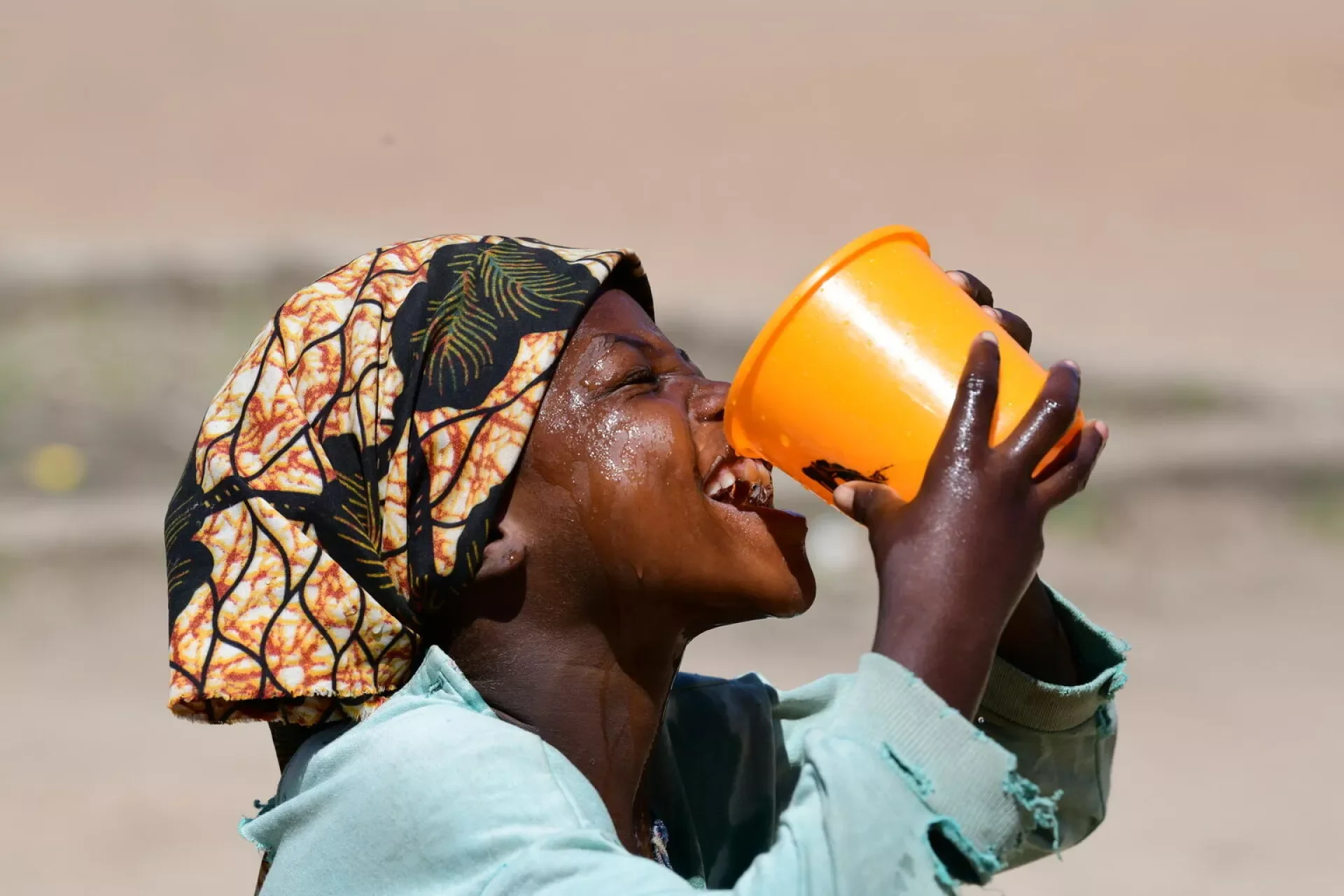
A woman drinking water | UNICEF
Water sustainability, availability, and sanitation on the continent were among the top agenda items during this year’s African Union Summit in Addis Ababa, Ethiopia.
Experts say severe water scarcity, worsened by the impacts of climate change and rapid population growth, poses an immediate threat to the continent’s stability, economic development, and health.
Estimates show that Africa loses up to $200 billion annually due to a combination of insufficient investment in water, climate change impacts, and operational inefficiencies. This disproportionately impacts agriculture and health for millions.
It is for these reasons that the summit focused on as a foundational, strategic resource rather than just a sectoral challenge.
‘‘The 2026 AU Summit’s focus on sustainable water availability and safe sanitation reflects the needs of African communities facing frequent droughts, water stress, and associated food and health impacts. ‘‘
- Mary Kyanyi, Power Shift Africa
But what do the water numbers in Africa say?
411 million: Africans without access to clean water
Today, only 51 percent of the population in Sub-Saharan Africa has access to clean, safe drinking water. The rest, about one in three Africans, don’t have access to water. The average African household consumes about 47 litres of water per day. In some rural parts of Africa, where access to water is even lower, a family consumes between 4 and 30 litres of water per day. To get this commodity, women and girls often trek for up to 4 miles daily. Africa’s consumption is steeply lower than that of the average American family, which uses up to 500 litres per day.
$50 billion: Resources Africa needs to invest annually in water security
If the continent is to achieve water sustainability, stability, and security by 2030, African governments must invest at least $50 billion per year, according to the African Union. Current investments range between $10 and $20 billion annually, leaving a shortfall of up to $30 billion every year. To close this gap, the AU has urged countries to invest 5 percent of their national budgets in water security and sanitation.
‘‘More than 60 percent of Africa’s water resources are transboundary. Proper governance and management of such shared resources is key to Africa’s access to the commodity amidst a changing climate. Failure to do so is to abandon populations in untold suffering and to neglect development.’’
- Mary Kyanyi, Power Shift Africa
215 million: Number of Africans who defecate in the open to date
Sub-Saharan Africa accounts for 47 percent of the global total of people who still practice open defecation. Nearly 85 percent of Africans who defecate in the open live in rural areas. According to UNICEF, West and Central Africa are notorious for this practice, with up to 120 million people lacking access to proper sanitation. Of these, 47 million are in Nigeria. Other African countries with widespread open defecation are Ethiopia (22 million) and Niger (17 million, or 60 percent of the population).
2050: The year most African natural water towers will have depleted
By mid-century, key water towers in Africa, particularly in East Africa, are likely to be depleted, owing to severe degradation. The degradation is primarily driven by human activity, including encroachment, deforestation, and illegal grazing, which destroy natural water catchment areas. Water towers like the Cherangany Hills in Kenya could be extinct as early as the mid-2040s if urgent measures are not taken. Under the current conditions, ecosystems like the Mau Forest Complex in Kenya could be severely depleted by 2053. The Mau Forest Complex is the largest water tower in Kenya, and accounts for 41 percent of all hydropower generated in Kenya.
9: percentage of freshwater found in Africa
While Africa is home to many large water bodies, including lakes, rivers, and springs, it is one of the most water-poor continents in the world. With a population of 1.5 billion, Africa accounts for only 9 percent of the total renewable freshwater resources in the world. This is equivalent to 1.3 million km² of surface freshwater. Europe, with a population of 745 million people, holds between 8 and 15 percent of the total freshwater resources in the world. Africa is home to large freshwater sources such as Lake Tanganyika, which holds 17 percent of the world’s surface freshwater, and Lake Victoria, the world’s second-largest freshwater lake by surface area. Even with its overall water wealth, Africa has an uneven distribution of the resource, with 54 percent of its water resources held by only six countries, while 27 countries face severe water poverty.
2.5 billion: Estimated population in Africa by 2050
As the population continues to grow, estimated to hit 2.5 billion by 2050, and with climate change and human activity destroying water resources, supply will become even scarcer, putting millions of households in danger of drought, dehydration, and a sanitation nightmare.
‘‘The African Union must galvanise countries to deliver on SDG 6 to protect the millions of Africans on the edge of water scarcity. This can be done by delivering investments that promote water security as an asset and a cornerstone of Africa’s economic development and welfare.’’
- Mary Kyanyi, Power Shift Africa