
It’s a bumpy road ahead for finance as we embark on the shift from talk to implementation
The Bonn sessions are not usually a summit of headline-grabbing political announcements, but they remain a critical test of whether the world is serious about moving from broad commitments to concrete implementation arrangements; and for countries on the frontlines of climate change, that shift is overdue
BY SAADA MOHAMED
The year 2025 marked big shifts in ambition and evolving geopolitical context that plunged the global climate finance landscape into a period of heightened complexity.
It defined COP30 in Brazil, where the Presidency united the world in celebration of the collective milestones achieved in the 10-year anniversary of the Paris Agreement while affirming the shared resolve to overcome the challenges, gaps, and barriers to transformative climate action.
This culminated in the political “Mutirão” decision that set in full motion the Paris Agreement policy cycle, fundamentally structured as a five-year ambition phase that enables transition of the agreement from negotiation to full implementation.
Countries also stressed the need for strong political will to uphold the Paris Agreement and its policy cycle as a foundation for trust, effective multilateralism, and accelerated action to continuously close ambition and implementation gaps.
However, the ultimate success of the policy cycle to effectively “move the needle” from negotiation to real-world action directly depends on predictable provision of quality and accessible finance from developed to developing countries.
The transition toward implementation of the New Collective Quantified Goal (NCQG) from 2026 onwards is in motion as the previous $100 billion annual climate finance expired in 2025. This next phase is defined by scaling up financial targets as developed countries are tasked to take lead in mobilising at least $300 billion per year by 2035, including efforts towards at least tripling adaptation finance
However, this remains a pipe dream, if the climate finance numbers recorded over the last decade and evolving global trends are anything to go by.
Reports show that climate finance from the developed countries cumulatively reached $136.7 billion in 2024, the highest amount recorded, but which represents barely a fraction of the true scale of finance for Africa alone, estimated at approximately $280 billion annually by 2030.
Moreover, adaptation finance remains largely stagnated, accounting for less than a third of total climate finance in 2024. This is negligible as the annual investment needs, estimated at between $310 and $365 billion by 2035, dwarf the current adaptation finance level by a factor of more than 10.
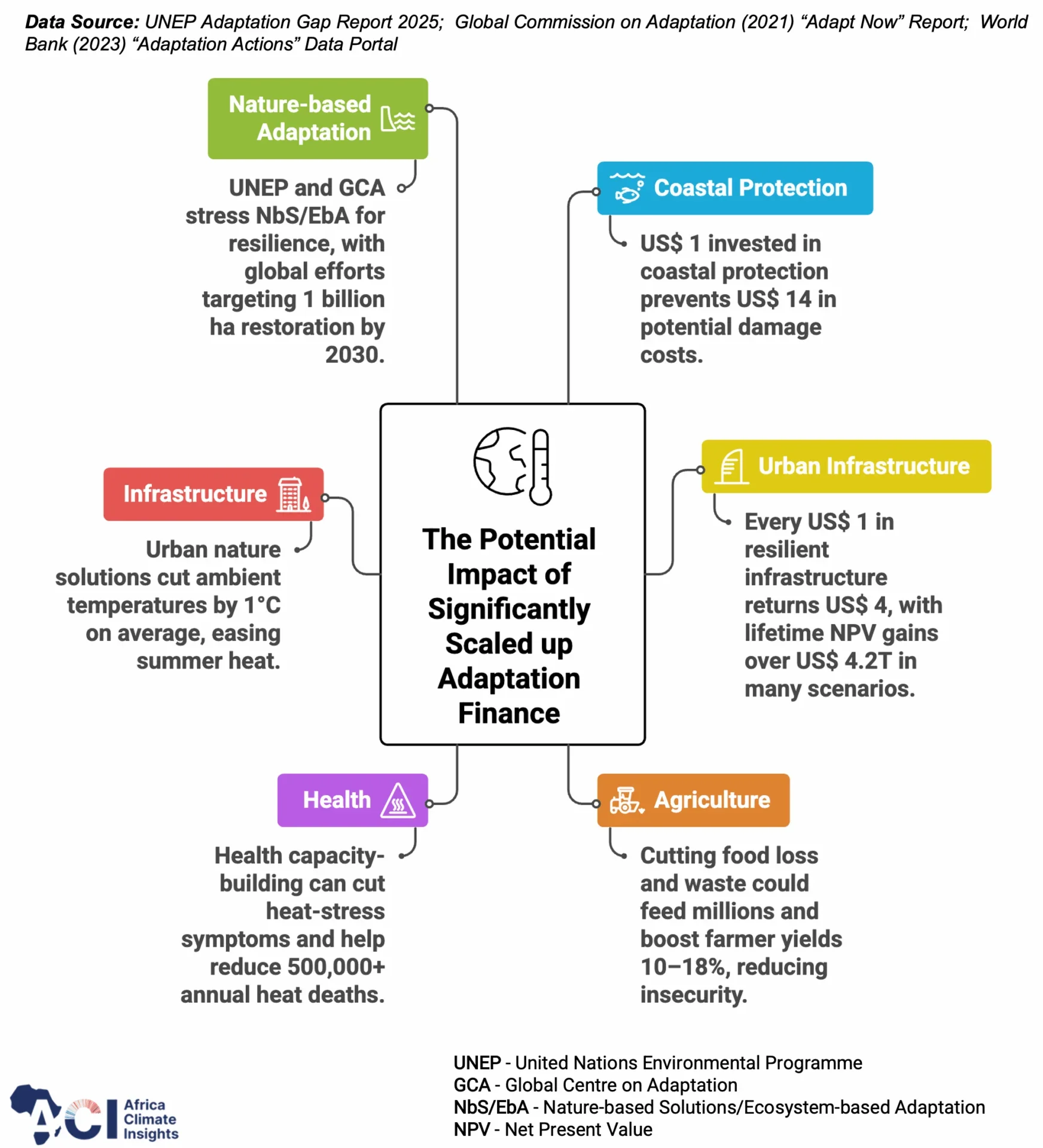
Although international public finance represented the largest share, of around three-quarters of the total climate finance reported in 2024, over 67% was delivered mainly in form of non-concessional loans through multilateral development banks. Framing loans at market-rate interest as climate finance is the highest form of climate injustice as it diminishes the actual value of finance received if the loans are counted as grant equivalent rather than at face value.
As such, recurrent climate-induced shocks continue to spike the debt burden as it increases cost of capital, worsens debt-to-GDP ratio, shrinks fiscal space, and hinders domestic investment in future resilience. This trend locks vulnerable countries in a systemic debt trap loop while rich countries generate billions of dollars in economic gains from the high interest repayments and attached conditionalities.
Last year also marked a period of historic contraction of the Official Development Assistance (ODA), with a 9%-to-17% projected drop following a 9% decline in 2024. This downward trend is largely driven by major donors like the US, Germany, France, and the UK cutting simultaneously for the first time in decades, and the outlook beyond 2025 remains highly uncertain.
These announced cuts have direct and indirect consequences for climate finance delivery since developed countries draw most of their climate finance contributions from reclassifying the existing ODA with climate objectives.
This is evident as most countries are also retrenching their international climate finance targets and commitment periods while redirecting funds toward defence and other domestic priorities. The UK recently halved its prior commitment to Green Climate Fund by approximately £815 million between 2024 and 2027, while both France and Germany announced lower contributions to multilateral climate-related funds.
On the other hand, wealthy nations have positioned multilateral development banks as pivotal actors in advancing climate action, leveraging their business models to mobilise substantial financial resources, including private capital.
As such, the World Bank has underscored its role as a global climate leader by implementing a five-year Climate Change Action Plan (CCAP) beginning in 2021. This plan has served as a cornerstone for setting climate finance targets within its lending framework and aligning the Bank’s overall financial strategies with the Paris Agreement.
Still, Africa is heading to the mid-year climate negotiations in Bonn with more rigour and hope to defend multilateralism for climate action and shape the technical foundations of future climate decisions amid all these uncertainties and fragmented geopolitical environment.
Top on the agenda is the commencement of the two-year work programme on climate finance, and Africa should leverage this space to demand that rich countries step up their climate leadership and reaffirm their real commitment to multilateralism for climate action. At the same time, developed countries should demonstrate good political will by prioritising incremental multi-year climate finance commitments to guarantee predictability and adequacy of public finance provision to enable climate action in developing countries.
Africa should also urge rich countries to accelerate the implementation of their existing finance commitments, and lead in delivery of scaled-up quality and accessible climate finance, particularly for adaptation and loss and damage needs. This is vital to protect and advance the gains towards achieving global climate ambitions.
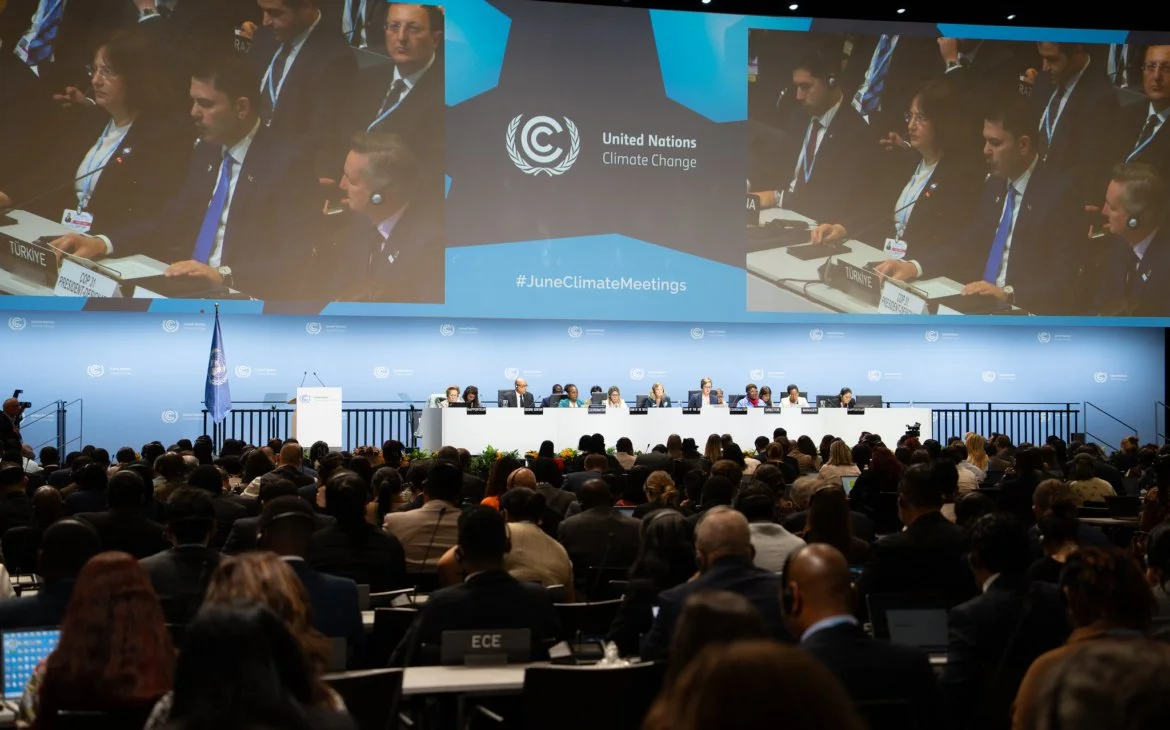
Most importantly, the discussions in Bonn should also lay groundwork for establishing a robust tracking and accountability framework that can effectively monitor the progress and delivery of the new finance target across all relevant actors.
The work programme should help identify potential action to improve the availability and comparability of data, and set up clear rules for reporting to enhance transparency and accountability arrangements. It should also advance the work on climate finance definitions, review reporting and accounting methodologies, including grant-equivalent perspectives, distinctions between provision and mobilisation reporting, and ways for addressing reporting lags.
Saada Mohamed is Climate Finance Advisor, Power Shift Africa. smohamed@powershiftafrica.org