Just Transition Mechanism and The Making of a Historic Deal
Just Transition Mechanism and The Making of a Historic Deal
Historic. Hard-won gain. Long overdue.
These are some of the ways one of COP30’s major breakthroughs, the Just Transition Mechanism, has been described. Established at the UN climate talks in Belem, Brazil, the mechanism is the first major win for workers, communities and for climate, as the global transition from dirty fuels accelerates into the future.
A product of relentless push by civil society groups, workers and communities from around the world, tough political interventions, tense negotiations and compromises, the just transition mechanism has been a long way coming. Justifiably, the Just Transition Work Programme (JTWP) was one of the most closely followed discussions at the summit.
What is the Just Transition Work Programme?
The mechanism is a product of the JTWP, also known as the UAE Work Programme on Just Transition. The framework aims to support countries in their transition to a low-carbon economy in a manner that is equitable and inclusive, by protecting workers and communities.
Essentially, it seeks to guide climate action, especially the shift away from fossil fuels, by promoting social protection, decent work and quality jobs, and universal rights, particularly for vulnerable communities in the Global South. The overall goal is to ensure that the transition doesn’t perpetuate or widen existing socioeconomic inequalities created by the fossil fuel regime.
What the Mechanism Says and Does
The mechanism is a platform that will coordinate assistance, facilitate the sharing of best practices among nations, mobilise resources, and track progress of the transition. It is the ‘‘formal home’’ for just transition discussions within the UN climate regime.
It shifts the focus of the JTWP from dialogue to practical implementation, while aiming to support countries design and deliver concrete just transition pathways.
Where it all Started
As the executive director of Climate Action Network, Tasneem Essop, says, the mechanism ‘‘didn’t fall from the sky’’. Thousands of hours of work, volumes of text and strong advocacy from global civil society actors birthed it.
Just transition has a long, winding, and eventful history, tracing its origin in the US labour movements of the 1970s. the Labour groups sought to protect workers from the socioeconomic consequences of environmental regulations. Having initially focused on industrial pollution and other harms, the concept has evolved over the years to become a mainstream issue in climate action.
But it’s the establishment of the goal and the foundational elements of the Just Transition Work Programme (JTWP) at COP28 that set the conversation fully in motion.
The JTWP recognised the need for national climate action plans, including Nationally Determined Contributions (NDC) and National Adaptation Plans (NAPs), to include social protection, labour rights for workers and communities affected by the shift from fossil fuels, in the spirit of ‘‘leaving no one behind’’.
The elements of the programme were to be refined at COP29 in Baku, Azerbaijan, in 2024.
A short Timeline of the JT Mechanism
| YEAR | ACCOMPLISHMENT | OCCASION |
|---|---|---|
| 2010 | Just Transition enters the UN formal climate negotiations for the first time | COP16, Cancún, Mexico |
| 2015 | Just Transition recognised in the preamble of the Paris Agreement | COP21, Paris, France |
| 2023 | The Just Transition Work Programme (JTWP) is officially established | COP28, Dubai, UAE |
| 2024 | Delegates develop the programme’s foundation further, including practical implementation pathways | COP29, Baku, Azerbaijan |
| 2025 | Just transition mechanism is agreed as part of the Belém Package | COP30, Belém, Brazil |
Where Baku Faltered, Belém Flourished
The world arrived at COP29 in Baku hoping to move the JTWP beyond dialogue and agree on robust action plans and implementation steps to facilitate a fair global socioeconomic shift. The work was, therefore, cut out for the technical experts and negotiators, namely, to develop practical strategies to support workers, communities, and industries impacted by climate change, to promote social equity and environmental sustainability.
However, JTWP negotiations stalled midway. Parties clashed over the scope, funding, and priorities between developed and developing nations. While developed countries pushed for a narrow, mitigation-focused approach, developing countries demanded a broader scope that included adaptation, finance, and equity.
The biggest point of dispersion, though, was the lack of clear financial commitments from developed nations for the implementation of a just transition. This stalemate led to the collapse of the talks, leading to the postponement of a JTWP decision.
For poor climate-vulnerable countries, the lack of a decision was considered a ‘‘half win’’.
Kudakwashe Manjonjo, the Just Transition Advisor at Power Shift Africa, remarked at the time: ‘‘Having no deal is better than a bad deal…It’s perhaps a positive outcome for Africa and the Global South as we look ahead to COP30.’’
High-octane Politics, Advocacy that Produced the Belém Action Mechanism (BAM)
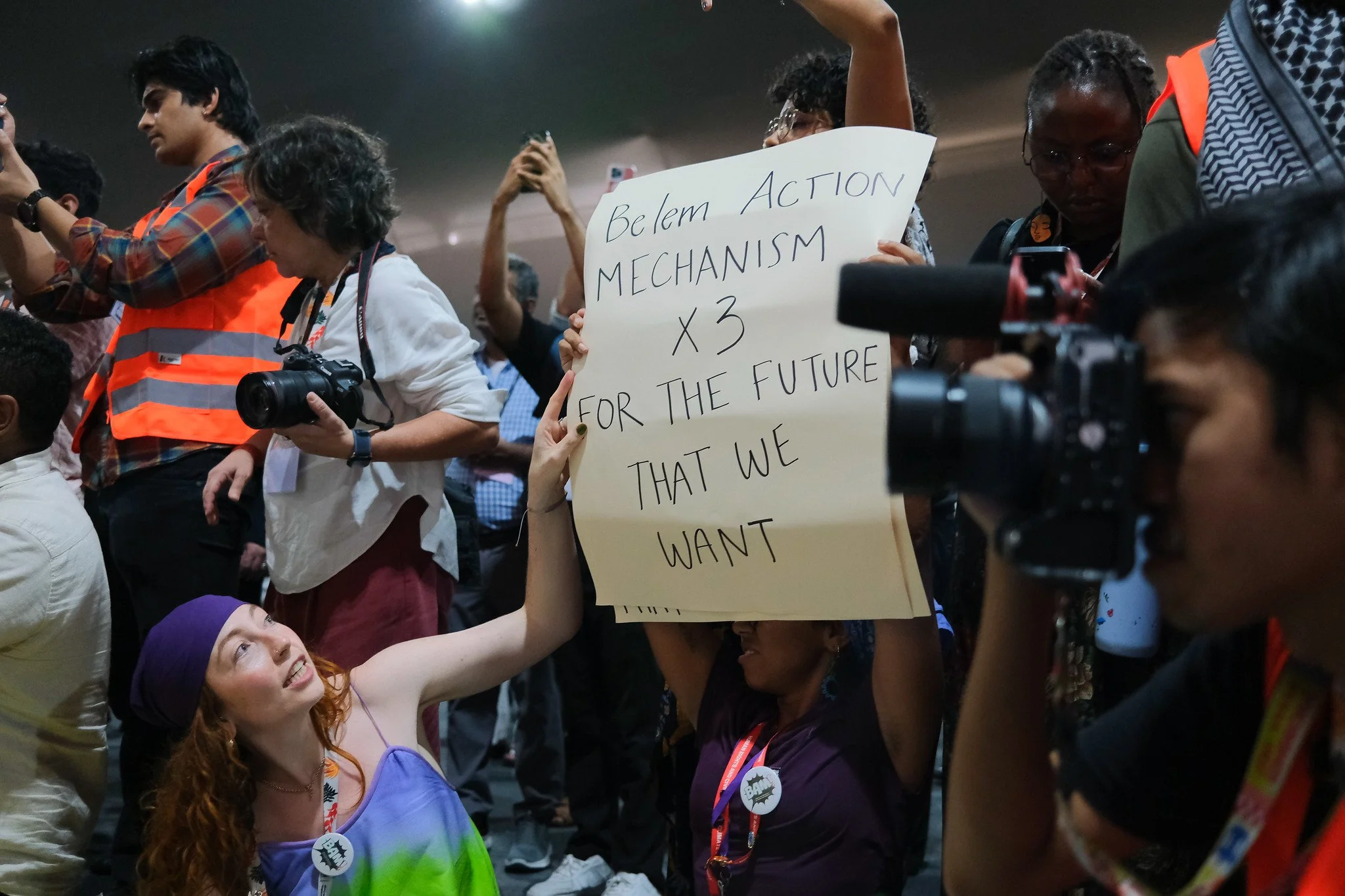
A year later, Civil society globally would arrive in Belém with a clear demand: convert the JTWP dialogue into delivery through a Belém Action Mechanism.
For African civil society, the expectation was nothing short of a just transition that facilitates development and creates jobs. In addition, Africa demanded ‘‘additional finance and MOI’’ for social protection, access to energy, and clean cooking.
The summit presidency had taken the cue. In August 2025, COP30 President Amb. André Corrêa do Lago highlighted that just transition would be a central theme at the talks in Brazil as a negotiation priority.
‘‘We cannot allow the climate agenda to be seen as socially detrimental. It must be linked to growth, job creation, and improving people's lives,’’ Amb. Corrêa do Lago stated.
This not only fuelled the negotiation fire but also heightened expectations for a solid outcome. To hit the target, the presidency included the just transition in the Belem Political Package, pushed through an implementation mechanism and set a clear path forward for the BAM.
These efforts saw Parties agree on the mechanism, which promotes broad and inclusive participation of workers, informal workers, Indigenous Peoples, youth, women, and other marginalised groups in planning and decision-making processes.
Finally, a deal. What They Said:
Mohamed Adow, Director, Power Shift Africa: ‘‘The creation of a Just Transition Action Mechanism is a recognition that the global move away from fossil fuels will not abandon workers and frontline communities.’’
Tasneem Essop, Executive Director, Climate Action Network International: “This outcome didn’t fall from the sky; it was carved out through struggle, persistence, and the moral clarity of those living on the frontlines of climate breakdown.’’
Teresa Anderson, Global Lead on Climate Justice at ActionAid International: “Amid growing economic insecurity and climate scepticism, this is exactly the signal needed to get the planet back on track to addressing this global crisis.’’
Financing for the Mechanism and the Future
For now, the mechanism’s operational details are not yet in place. At SB64 in 2026, the midyear climate summit in Bonn, Germany, countries will continue with the JTWP to smooth out the details for implementation.
Specifically, Parties will focus on implementing the BAM, by discussing ways to integrate the just transition principles into national climate plans and actions. Once these modalities are agreed, Parties will adopt them at COP31 in Turkey, paving the way for implementation by countries.
The outcome in Belem recognises financial barriers for a just transition and the need to address them by scaling up new and additional grant-based finance to support transition efforts in developing countries in a way that avoids debt.
Social dialogue, skills development through capacity-building efforts, and social protection systems are equally recognised as essential to a fair and inclusive transition.