REVEALED: Inside the Clash at COP30’s Closing Plenary
From the beginning, GGA negotiations were expected to be one of the fiercest battlegrounds at COP30 in Belem, Brazil. In the end, this came to pass, and more.
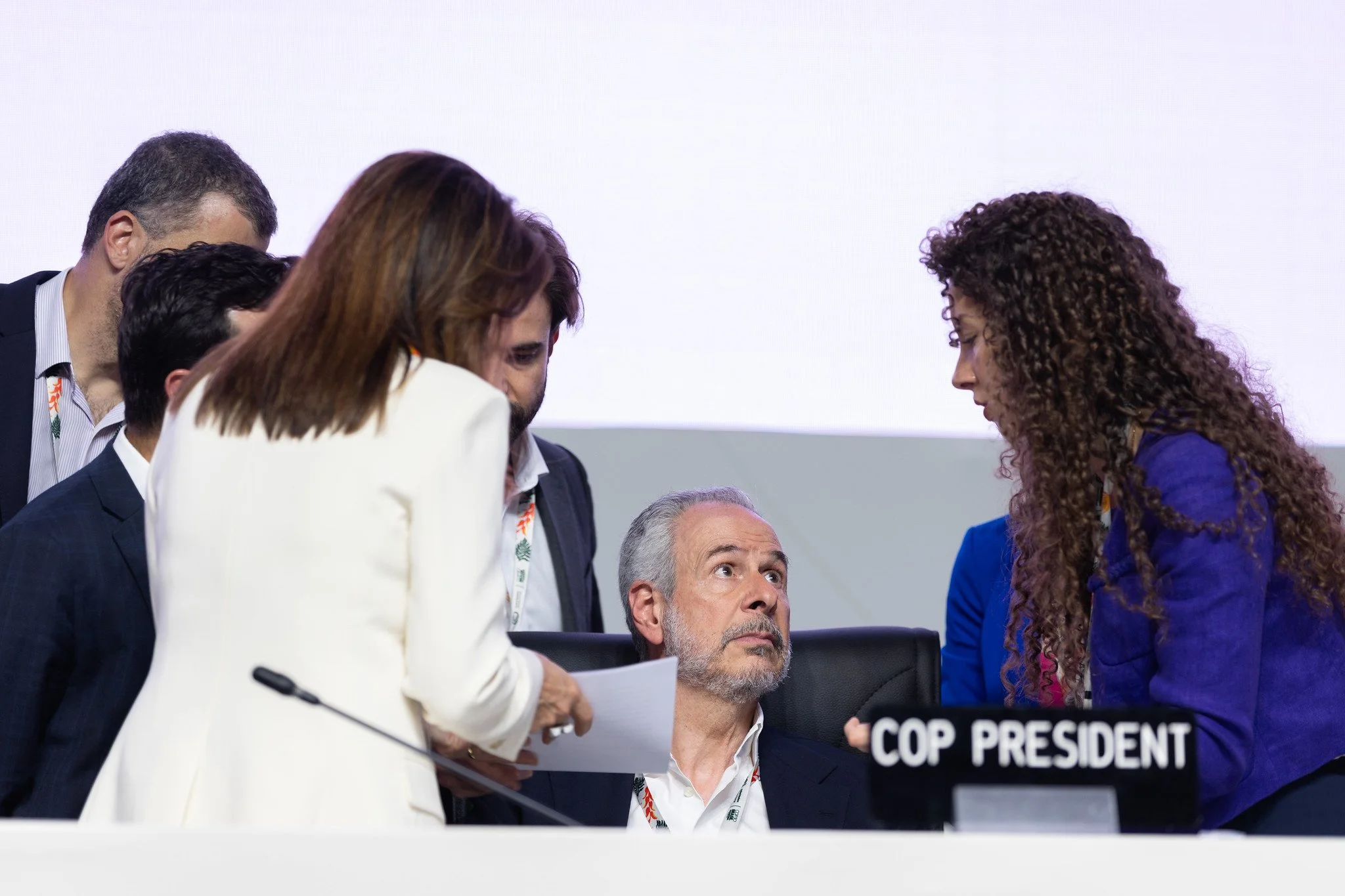
During the closing ceremony, when Parties adopted the text on the different thematic subjects, fissures emerged. Developing country Parties objected to the GGA text. By then, however, the decision had already been gavelled.
Colombia, Panama and several other Latin American nations petitioned COP30 President Andre Correa do Lago for gavelling through the decision without acknowledging requests from the floor, as procedure dictates.
One of the red flags raised before the gavel was that some indicators proposed by technical experts made the indicator set less robust, and others even harder to measure. The president regretted the decision, noting that the reservations would be reflected in the session’s report.
‘‘What this means in practice is hard to say at this point,’’ says Cristina Rumbaitis, a senior policy advisor on adaptation and resilience at the UN Foundation.
What followed was a vicious objection by Colombia. ‘‘The ‘COP of Truth’ cannot ignore science,’’ Colombia said. ‘‘We are not asking to have our statement noted in the session report, it’s an objection.’’
At this point, the session could not go on. The Presidency needed to consult. ‘‘We will resume as soon as possible,’’ declared President do Lago as he suspended the plenary, signs of fatigue now all over his face.
Having overshot by more than 24 hours, the conclusion of the event was now thrust into limbo, as exertion took its toll on the delegates, patience depleted, and the clock ticked slowly to an uncertain end.
When the session resumed, Amb do Lago clarified that the gavelled decisions in the ‘‘Belém Political Package’’ could not be revoked. Work on the contested areas would only continue at SB 64 in Bonn in June next year.
But the battle lines had been drawn long before the closing plenary convened on Saturday afternoon. The GGA fight only removes the lid on the deep tensions that have existed between wealthy and poor countries.
These tensions, we can now reveal, have been perpetuated by the urgency for adaptation support in frontline countries on the one hand, and developed countries’ flagrant failure to deliver their climate finance pledges on the other.
During the negotiations in Belem, deep cracks emerged as developed and developing nations clashed over the means of implementation, especially climate finance, technology transfer, and capacity-building support for poor, climate-vulnerable nations.
Adaptation Finance Gap: Developing country groups such as the African Group of Negotiators (AGN), the Least Developed Countries (LDCs), and AILAC (Alliance of Latin America and the Caribbean) highlighted the enormous gap between the funding needed for adaptation action, estimated at more than $300 billion per year, and the finance that actually flows from developed nations.
Unmet Financial Obligations: Developing countries decried breach of trust by wealthy nations’ failure to meet past pledges, including the 2025 goal to double adaptation finance (The Glasgow Climate Pact) agreed at COP26. Throughout the process, developing nations said a GGA framework without concrete, new, and predictable financial commitments, not just pledges or loans, was meaningless.
Indicators - The Grand Contest: Besides finance, the GGA indicators have been a major fault line in the negotiations, with developed and developing nations differing on the proposed GGA indicators to measure progress. As Australia, Japan, the European Union wanted to have the indicators adopted and refined later, developing countries cautioned against rushing the adoption. They were concerned that the indicators were incomplete or inequitable.
Shift the Burden to Us? Now Way: Developing countries have long insisted that their developed counterparts owe them a climate debt following their polluting ways that triggered the climate crisis. This position is anchored in the UN Framework Convention on Climate Change and Article 9.1 of the Paris Agreement. These obligate wealthy nations to provide the support necessary for poor countries to adapt to and mitigate against climate shocks.
In their argument, Global South countries feared that some of the indicators proposed could shift the burden of responsibility onto them, especially on finance. Notable among the arguments was that several indicators on domestic budgets infringed on national sovereignty.
In the end, the final text specified that the indicators were voluntary, without creating new financial obligations.
Saada Mohamed says finance and other means of implementation outcomes from COP30 ‘‘totally contrast’’ the demands of poor and vulnerable countries.
‘‘The weak language sets the worst precedence in the history of the negotiations by failing to refer to the legal mandate of rich countries to provide public finance for adaptation,’’ says the climate finance associate at Power Shift Africa.
Saada adds: ‘‘This further marginalises adaptation action and the voices of climate vulnerable countries.’’