Another Flooding: South Africa’s Humanitarian crisis as a case for anticipatory adaptation
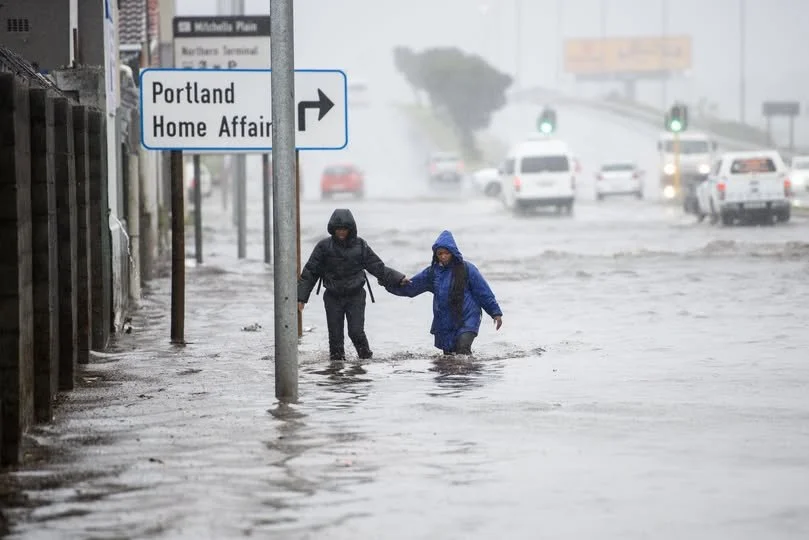
School kids brave the weather during the Cape Town floods. | Facebook
South Africa has declared a national disaster after torrential rains killed at least 10 people and destroyed thousands of homes across six provinces.
By Ndivile Mokoena and Thandokuhle Zungu
Many regions in South Africa are currently facing a humanitarian crisis due to flooding caused by heavy downpour, strong winds and snowfall. The trail of impacts experienced is not any different from recent incidents in Mozambique, Kenya, Morocco and Ethiopia. Deaths, property damage, breakdown of health systems, damage to critical infrastructure, mass displacements, and loss of cropland are being faced.
A national disaster has been declared across six provinces including the Western Cape, Eastern Cape, Northwest, Northern Cape, Free State and Mpumalanga.
The flooding incidents that have become frequent and severe in Africa are pointers that lack of adaptation or limited investments in safeguards can easily spiral into a humanitarian crisis. There is an astronomical cost for climate inaction as such floodings have shown.
Indeed, climate change will drive more of such disasters both in the short and long term. This climate reality implies a need for anticipatory disaster preparedness and transformative adaptation which not only prepares at risk communities to overcome climate impacts but also enables them to avoid or limit the scale of impacts.
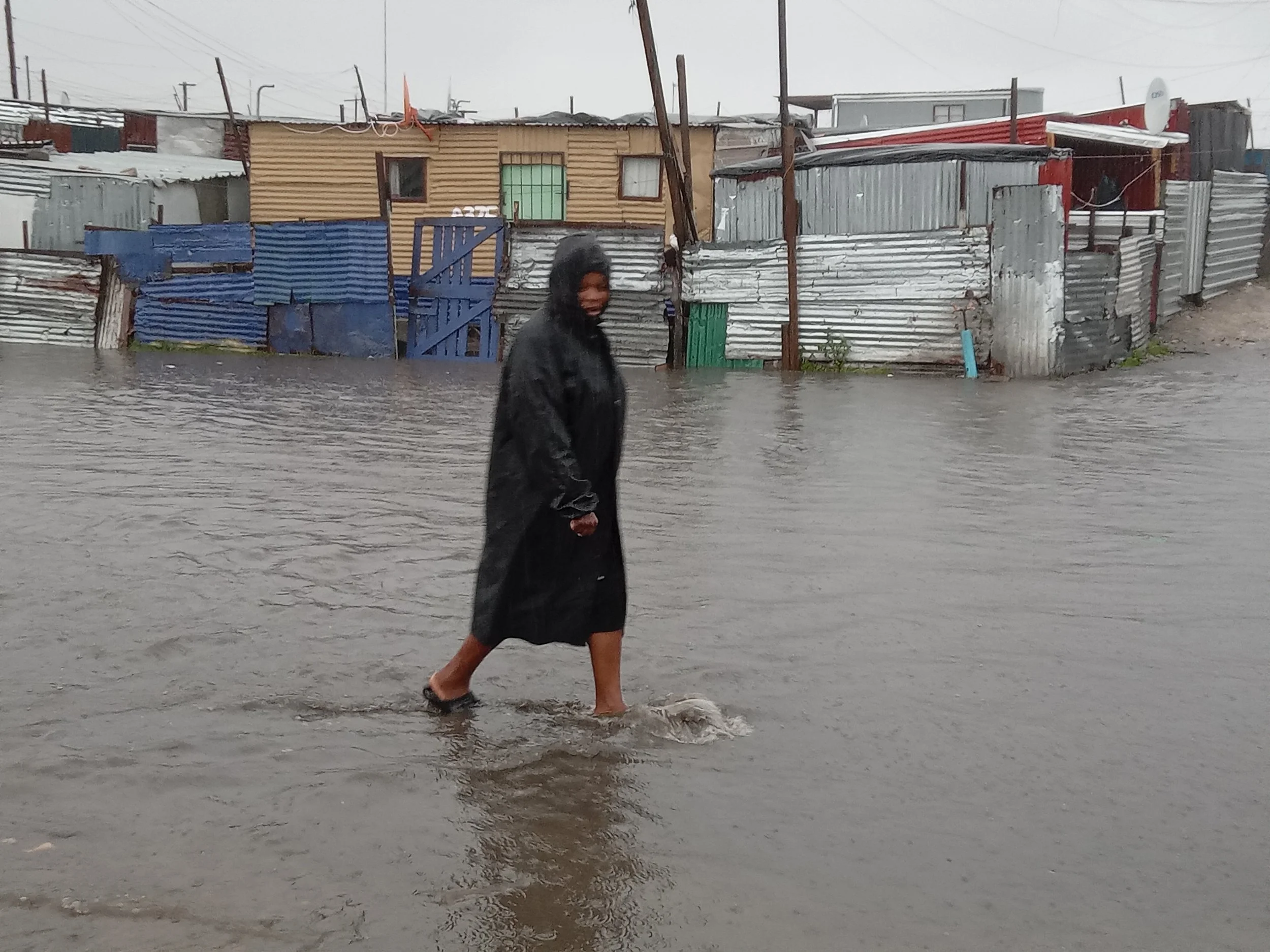
Women crosses flooded street | Sandiso Phaliso
In a recent article, Nairobi’s recurring floods and lessons for African cities, Mary Kyanyi provides practical suggestions on what could be done to tackle flood menace in Africa. She suggests proactive measures to prevent adaptation opportunities from degenerating into humanitarian crises.
Instead of communities getting handouts as quick fix disaster response measures, Mary recommended building resilience as the most realistic ways to protect communities.
Proper land use planning, flood risk sensors, proper waste management, expansion and management of drainage channels, proper waste management, and resilient settlements as some of the approaches to proactively address flood vulnerability and build long term resilience among the vulnerable communities. These propositions are as relevant to the context of South Africa as they are for Nairobi.
As South Africa faces the gory impacts of floods, it provides a case for urgent collective action — from government, civil society, communities, researchers, and the private sector — to build a more climate-resilient and socially just future for all South Africans.
Ndivile and Thandokuhle are members of the Pan African Coalition For Adaptation and Resilience.