Tanzania’s Clean Cooking Milestones and Lessons for Africa
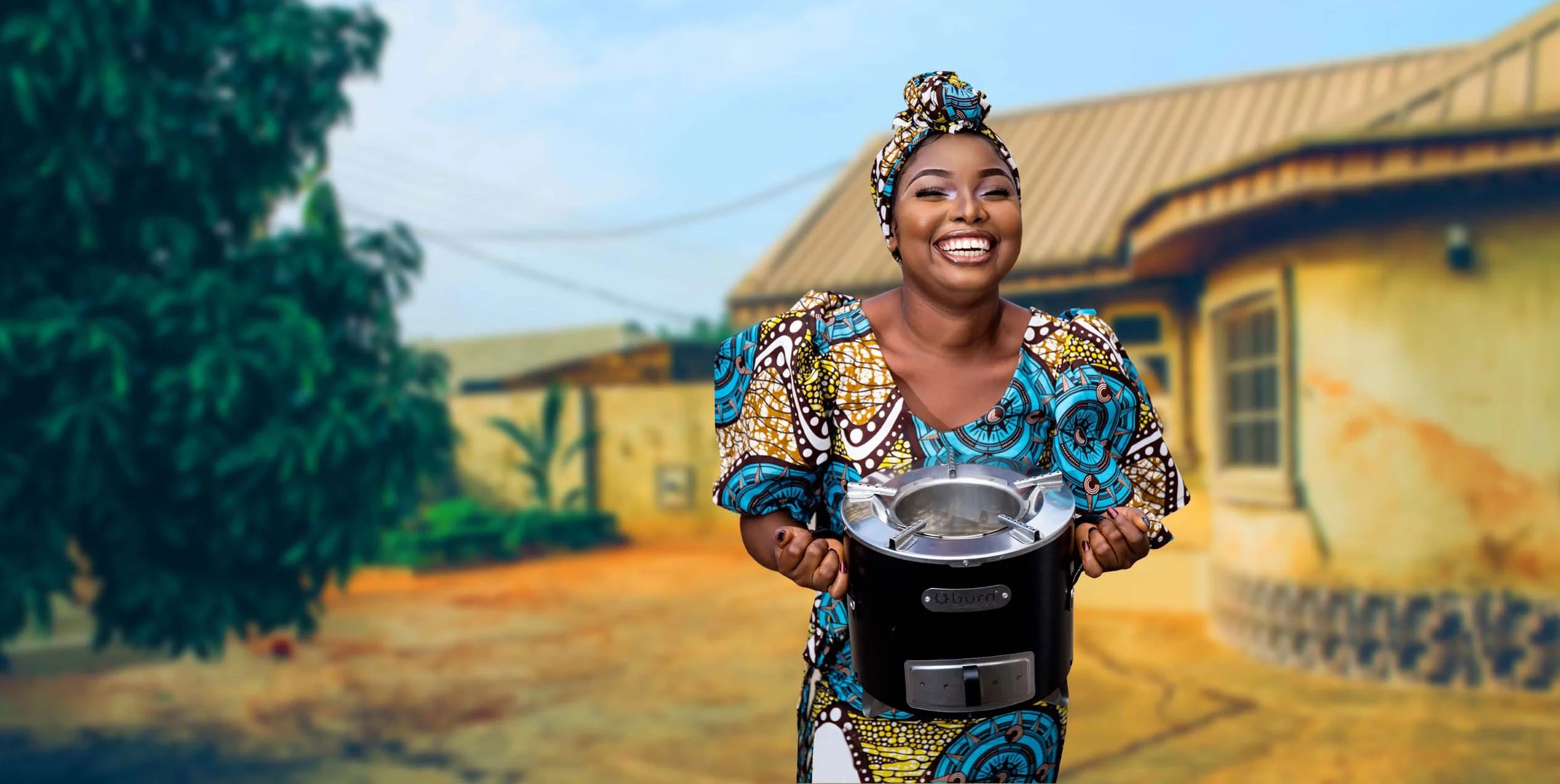
An African woman holding a stove.
BY NOMTHANDAZO MABENA
African governments are ramping up investments to improve access to clean cooking, with Tanzania leading the front. Its national clean cooking initiative was announced at the 2026 SADC Sustainable Energy Week in Victoria Falls, underscoring a growing awareness on the continent of clean cooking as a priority for both development and energy security.
Tanzania’s initiative aligns with its commitments under its Mission 300 energy compacts, including achieving 75 percent clean cooking access by 2030. Recent progress shows promising momentum towards this target. Access to clean cooking in Tanzania rose from only 6.9 percent in 2019 to 25 percent in 2025.
Like its continental peers, Tanzania is also expanding its renewable energy capacity, especially hydropower. The Julius Nyerere Hydropower Project is one of them. Owing to weak grid infrastructure and distribution challenges, however, sometimes power doesn’t reach rural and underserved communities.
On the global stage, momentum is growing to meet the 2030 clean cooking target under SDG 7, which calls for universal access to affordable, reliable, and modern energy. Nearly 2.3 billion people worldwide still lack access to clean cooking, with 1 billion of them in Africa. For the continent, the consequences are deadly.
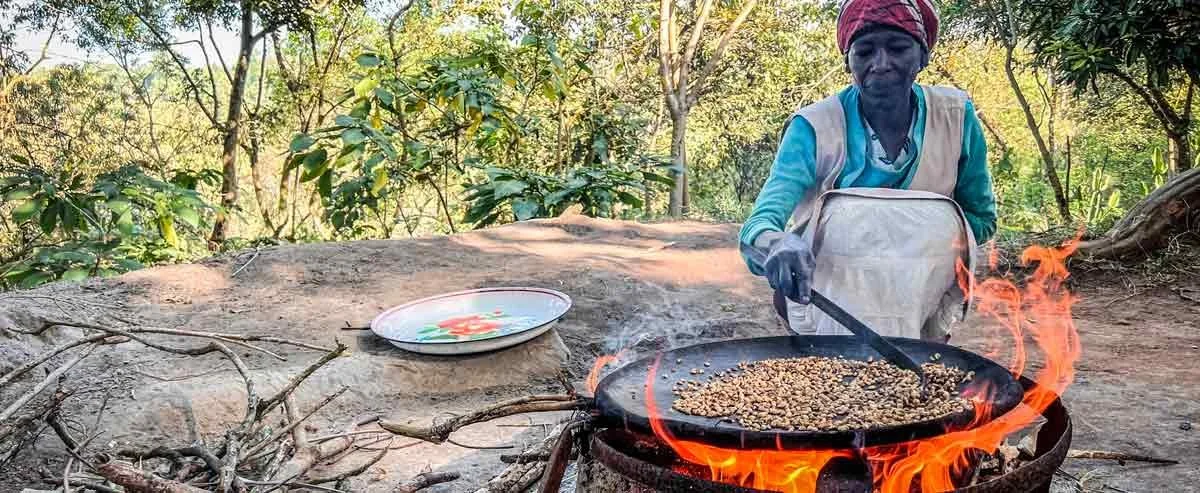
An African woman cooks a meal over an open fire.
Traditional cooking fuels such as charcoal and firewood cause indoor air pollution, responsible for thousands of premature deaths in Africa each year. Most of the fatalities are women, girls, and children, since they spend more time than men near fireplaces.
“This is not just a striking statistic. It is the tragic reality of our energy situation. It also highlights the need for a thoughtful approach to clean cooking moving forward. ”
Estimates such as these by the International Energy Agency (IEA) indicate that up to $37 billion in investment will be needed by 2040 to improve energy access. However, urgency should not lead to quick and ineffective solutions. Closing the clean cooking access gap should not become just a numbers game where targets are met on paper at the expense of long-term sustainability, fairness, and safety.
Tanzania’s ambition is inspiring for the rest of the continent. The East African country’s giant steps towards clean cooking are also influenced by the size of its challenge. Up to 95 percent of Tanzanians depend on biomass as their main cooking fuel, according to national data. In rural areas, most households use traditional three-stone fireplaces, while their urban counterparts depend on low-quality charcoal stoves for daily cooking needs.
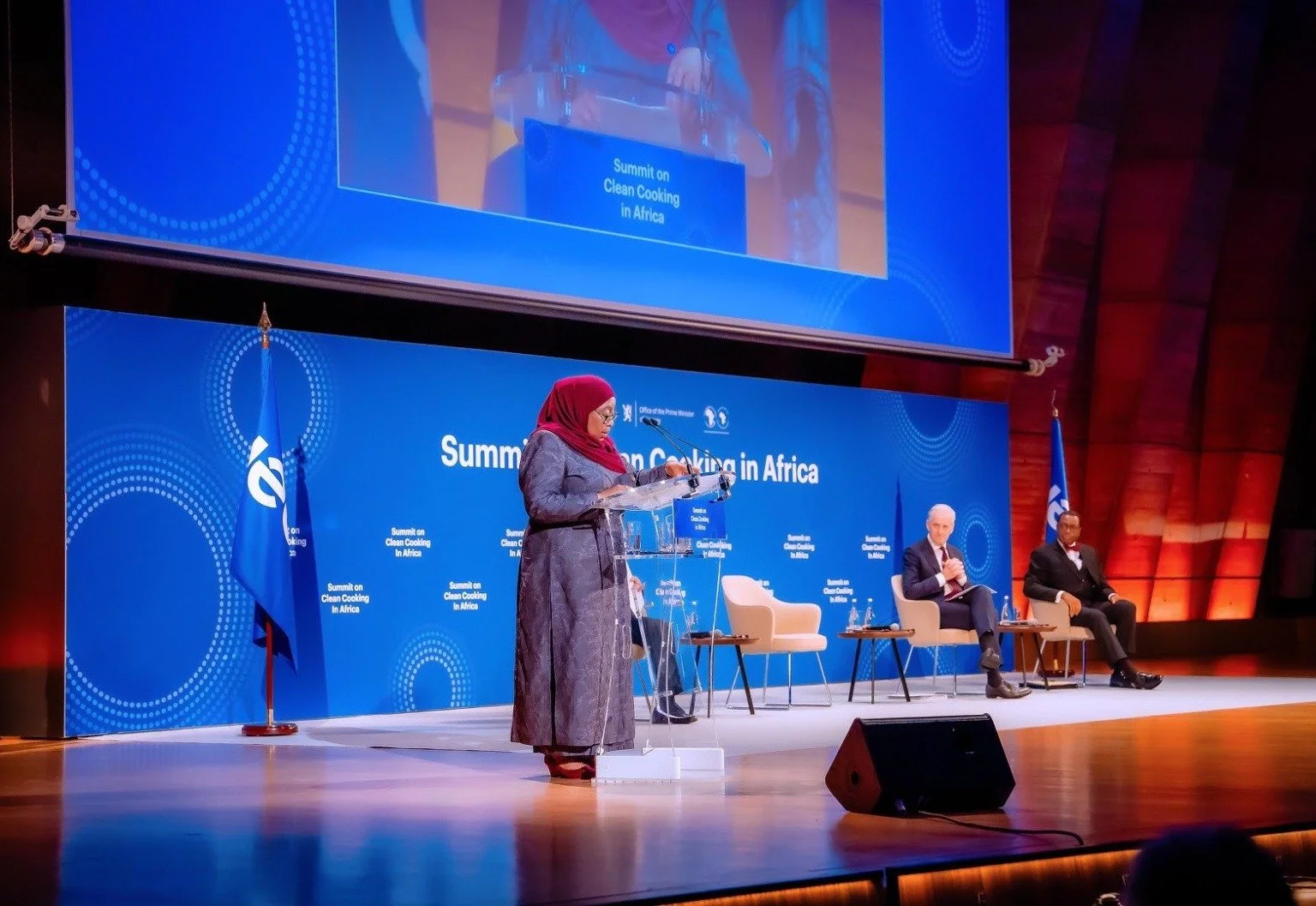
Tanzania’s President Samia Suluhu addressing the Summit on Clean Cooking in Africa in Paris, France, in 2024.
The reality of many African households is that they use several heating methods at any given time. Called fuel stacking, this practice allows families to use conventional fuels such as charcoal and firewood alongside green substitutes like electricity. Even where subsidies exist, larger families may still find electricity as a cooking solution too costly.
Tanzania recently distributed 400,000 LPG cylinders to public institutions and rural communities across the country, an initiative supported with 50 percent subsidies and tax exemptions. This project apparently aims to expand access to modern energy systems and encourage private sector participation in the clean-cooking sphere.
Already, new policies have been developed, and storage facilities and import terminals built to support LPG expansion. In essence, Tanzania is locking itself into another dangerous long-term fossil fuel pathway. The country could soon end up with stranded infrastructure when investment in renewable energy catches up.
While Tanzania’s progress is notable, the long-term negative impacts of its approach are undeniable. For a continent that is highly vulnerable to emission-driven climate impacts and neck-deep in public debt, some of it decades old, continued investment in fossil fuels raises grave concerns.
“Large investments in LPG-based cooking solutions will deepen not only the continent’s dependence on gas, but also its debt burden. ”

Nomthandazo Mabena is a Project Assistant at Power Shift Africa | PSA Media
Offering subsidies and tax breaks for LPG lends gas the illusion of clean cooking, with quick adoption by households and communities. This makes it harder to challenge gas or move away from it, even when cleaner, more sustainable alternatives exist.
Even as we strive for a future powered by 100 percent renewable energy, we must confront the distraction of “transition fuels.” These are short-term energy alternatives said to facilitate the transition from high-carbon fossil fuels to low- or zero-carbon energy systems. Although often presented as a practical approach, relying on transition fuels prolongs dependence on them and weakens the long-term mission to phase out all fossil-based energy systems.
If Africa is committed to building a sustainable and fair energy system, national strategies must focus investment in equitable, scalable, and sustainable renewable-based cooking solutions for all households. The Uganda Biogas and Electric Cooking Project (UBEP) offers great lessons on how the rest of the continent could implement similar initiatives.
“Only renewable energy, not temporary solutions like LPG, can permanently break the cycle of fossil fuel dependency in Africa.
”
The lack of access to clean cooking has long been an overlooked crisis, as the deficit fuels various socioeconomic, environmental, and public health issues. The time spent gathering fuel alone burdens women and girls, reinforcing gender inequalities, limiting their opportunities for education and paid work, while exposing them to the increased risks of harassment and sexual violence.
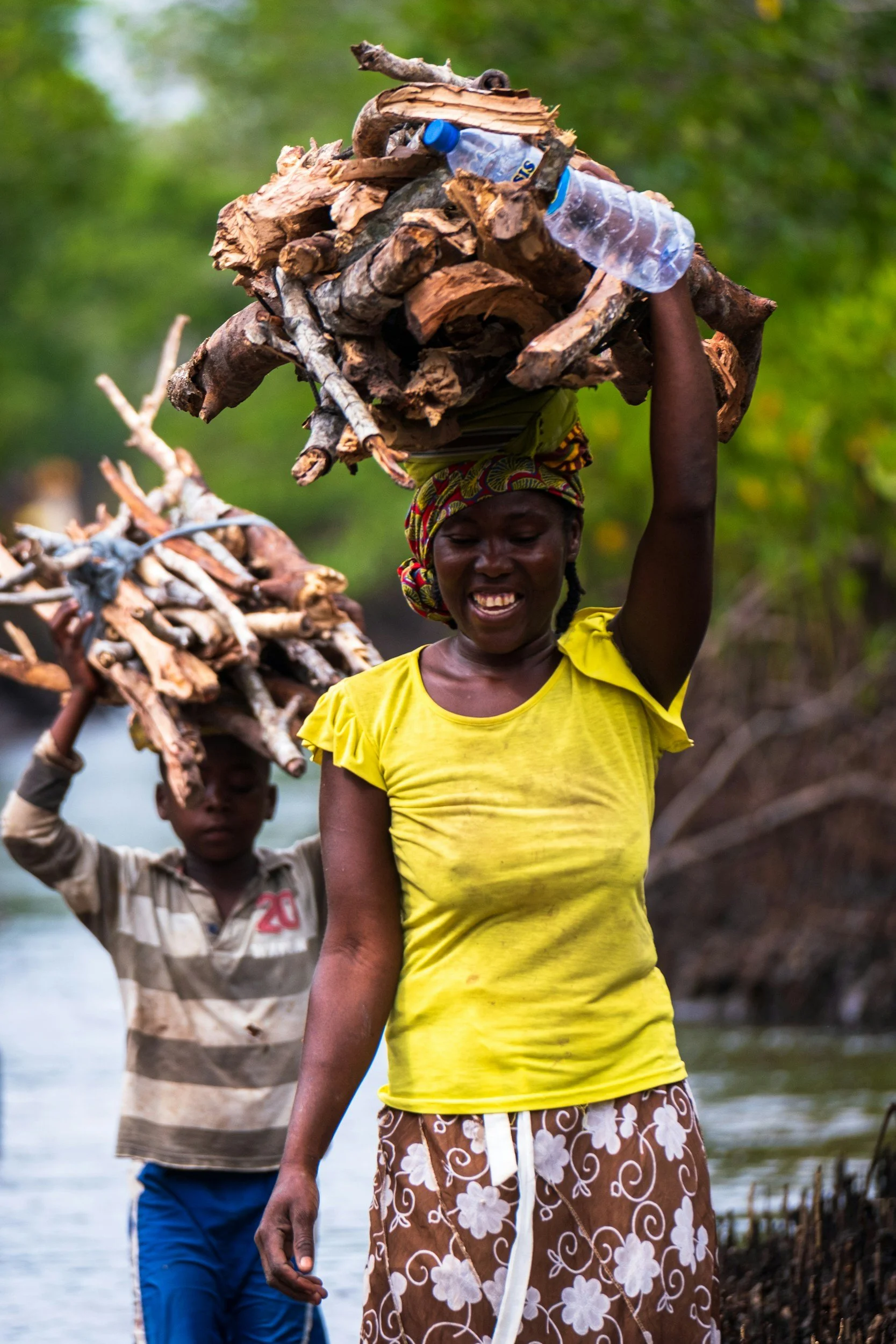
A woman and a boy carrying firewood | STOCK
Meanwhile, heavy dependence on biomass fuels leads to deforestation and environmental harm. These interconnected issues put extra pressure on already strained public health systems and social services. This makes the clean cooking crisis not just an energy issue but also a broader development challenge linked to health, gender equality, environmental protection, and social welfare.
Instead of placing long-term bets on gas-based solutions, greater attention should be directed toward truly renewable cooking technologies that can move households completely away from fossil fuels.
Replacing one temporary fix with another will not work. It will merely delay the phaseout of all fossil fuels.
Nomthandazo Mabena is a Project Assistant at Power Shift Africa