
A JUST TRANSITION FOR ADAPTATION: DISMANTLING COLONIAL AND NEOCOLONIAL STRUCTURES
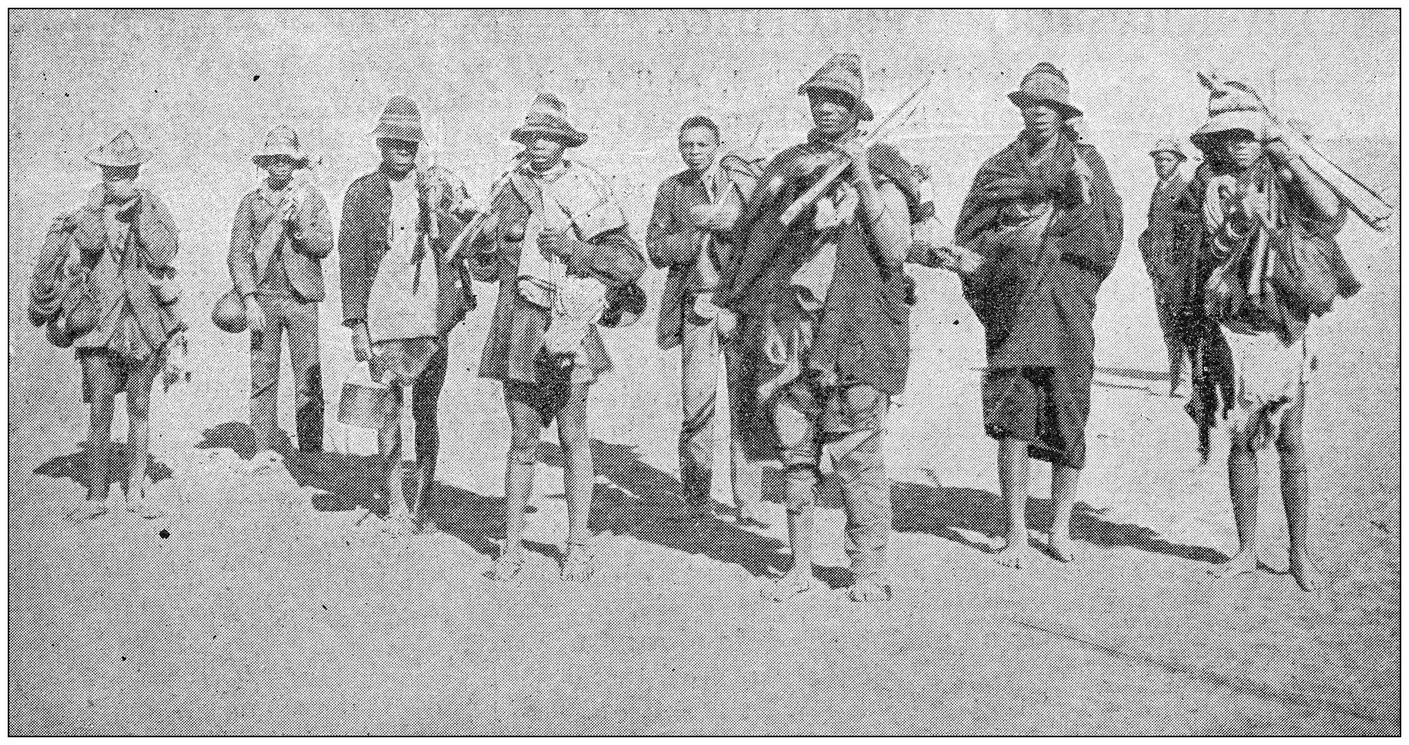
Black African miners in colonial South Africa. | STOCK
Africa’s climate vulnerability isn’t accidental. It’s structural.
New report by Power Shift Africa, A Just Transition for Adaptation, finds that decades of colonial extraction, inequality, debt and unequal global economic relationships have worsened Africans’ exposure to climate impacts.
Any rational consideration of Africa’s ability to meaningfully and justly adapt to the climate crisis, therefore, cannot ignore how the continent’s colonial past has profoundly shaped its current adaptation potential.
Africa’s colonial history is one of the injustices, characterised by colonial powers’ brutal and systematic dispossession and exploitation of African people and natural resources.
The report argues that these crimes underpinned how colonialism shaped African economies to be sites of primary resource extraction that feed European economies within the wider global economy.
They also fundamentally reordered African political, cultural, and epistemic logics by hierarchically privileging respective colonial logics, reducing most Africans to little more than labourers to be exploited.
This is also the basis of the demands for climate reparations.
The executive director of Terralex Africa, James Gondi, says the colonial project was set up to extract resources and labour through slavery from Africa and other parts of the Global South to feed the Industrial Revolution in Europe.
“These extractive endeavours have occasioned a lot of damage to Africa’s ecology that has been taking place for centuries.”
To achieve intergenerational justice for Africans, Gondi says Africa is challenging the international community ‘‘to consider reparations for ecological loss and harm to our people.’’
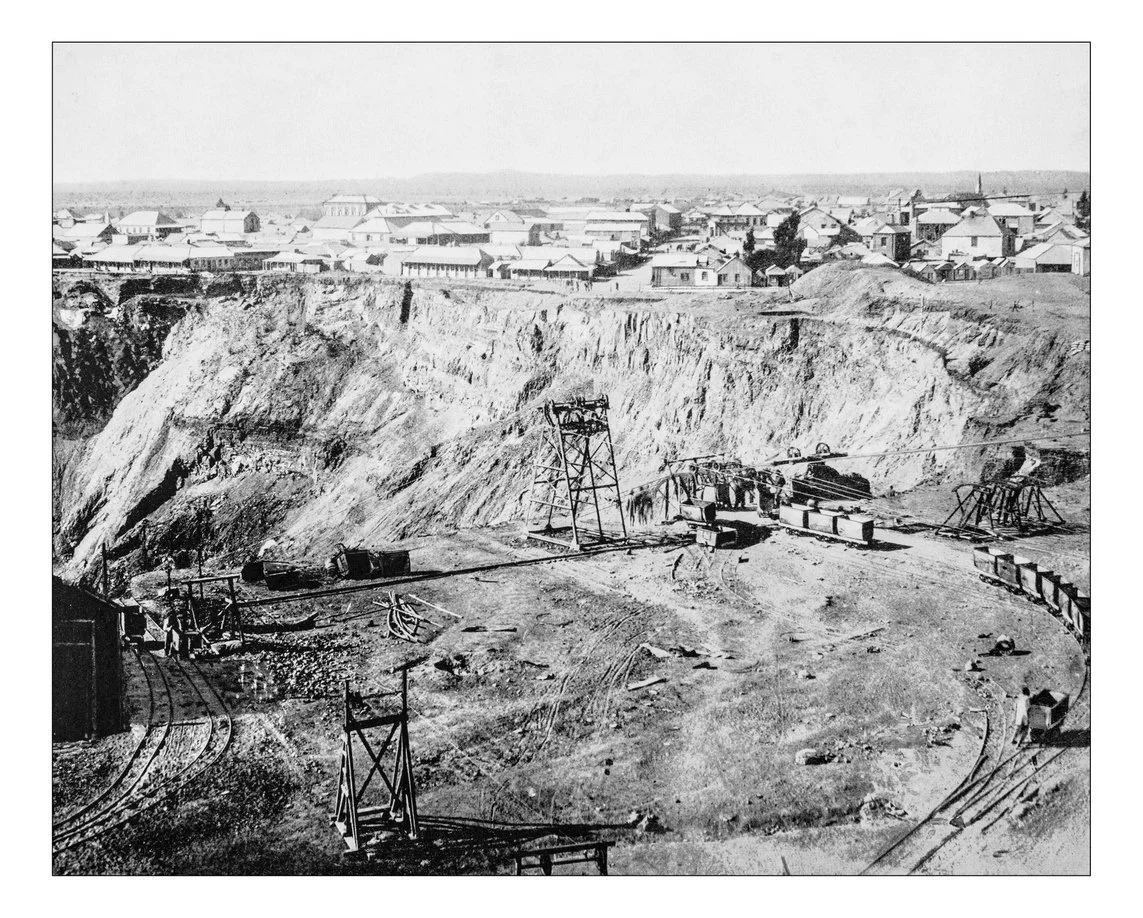
A colonial gold mine in South Africa. | STOCK
Another adaptation practitioner from West Africa interviewed for this report agrees, noting that ‘the resources that were supposed to be used to develop the continent were shipped away, including some human resources.’
Slavery and colonialism involved both the forcible removal of Africa’s material wealth and the displacement of its human potential. Only by recognising the continued impact of this dispossession and exploitation as the primary drivers of Africa’s climate vulnerabilities can new radical possibilities for transformative just adaptation policies and practices that tackle the systemic causes of vulnerability emerge.
Resource extraction and economic dependency
For both economic and political reasons, colonialism left Africa with a critical lack of infrastructure, chronic skills shortages, democratic deficits, distorted knowledge systems, and economies perversely skewed to the developed world’s narrow economic interests.
Since the wave of independence in the 1960s, these structural legacies have thwarted attempts to develop and diversify African countries’ economies.
This phenomenon has been called the ‘resource curse’ or ‘paradox of plenty,’ whereby countries with abundant natural resources but weak political institutions tend to have less inclusive economic development and growth, more inequality, and poorer governance than those without.
While this resource curse is a common feature across the continent, it’s hardly a coincidence; it exists because of interrelated issues, all of which are directly linked to colonialism’s deeply entrenched legacies.
Still, some African countries, notably South Africa, Tunisia and Morocco, have relatively diversified economies compared with the rest of the continent.
Lack of economic diversification
Resource-rich countries in Africa generally have failed to diversify their post-colonial economies, prioritising gains that come from entrenched historic patterns of extraction over longer-term, inclusive economic planning. As a result, 12 of the 20 least diversified economies globally are in Sub-Saharan Africa.
A lack of economic diversification partly explains why 33 of the 44 LDCs are in Africa.
As noted above, while a few African countries have diversified their economies further, most have failed to make any significant gains since the end of the colonial era.

A diesel engine is seen at the Nairobi Railway Museum in Nairobi. The Uganda Railway Line in Kenya and Uganda was constructed to give the British colonial government strategic, military, and political control over the source of the Nile River in Uganda. STOCK
Income, therefore, is ‘largely based on rents extracted by selling basic, low-value primary resources, and not on diverse productive sectors.
The export of primary goods remains the defining characteristic of African economies, with 45 of 54 countries dependent on agricultural, mining, and other extractive exports.
Consequently, Africa is stuck on the periphery of global economic prosperity.
Unsustainable sovereign debt
Africa is facing another debt crisis, resulting largely from deteriorating terms of trade, expensive credit terms, currency shocks, COVID-19’s impacts, and mounting climate-related loss and damage, along with adaptation costs.
The scale of this debt is immense, and debt repayments redirect funds needed for sustainable development and implementing climate mitigation and adaptation measures.
Africa’s debt is at approximately USD 746 billion, or 26 percent of the continent’s GDP. Today, Africa is paying average interest rates of 9.8 percent, compared with just 2.5 percent in the US.
In 2023, 13 percent of the total expenditure by African governments was debt service. That’s twice what was spent in 2012. Moreover, nearly 60 percent of Africa’s population now lives in countries that spend more on debt repayment than on health and education.
Elite capture
Many post-independence political elites have often redirected rents made from primary product exports to themselves and their extended political support networks. This practice severely compromises attempts to diversify economies. Yet we cannot place blame on African leaders alone, as many transnational corporations and their home governments encourage elites in African countries to agree to neo-colonial extractive deals.
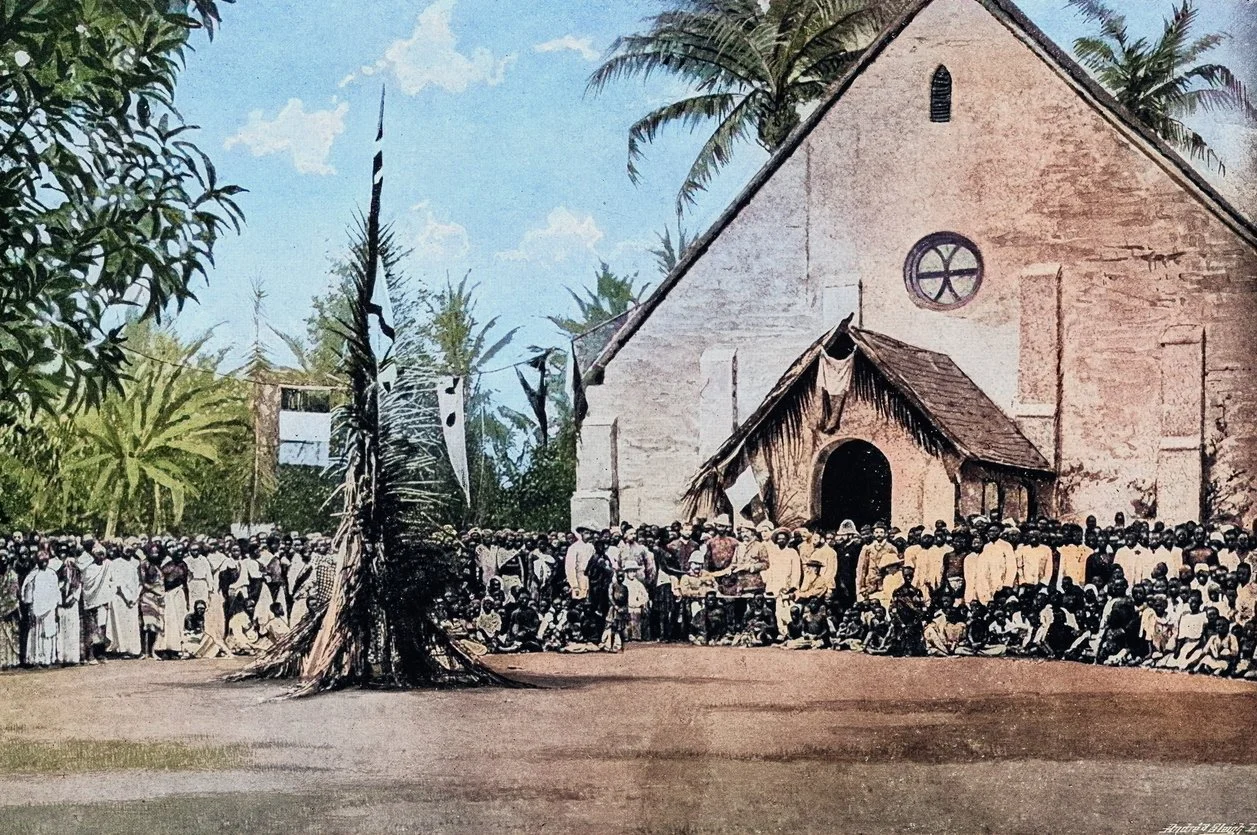
Africa is not climate-vulnerable by accident. Its high exposure to climate shocks is a result of colonialism, colonial extraction, and slavery. | STOCK
Governance: Poor institutions
Government fiscal, environmental, and social support institutions are often poorly staffed and under-resourced, and therefore unable to effectively undertake their mandates. Limited technical and financial capacities severely and chronically undermine their capacity to establish and implement long-term development plans. This is certainly a symptom of a lack of institution-building during colonialism, yet it continues to hamper African development, sometimes deliberately to facilitate rent-seeking by political elites.
This institutional dysfunction leads to policy incoherence, a lack of transparency, poor regulatory controls, and corruption – factors that hinder political investments in economic diversification and skills development.
Land grabs
Africa is at the centre of a neo-colonial scramble for land, driven by foreign companies and governments. This is reminiscent of colonial land grabs, and researchers argue that it relies on the same logic of dispossession, whereby customary systems of land use and the principles of free, prior, and informed consent (FPIC) are often ignored at local people’s expense.