Inside the Xingu Finance Talks at the World Bank, IMF Annual Meetings
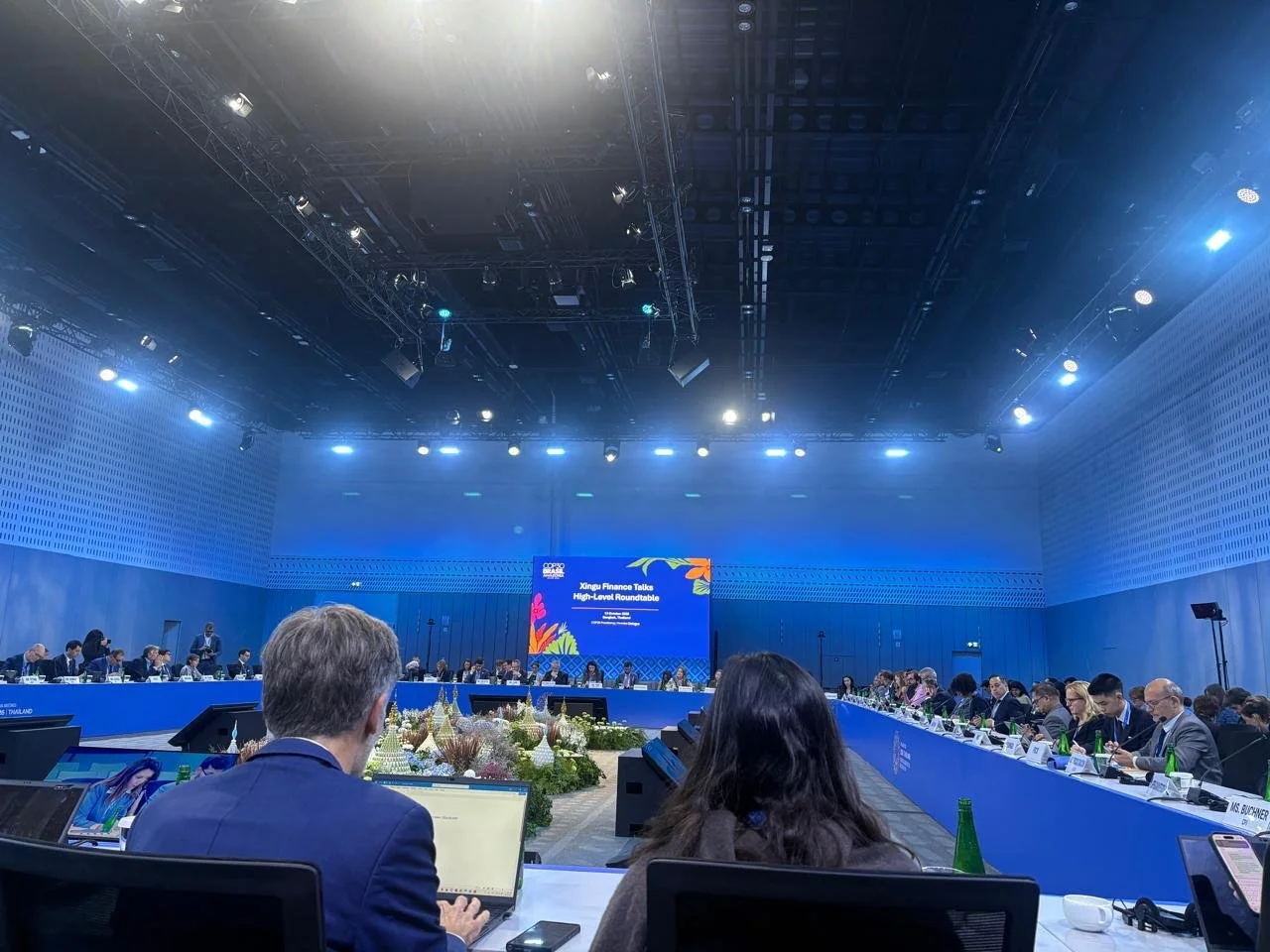
The Xingu Finance Talks were established at the COP30 climate summit in Belém, Brazil, in 2026. | PSA Media
BY MERCY JOHN
At the World Bank and IMF Annual Meetings taking place in Bangkok this week, headlines will likely centre on job creation and Artificial Intelligence as an emerging market in the global economy, two of the top themes at the event.
Yet in this forum bringing together finance ministers, central bankers, and other finance stakeholders, a newer and less familiar process in climate finance will get its first real test. That’s Xingu Finance Talks.
These talks were established at the COP30 climate summit in Belém, Brazil, last year upon the Parties’ request to the COP Presidency to convene them each year under the Veredas Dialogue. This high-level roundtable convenes governments, international financial institutions, the private sector, and academia to discuss practical solutions for aligning global financial flows with the goals of the Paris Agreement.
Article 2.1(c) of the Paris Agreement commits countries to making finance flows consistent with low-emission and climate-resilient development. Article 9.1 of the agreement spells out the obligation of developed countries to provide financial resources to developing country Parties with respect to both mitigation and adaptation, as outlined under the Convention.
This inaugural edition of the talks tackles two topics. Specifically, it addresses expanding fiscal space for climate investment and reducing the cost of capital through risk-sharing and guarantees, topics that could have been written with Africa in mind. On Sunday, a preparatory workshop was held at Chulalongkorn University while the roundtable itself took place on Tuesday, October 13.
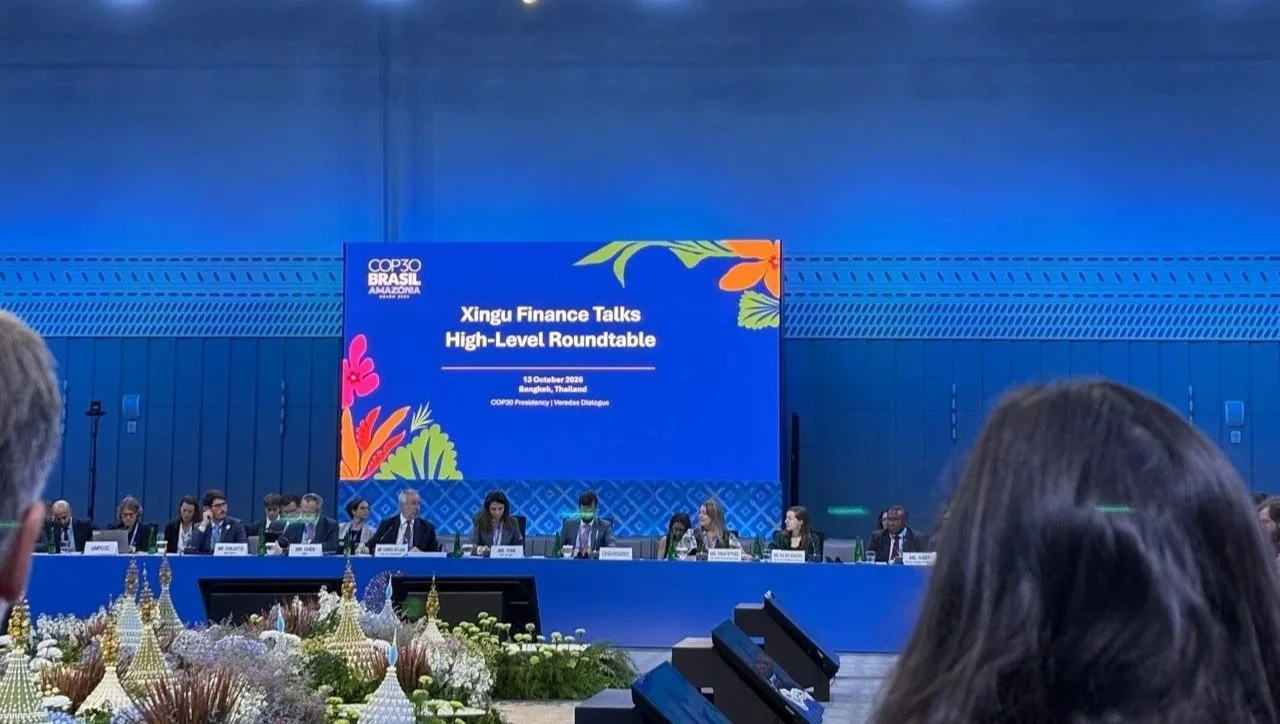
Delegates participating in the Xingu Finance Talks at the ongoing World Bank and IMF Annual Meetrings in Bangkok, Thailand. | PSA Media
Africa’s problem is not a shortage of climate ambition or projects. Rather, it’s largely the price of money. In 2024, African countries spent a record US $90 billion to service their external debt, a 2024 UN report found. This figure tells a much deeper story. Governments on the continent routinely pay far more to borrow than fundamentals justify. The ‘‘Africa risk premium’’ describes the extra cost governments and businesses on the continent pay to borrow money because international credit rating agencies perceive the region as inherently riskier than it actually is.
Africa needs more than $2.4 trillion every year by 2030 to fund climate action and resilience, according to a new report, A Just Transition for Adaptation, by Power Shift Africa. Between 2021 and 2022, however, the continent received about US$44 billion in climate finance. Other estimates show that actual flows to Africa average about $35 billion a year, with more than half of it coming as debt rather than grants. Worse still, African countries paid more than twice as much to service debt as they received in climate finance between 2021 and 2023. Climate shocks worsen countries’ debt distress and debt servicing then crowds out adaptation resources that would reduce the next shock. That puts vulnerable countries in a cycle of more debt amid rising climate impacts.
“Africa has continued to sharpen its asks, build common positions, and produce its own institutions. Now, shareholders of the international financial system must match diagnosis with action.
”
Success in Bangkok will, therefore, be measured against a short list of outcomes, including a guarantee of scale that is priced for Africa. Multilateral development banks can take on risk that private lenders will not. These talks should push for guarantee and risk-sharing instruments that are standardised, quick to access and open to African sovereigns, banks and project developers. Bespoke deals available to only a handful of well-advised borrowers can’t work for Africa.
Critics argue that standard debt sustainability analytics ignore climate and development investment needs, understating the risk to vulnerable economies. If these talks are about fiscal space, they should say plainly how lenders and the IMF treat resilience spending.
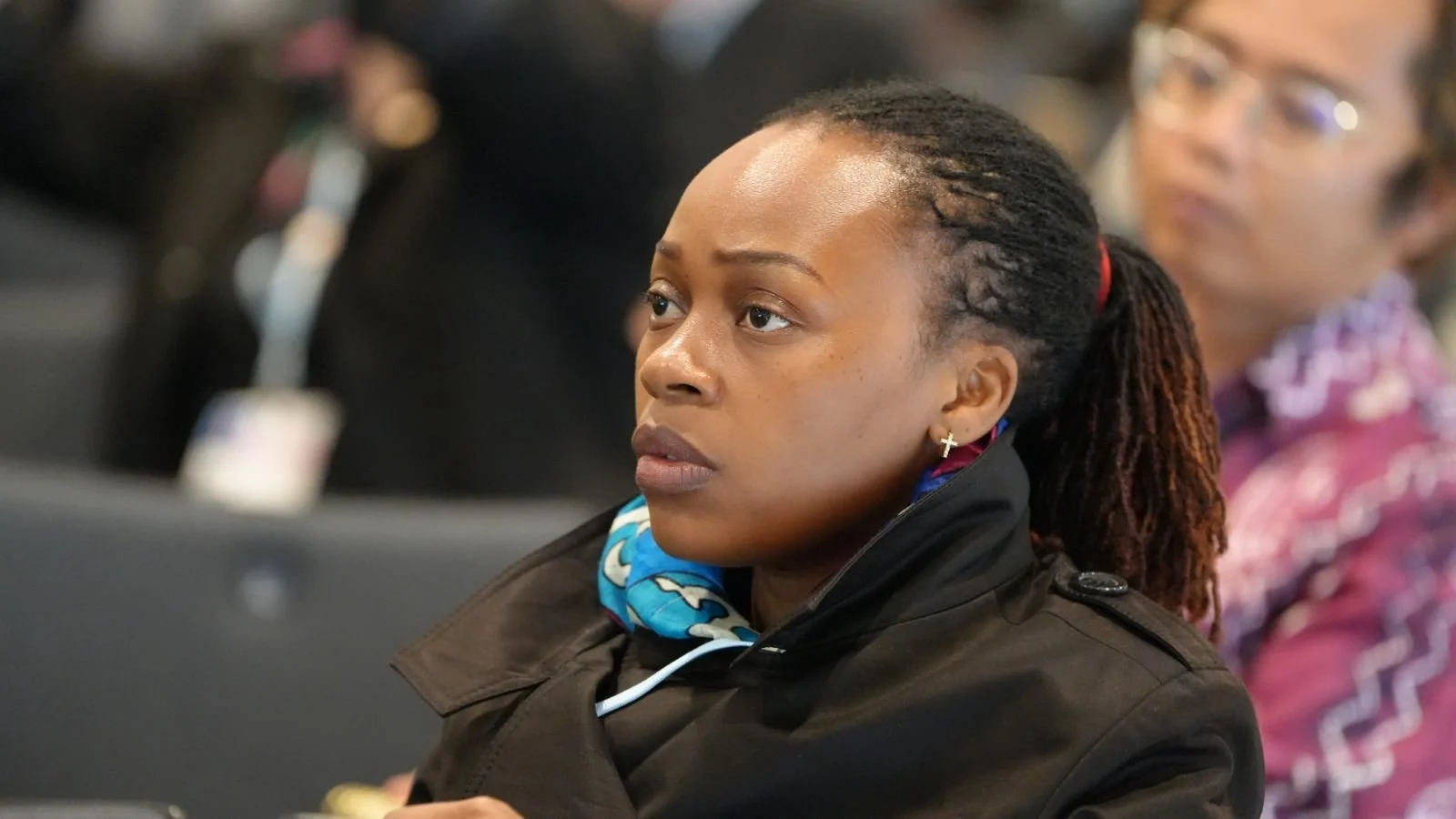
Powe Shift Africa climate finance fellow, Mercy John, is attending the World Bank and IMF Annual Meetings in Bangkok, Thailand. | PSA Media
Africa recently launched its own credit rating agency, signalling that the continent no longer accepts being priced as a single risk. In Bangkok, delegates should welcome such efforts and press for better data and methodologies that distinguish countries based on their creditworthiness and, consequently, level of risk.
The COP30 Presidency has an opportunity to carry specific, trackable proposals from Bangkok into the COP31 negotiations. A credible result would include named instruments, named institutions, timelines, and a way to report back at next year’s edition of the talks.
The Xingu Finance Talks are meant to connect the climate process with the institutions that move money. Bangkok should be remembered as the place where that link was made real. For Africa, there’s a real chance to turn a protracted grievance into money and action. These talks cannot become simply another well-meaning conversation. If MDBs can’t lower the cost of borrowing and widen fiscal space for the world’s most climate-exposed continent, they will have slept on the job.
Mercy John is a Climate finance fellow at Power Shift Africa