LIVE BLOG: SB64, Bonn
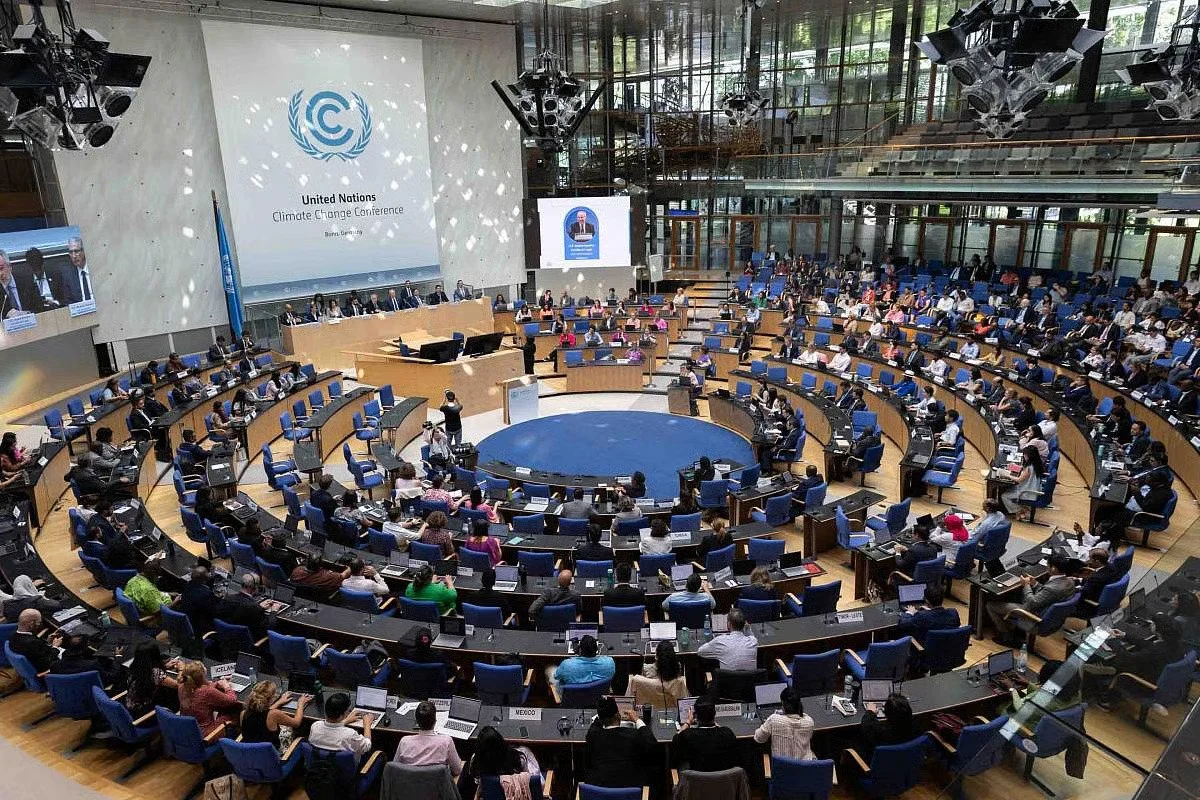
SB64 began in Bonn, Germany, on Monday, June 8, 2026
Welcome to our daily blog for SB64
For the next two weeks, climate negotiators meeting in Bonn, Germany, will pore over various issues to define the agenda for COP31 in Antalya, Turkey, in November.
In this blog, Power Shift Africa will track negotiations, highlight the contentions, and analyse outcomes and their implications for climate justice.
The blog will be updated daily. Follow us on social media for more.
-
Welcome to the final day of the Bonn Climate Conference.
The SB64 summit has, in the typical fashion of the annual June Climate Meetings, exposed the deep-seated differences between climate-vulnerable and rich nations.
So, what should we expect today? Well, several things to watch out for.
From a marathon of negotiation sessions that could spill over past the official close time, charged informal huddles, a closing plenary where draft decisions are gavelled through, and guidance on the way forward towards COP31, this is going to be a day of high drama. As well it might.
Climate finance is unresolved. GGA remains an open case. Trade measures have heightened divisions. And trust between the Parties has once again taken a beating. There’s what Bonn 2026 got done, and there’s what must surely head to COP31.
The last day of the summit is also the toughest for the chairs and co-facilitators of different negotiation tracks, as they try to bridge gaps in viewpoints between developed and developing countries.
Just Transition, finance, and transparency were expected to be a major test for #SB64, with many hoping it could adopt stronger language on these issues. That hasn’t happened. Expect one last push today, including on the Mitigation Work programme and Capacity-building.
On the Global Goal on Adaptation, where finance was a point of departure between developed and developing countries, facilitators may consult the chairs on the way forward, if a final agreement is a long shot. The former appears more likely.
Reporting requirements have been a touchy subject at #SB64, with developing countries demanding support. So far, some negotiating blocs have disagreed with procedural conclusions. As such, the debate will continue at COP31 in Antalya in November.
Last year’s COP30 was all about implementation, and the world is now smack in the delivery phase. Being the first major climate summit since Belém, eyes have been on Bonn to monitor whether it would promote the spirit of implementation.
Already, some developed countries have objected to the proposal to include the roadmap to transition away from fossil fuels (TAFF) in the UN negotiation text, saying there’s an opportunity to ‘‘keep talking’’.
Bonn is a technical stage of the climate calendar. It isn’t a decision-making or deal-signing arena like COP. What will happen, though, is that Parties must agree on the conclusions and recommendations that shape COP31 later in the year.
Should there be a deadlock, text on the various themes will still go forward, either as informal notes or with brackets and options.
Stay with us for updates and analyses.
-
Today is the 9th day of the Bonn Climate Conference.
That means we’re two days away from the conclusion of SB64. It also means discussions are crescendoing. Except there’s a snag. Several snags, really.
With the finishing line in sight, delegates are grappling with political stalemates and tense negotiations across multiple themes.
Divisions between Parties have escalated over climate finance, with the main points of departure being the scale, obligations, and implementation. Progress has stalled over the ‘‘Baku to Belém Roadmap’’ and the Adaptation Fund.
Where’s the money?
Developing nations and civil society groups are frustrated over the lack of concrete funding figures and accuse developed countries of walking back on their public finance commitments.
With the United States having withdrawn from the Paris Agreement and other commitments under the UNFCCC, this has meant less funding for climate action.
Meanwhile, countries in Europe are slashing their aid budgets and directing more resources to their militaries.
Africa argues that the money coming to the continent arrives in the form of loans and, often, doesn’t reach climate-vulnerable communities.
On Tuesday, the African Group of Negotiators noted that developed countries had resisted engaging on the tripling of adaptation finance agreed at COP 30.
‘‘It is unacceptable that this hard-won commitment is at risk of being erased from the conclusions of the current session,’’ said AGN Chair, Nana Dr Antwi-Boasiako Amoah at a press conference.
Dr Antwi added that the transitional arrangements for the Article 6.4 mechanism were being held hostage to ‘‘unresolved debates on terminology and board composition,’’ terming the approach as ‘‘fundamentally misguided.’’
Trade Measures
On Climate and Trade, the G77 and developing nations have raised concerns that climate-linked trade measures, such as the European Union’s Carbon Border Adjustment Mechanism (CBAM), could create unfair burdens for their economies.
Developing nations highlight reporting requirements, certification, and traceability as some of the challenges of these measures. They also cite market access, cross-border impacts, competitiveness, and increased cost of imports and exports as a hindrance to their fair and effective implementation.
They have continued to push for equity and transparency to cushion themselves from the challenges of the trade measures.
Fossil fuels and the slippery ground of the push to transition
The debate on the transition from fossil fuels continued to elicit strong emotions at SB64. Parties have been debating how to integrate a global roadmap to cut fossil fuels into the formal UNFCCC process. This proposal has drawn sharp objections from some fossil-fuel-producing nations, notably Saudi Arabia and Russia.
The roadmap to transition away from fossil fuels is being spearheaded by the Brazilian COP30 presidency.
Global Goal on Adaptation
Discussions on the Global Goal on Adaptation (GGA) have been an intense battleground at the Bonn Climate Conference. Last week, the informal consultation sessions on the GGA struck a dead end after Parties failed to agree on multiple elements, from language to figures, process, and the constitution of a task force for refining the indicators.
At the same time, developing nation blocs, including the AGN, strongly demanded that the commitment to triple adaptation finance be firmly featured in the negotiation text, rather than being merely a technical or voluntary indicator.
-
Welcome to the final week of the Bonn Climate Conference.
After yesterday’s break, talks have resumed this morning, with negotiations on most items still steeped in sharp divisions and tension.
The final week at the midyear climate summit typically features highly political, make-or-break negotiation tracks, and, for the next few days, delegates will be scrambling to reach a consensus, or compromise, on climate finance, fossil fuels, GGA, and trade measures.
Below are some of the themes likely to generate the most heat.Climate Finance
This is the week when the rubber finally meets the road on climate finance.Throughout the week last week, developing countries pushed industrialised nations on the ‘‘Baku to Belém Roadmap’’ and Article 9.1 commitments.
Specifically, they expressed alarm at the growing shortfall in climate finance provisions, especially for adaptation. They want dedicated, grant-based adaptation funding rather than debt-increasing loans.
Just Transition and the Belém Action Mechanism (BAM)
Negotiators are racing to conclude the operational design of the BAM, a key tool for driving practical, sector-wide shifts away from fossil fuels.Last week, developed and developing countries disagreed on the modalities of implementing the just transition and the provision of the resources for this implementation, especially for climate-vulnerable and poor countries moving away from fossil fuels.
Global Goal on Adaptation (GGA)
Sharp divergences emerged between the Parties last weekend over financing, language, process, and the constitution of a technical task force charged with refining the metrics, methodologies, and metadata required to operationalise the indicators agreed in Belem.
Developing nations don’t want the indicators to burden them with reporting demands. Unless, of course, money is coming with them.To them, the indicators must strictly track the delivery of finance under the Paris Agreement.
Trade Measures
This week, negotiations among Parties will heavily focus on the fairness and implications of unilateral climate-related trade measures, such as the European Union’s Carbon Border Adjustment Mechanism (CBAM).Developing countries are advocating for guarantees for open trade and fair technology transfer to address the structural inequities of unilateral trade policies of their developed counterparts.
Second Global Stocktake (GST2)
This week, negotiators will continue to gather information and work on the framework for the second Global Stocktake, expected to launch at COP31.Delegates will review lessons from the first GST and ways countries can reflect GST findings in their national climate plans in both adaptation and mitigation, as the world seeks to transition to a more climate-compatible future
-
BREAK
Today is rest day at SB64. Our blog will take a break today and resume tomorrow.
-
WEEK ONE ROUNDUP
We’re midway through the Bonn climate talks, and what a week it’s been.
Intense negotiations on process, finance, transparency, targets, and implementation pathways of existing commitments dominated the week that also saw the incoming COP31 presidency launch the agenda for the summit in November.
Our analysis of that later.
Traditionally, events in Week One set the tone of what to expect during the second week of the conference.
From the hardlines and frenzy that characterised this week, it’s hardly difficult to predict heated negotiations, pushback, and compromises in the final week of the negotiations.
Below, we reflect on the week that was at the midyear climate summit, and what that could mean for Week Two.
Roadmap to transition away from fossil fuels
The fierce COP30 clash between world nations over the proposed global roadmap on transitioning away from fossil fuels replayed in Bonn. As some countries demanded ‘‘continuing conversations’’ on the roadmap, others pushed to have it included in the official UN climate negotiation text.
The roadmap, proposed at COP30 by the host Brazil, has faced intense objections from Saudi Arabia, Russia, and other major oil-producing countries. It is expected to be ready in November in time for COP31, and will feature outcomes from the First International Conference on Transitioning Away from Fossil Fuels, held in April in Santa Marta, Colombia.
Roadmap to 1.3 T
Negotiations centered on operationalising the Baku to Belém Roadmap to 1.3T and addressing systemic bottlenecks in mobilising these resources. At COP29, developed nations agreed to provide $300 million in climate finance to developing countries. World nations would also create a roadmap to raise $1.3 trillion in climate finance annually by 2035.
In Bonn, the debate saw developing nations led by the G-77 and the African Group of Negotiators (AGN) blocs) protest delays in providing this finance. They continued to demand the delivery of predictable, grant-based finance, while clashing with their developed counterparts over the structural inequities in funding for climate action.
Who will blink first?
Global Climate Action Agenda
On Tuesday, the COP31 Presidency officially launched its Global Climate Action Agenda with a heavy focus on global electrification, waste reduction, and resilient city initiatives. Türkiye and Australia are the joint hosts of COP31, which will be held in the coastal city of Antalya in November. The duo seeks to push for the expansion of electricity to meet at least 35 percent of the global energy demand by 2035.
The initiative is, however, voluntary.
Just Transition Work Programme
This was always going to be a key battleground at the June Meetings. As soon as the negotiations started, Parties clashed over the procedural mechanisms required to make the newly established just transition framework operational. Countries could not agree on ways to track energy access, skills development, and economic transformation for communities, or how to finance them.
Still, developing countries pushed to have indigenous knowledge integrated into global climate interventions.
Global Goal on Adaptation (GGA)
Discussions focused on advancing work on the 59 GGA indicators agreed at COP30, and evaluating the data for measuring and tracking global adaptation progress. A primary point of debate was how to connect these targets directly to climate finance and adaptation delivery.
In Bonn, countries debated the structural inadequacies of adaptation finance, with developing nations pushing for clear baselines and transparent delivery plans to ensure funding is adequate, grant-based, and directly accessible by vulnerable communities.
Loss and Damage
The highlight of these negotiations was Kenya, which became the first African nation, and only the second globally after Vanuatu, to secure a technical assistance package worth USD 700,000 (KES 90 million) from the Santiago Network on Loss and Damage. This money will fund a comprehensive national climate impact assessment for losses and damages experienced in the country over the past decade.
Delegates pushed for the Santiago Network to prioritise demand-driven technical assistance so developing countries can build the structural capabilities required to apply for support. Throughout the week, civil society and developing nations advocated for a regular, formalised Loss and Damage gap report to properly quantify economic and non-economic losses of climate change.
Now operational, the Loss and Damage Fund suffers from low capitalisation. Climate-vulnerable nations, notably those under the African Group, pushed for increased financial contributions and innovative revenue sources to feed into the fund. So far, $822 million has been pledged to the fund, with only about $500 million delivered.
On Monday, we begin the countdown to the outcomes of SB64.
-
On Day 5 of the Bonn Climate Conference, the negotiations went into overdrive.
As Week One of SB64 nears its end, sharp divisions on various issues are now playing out as the summit enters its most decisive period.
On Friday, Parties clashed over the future of fossil fuels, with the global phaseout proposal at the centre of the contest.
Yet it’s on the money front where the negotiations were more frenzied. As Parties debate the Global Goal on Adaptation, developing nations and civil society voices are pushing rich countries to table credible plans for scaled-up adaptation finance.
Climate Finance
At a COP29 and 30 Presidency meeting on the implementation of the Baku to Belém Roadmap to 1.3 on Thursday, UN climate chief Simon Stiell told delegates that, being ‘‘an era of implementation’’ it’s finance that will drive it forward.
“Finance is essential for a truly global transition. For turning plans into projects,’’ Stiell said.
But that conversation faces heavy headwinds, with wealthy nations disinclined to commit to providing more finance.
Experts argue that this resource gap is deliberate.‘‘The climate finance challenge is no longer a shortage of money but a financial system that continues to price developing countries as too risky,’’says Mercy John, the Climate Finance Fellow at Power Shift Africa.
‘‘Climate finance is not a capital problem. It is a risk allocation problem,’’ Ms John adds.
At COP29 in Baku, Azerbaijan, countries agreed to scale up climate finance to $1.3 trillion by 2035.‘‘We need real political backing to deliver on the Roadmap. Including through other international fora,’’ Stiell noted.
This comes even as the risk of devastation in climate-vulnerable countries grows.
Looming El Niño
It’s now inevitable. The ‘‘super’’ El Niño is coming, and with it, potentially disastrous consequences around the world. Indeed, American scientists at the National Oceanic and Atmospheric Administration (NOAA) say the phenomenon that could go on until November has already begun.
‘‘El Niño is a natural climate pattern, but there is nothing natural about what happens when it collides with a planet already superheated by fossil fuel emissions,’’ says Mohamed Adow, the Director of Power Shift Africa.
Mohamed warns about the danger of treating every new climate record as just another headline. ‘‘We must instead aim for faster emissions cuts, greater investment in adaptation, and far more support for countries on the frontlines of climate impacts.’’
Roadmap on transitioning from fossil fuels
The fierce COP30 clash between world nations over the proposed global roadmap on transitioning away from fossil fuels is replaying in Bonn, as some demand ‘‘continuing conversations’’ while others push for its inclusion in the official UN climate negotiation text.
The roadmap, proposed at COP30 by the host Brazil, has faced intense objections from major oil-producing countries, including Saudi Arabia and Russia. Despite garnering initial endorsement from more than 80 nations in Belem, the proposal failed to sail through. Not even Brazil’s promise to develop a voluntary roadmap has softened oil and gas-dependent countries, as it remains on shaky ground.
Don’t you dare!
The roadmap is expected to be ready in November in time for COP31, and will feature outcomes from the First International Conference on Transitioning Away from Fossil Fuels, held in April in Santa Marta, Colombia.
Now, some countries want the roadmap to formally enter negotiations, a move that is certain to be resisted by producers and exporters. Russia has drawn the line on the issue, asking that no reference is made to the roadmap.
Countries, including Brazil, are already developing their national roadmaps, and civil society organisations now want the COP31 Presidency of Turkey and Australia to lead by example by developing theirs.
Did you know that more than 30 percent of Turkey’s electricity comes from coal? Meanwhile, Australia is the third-largest fossil fuel (coal and natural gas) exporter after Russia and the US.
Just Transition
On Friday, negotiators held advanced discussions on operationalising the UAE Just Transition Work Programme, even as developing nations and civil society continued to demand finance to implement it. At COP30 last year, world nations agreed to establish the Just Transition Mechanism, known formally as the Belem Action Mechanism (BAM). In Bonn, Parties are discussing the design of BAM and ways to operationalise it.
Negotiators have been exploring ways to integrate it into existing initiatives and institutions, with barriers to equitable transitions in vulnerable countries being a major fault line in the talks.
Process. Process. Process.
Throughout the week, Parties have locked horns over the agenda and text, stalling negotiations. At stake is COP31 in Antalya, whose substance hinges on the outcomes from Bonn. Unlike at SB62 when Parities failed to agree on the agenda for two days, putting negotiations on a slippery path, the agenda at SB64 was adopted on the first day of the summit. That, however, has not prevented a fallout between developed and developing countries. These diversions could set the stage for a dramatic second week of the conference, with the possibility of protracted talks.
Last year, negotiations on adaptation indicators under the Global Goal on Adaptation went down to the wire, lasting seven hours before Parties could reach consensus. Parties continued to debate late into the night, hours after the closing ceremony.
That’s a situation experts will be hoping to avoid. But that can’t be guaranteed, unless common ground is found soon.
Building consensus
Typically, no major binding treaties are finalised in the midyear climate talks in Bonn as the conference serves only as a technical preparatory milestone where Parties agree on the agenda for the next COP.
In the next few days, negotiators from different blocs must define clear political landing zones that will translate the commitments of COP30 in Belém and the priorities of the upcoming COP31 in Turkey into not just actionable and trackable policies, but also the finance to drive that action.
What does the weekend hold for the Bonn climate talks?
Follow us on social media for more updates.
-
Week One of the Bonn Climate Conference is rolling towards the end, and Day 4 showed glimpses of some of the contests that could define Week Two as the negotiators race against the clock to agree on an outcome.
There was plenty to look forward to on the implementation front, with dialogue on ocean and climate change, women in renewable energy, and consultations on some of the big subjects at the summit, the Global Goal on Adaptation and Just Transition Work Programme, and resources for infrastructure development.
The implementation of the Baku to Belem Roadmap to $1.3 trillion in climate finance was one to watch, as were discussions on climate change and global health, and ways to strengthen the global ecosystem for the implementation of National Adaptation Plans (NAPs).
Below, we take a deep dive into some of the hotly contested areas so far.
BONN BRIEFING, June 2026
Processes, platforms, and politics at first Baku Adaptation Roadmap workshop
The first workshop under the Baku Adaptation Roadmap (BAR) took place on Tuesday, June 09, 2026, bringing together Parties and institutions to discuss how the global adaptation architecture can better support implementation of the UAE Framework for Global Climate Resilience and the Global Goal on Adaptation (GGA).
The workshop forms part of the process established at COP29 in Baku to advance adaptation work and strengthen the implementation of adaptation actions under the Paris Agreement.
Discussions focused on three broad themes: improving coherence across the adaptation architecture, accelerating the shift from adaptation planning to implementation, and addressing means of implementation, including finance, technology transfer, and capacity-building.
The meeting provided an important opportunity to take stock of how adaptation institutions have evolved over more than three decades of climate negotiations.
Participants heard presentations from the UNFCCC Adaptation Division, the Adaptation Committee (AC), the Least Developed Countries Expert Group (LEG), and the Consultative Group of Experts (CGE).
The afternoon session featured presentations from the Adaptation Fund (AF), Green Climate Fund (GCF) and Global Environment Facility (GEF) on their efforts to align their work with the Global Goal on Adaptation and support implementation of the UAE Framework.
While the workshop demonstrated broad recognition of the urgent need to scale adaptation action, it also exposed significant tensions around finance, institutional arrangements, and the future direction of adaptation governance under the UNFCCC.
Process concerns overshadow opening discussions
A notable feature of the workshop was the number of concerns raised regarding process and transparency.
Several Parties, including Japan, the United Kingdom, Canada, Norway, the Least Developed Countries (LDC) Group, and the African Group of Negotiators (AGN), criticised the late publication of the revised concept note for the workshop.
Delegations argued that the short notice undermined transparency, predictability, and meaningful participation, particularly for smaller delegations with limited capacity.
They requested that future workshop documents be circulated at least two weeks in advance to allow adequate preparation and consultation.
Sources indicated that underlying these concerns were broader disagreements that had emerged during preparations for the workshop. Several negotiating groups, including the AGN, Like-Minded Developing Countries (LMDCs), and the Arab Group, raised concerns with earlier versions of the concept note, questioning references to potential “reform” of the adaptation architecture and arguing that restructuring adaptation institutions falls outside the mandate of the Baku Adaptation Roadmap process.
Concerns were also raised regarding what some Parties viewed as an overly narrow treatment of means of implementation, particularly adaptation finance. These disagreements appear to have contributed to the revisions of both the concept note and the informal note guiding the workshop process.
Consensus on the need to deliver adaptation
Despite procedural disagreements, the workshop revealed substantial convergence across negotiating groups on the fact that adaptation implementation remains the weakest link in the global adaptation effort.
‘‘For Africa, adaptation is critical. It’s the pillar on which climate justice meets everyday realities,’’ says Senior Climate Advisor at Power Shift Africa, Amos Wemanya.
READ: Romance without finance: https://bit.ly/4xnVi2R
Representatives from developed and developing countries alike acknowledged that significant progress had been made in building adaptation institutions, developing national adaptation plans, and creating technical support mechanisms.
However, many said these efforts have yet to translate into sufficient action on the ground for vulnerable communities.
Across groups, including the G77 and China, LDCs, AOSIS, AGN, and the European Union, there was broad agreement that the focus should now shift from planning and reporting towards implementation.
Participants pointed to the gap between growing adaptation needs and the pace at which support reaches countries and communities facing climate impacts, amplifying a growing frustration that adaptation negotiations continue to generate reports, submissions, and frameworks while implementation remains underfunded and uneven.
Seeking coherence instead of restructuring
Another area of broad agreement concerned the need for greater coherence across the adaptation architecture. Parties generally supported efforts to improve coordination between existing institutions and mechanisms, but many developing countries strongly opposed any suggestion that the process should revisit mandates or restructure existing bodies.
A recurring message from developing country groups was that adaptation institutions such as the Adaptation Committee, the Least Developed Countries Expert Group, and other established mechanisms were created through difficult political negotiations and should not be reopened under the banner of efficiency or reform.
Instead, Parties called for better coordination, stronger collaboration, and more effective use of existing mandates to support implementation.
Push for direct access and country platforms
Perhaps the strongest area of consensus concerned the difficulties faced by vulnerable countries in accessing adaptation finance. Delegations from LDCs, Small Island Developing States (SIDS), and African countries spoke of persistent barriers, including fragmented funding arrangements, burdensome accreditation requirements, complex application processes, and co-financing demands that many countries struggle to meet.
Participants argued that countries are dedicating disproportionate resources to navigating funding systems rather than implementing adaptation projects.
Weighing on the finance tussle at the summit after attending the Veredas Dialogue, Mercy John noted that the climate finance challenge is no longer a shortage of money, but a financial system that continues to price developing countries as too risky.
‘‘Climate finance is not a capital problem. It is a risk allocation problem,’’ said the Climate Fellow at Power Shift Africa.
There was particularly strong support for expanding direct access modalities, with many Parties identifying the Adaptation Fund as an important model that should be strengthened and replicated across other climate finance institutions.
Several delegations also advocated for programmatic and country-platform approaches capable of delivering adaptation at scale, rather than relying primarily on isolated project-based interventions.
The way we see it: Political divides could hamper the process
While consensus emerged on implementation challenges, several substantive disagreements surfaced during discussions. One fault line concerned the relationship between adaptation planning and global temperature increases.
Small island states and other highly vulnerable countries argued that adaptation frameworks should remain anchored to the 1.5°C temperature goal, warning against normalising scenarios in which global warming exceeds that threshold.
More concerns and divergences
Some participants expressed concern that adaptation discussions should not become a substitute for urgent mitigation action. But other groups, including the Arab Group, argued that adaptation effectiveness should be assessed across different warming scenarios and temperature pathways.
Differences also emerged regarding the role of private finance.
Developed countries generally advocated greater engagement of the private sector and increased use of blended finance approaches to support adaptation investment, but developing countries challenged this approach, arguing that adaptation generates public benefits rather than financial returns. It, therefore, cannot rely on market-based investment models.
They further argued that adaptation remains a public responsibility that requires predictable public finance from developed countries.
Disagreement also persisted regarding the scope of finance discussions under the Baku Adaptation Roadmap itself. While some developed countries cautioned against duplicating the work of existing finance bodies under the Convention, developing countries insisted that finance should remain a central and substantive component of future BAR discussions.
IPCC Report Updates
The IPCC used the June Meetings to update Parties on the progress of the upcoming Seventh Assessment Cycle, whose initial findings on climate change and cities are due early next year.
The scientific body also presented its findings from a February workshop on engaging diverse knowledge systems.
The workshop aimed to include Indigenous, local, and practitioner knowledge in climate assessments. It emphasised ethical engagement, capacity building, and procedural reforms.
It recommends expanding the pool of nominees, creating support mechanisms, and developing guidelines to ensure the equitable, inclusive, and effective integration of multiple knowledge systems into its future assessments.
Meanwhile, the UNFCCC held a forum on the implementation of the Paris Agreement, focusing on transparency and science as tools for influencing climate policy.
-
It’s Day 3 of the Bonn Climate Conference and, already, there’s a sense the rubber is starting to meet the road. That difficult but vital conversations about the future of humanity and the planet are happening is undeniable.
From fossil fuels to climate finance and the push to end the historical extraction of vulnerable communities, #SB64 is now in full swing.
But first, a peek at what was on the menu on the third day.
The day kicked off with several informal discussions, mandated events, and high-level meetings and side events between Parties and non-state actors. Another round of informal consultations featured discussions on the host of the Climate Technology Centre (CTC), capacity building, and the UAE Work Programme on Just Transition.
In many ways, however, the just transition debate took centre stage throughout the day.
Fossil Fuels
They are, inevitably, a big topic at this Bonn meeting - the biggest topic at every climate meet. Observers say the negotiations at SB64 will be the ‘‘first major test’’ of whether momentum from Santa Marta can begin to shape the formal UNFCCC process.
In April, Colombia and the Netherlands hosted the First International Conference on Transitioning Away from Fossil Fuels in Santa Marta, a meeting attended by 60 countries, to address ways to phase out fossil fuels.
The test for Bonn is whether, through discussions on transparency, just transition, finance, the second global stocktake, and Presidency-led work on implementation, the momentum to end the era of fossil fuels can be sustained.
But even as this momentum grows, civil society groups are demanding that governments move from political recognition to implementation.
COP31 Presidency Meeting Observers
The COP President-designate (Turkey and Australia) held a forum with observer groups, including civil society actors, to discuss their action agenda and lay the technical groundwork for the COP31 summit in Antalya.
We had earlier reported that expanding global electrification sits at the top of the presidency’s Global Climate Action Agenda, launched on Tuesday. Turkey is rallying world nations to join a voluntary push to increase electricity’s share of global energy demand to 35 percent by 2035.
‘‘The target is a welcome step,’’ reacted CAN International, and warned, ‘‘but it will only succeed if countries receive the finance, technology, and support needed to make electrification and the transition away from fossil fuels a reality.’’
This comes as conflict in the Middle East continues to destabilise the global energy market, with many oil-importing countries in Africa and elsewhere facing price spikes and supply shortages.
READ: Middle East Conflict is Africa’s wake-up call on oil
Electrification is one of the key priorities for COP31, as a path out of dependence on fossil fuel price volatility.
To Simon Stiell, the global economy is shifting faster than most people think, through climate cooperation and hard, cold economic reality.
The UN climate chief reiterated that renewables are cheaper while ‘‘fossil fuel pollution is baking our planet’’ and driving a global cost crisis.
‘‘Electrification will drive innovation as more countries build and scale their efforts, seeding new industries, while saving billions on imported fuels and creating countless new jobs,’’ says Stiell.
Voluntary initiative
Turkey argues that raising electricity’s share of global energy demand from 20 percent to 35 percent by 2035 could accelerate the transition from fossil fuels to clean energy.
To this end, the country is working ‘‘to build a strong global coalition’’ for this voluntary ambition that doesn’t require approval by Parties to the Paris Agreement.
Being the ‘‘Just Transition Day’’, a cross-constituency of trade unions, Indigenous Peoples, women and gender groups, youth, and climate justice movements held a press conference to push for implementation.
Here is what was said:
Labour rights and just transition
Bert De Wel of the International Trade Union Confederation (ITUC) said that freedom of association and collective bargaining are ‘‘fundamental rights’’ that define the role of trade unions.
‘‘We have spent years talking about just transition; now we need to start implementing it,’’ said De Wel.
To him, climate action and human rights cannot be separated.
‘‘How can we address the impacts of climate change if workers are being arrested for exercising their fundamental rights?’’
Women and Gender in Just Transition
Gina Cortés Valderrama of Women and Gender Constituency said communities do not need ‘‘another endless round of consultations’’ but urgent action.
‘‘Mandates without mechanisms are empty... We cannot talk about just transition without examining the economic systems that underpin the crisis. Too many of these systems remain colonial, militarised and dependent on expanding extractivism,’’ Valderrama shot.
An Indigenous Peoples-centred Just Transition
A just transition must include a transition away from extractivism, according to Andrea Carmen from the Indigenous Peoples Organisation.
‘‘The rights of Indigenous Peoples to land, territories and resources must be at the centre of just transition pathways.’’
For Amiera Sawas from the Fossil Fuel Treaty Initiative, there has been a staggering mismatch of commitments and the resources required to deliver a just transition.
‘‘Too much emphasis is being placed on process. Many initiatives are being listed, but there is not enough analysis of whether they are [sic] making a difference,’’ said Sawas.
In Bonn, civil society has demanded that non-state actors be given the avenue to meaningfully shape the negotiations and outcomes.
WATCH: Just Transition picket
Health and climate justice
The Global Climate and Health Alliance has called on governments to triple public, grant-based adaptation finance, to ensure the creation of national energy transition roadmaps, to deliver on pledges to address loss and damage, and to define a process and scope for a loss and damage report.
Warns Jess Beagley, Policy Lead at the Global Climate and Health Alliance:‘
‘Without adaptation finance, life-saving action to build resilience in the health sector and in health-determining sectors, such as water and sanitation, disaster planning, and food systems, will be impossible.’’
The risk, she says, is malnutrition, waterborne disease, exposure to extreme weather, and lack of access to health services ‘‘at the very moments they are most needed.”
Stay with us for Day 4 of the conference.
-
Welcome to the second day of the Bonn Climate Conference, #SB64.
Foremost, some good news.
Kenya became the first African country, and the second globally, to secure technical assistance from the Santiago Network on Loss and Damage.
The support, valued at about USD 700,000, (KES 90 million) will finance a national assessment of climate-related loss and damage experienced in Kenya over the last ten years.
This assessment will provide evidence to inform policy, planning, and resource mobilisation to drive climate resilience.
The day featured a series of coordination meetings of the different negotiation blocs, mandated events, informal consultations on various technical issues, and a host of civil society actions on climate justice.
On the negotiations front, Parties held informal discussions on the Adaptation Fund, the Sharm-el-Sheikh joint work programme on implementation of climate action in agriculture and food security, and capacity building.
They also consulted on the Climate Technology Centre that Africa has offered to host.
Launch of COP31 Action Agenda
On Tuesday, the COP31 Presidency officially launched its Global Climate Action Agenda, as the journey to the November picks up pace. The action agenda features specific targets on global electrification, waste reduction, and resilient city initiatives.
Türkiye and Australia are the joint hosts of COP31, which will be held in the coastal city of Antalya in November.
The Pan African Coalition on Adaptation (PACAR) has launched a new campaign, #Adapt2Live!
VISIT the campaign page to learn more.
WATCH the launch video
Our ‘‘Shifting Power Quarterly’’ newsletter is out!
READ high quality analyses on SB64 from diverse African experts.
Press conference scandal continues
Following concerns raised by civil society, the UN Climate Change allocated Climate Action Network (CAN International) two additional press conference slots at the summit.
Mohamed Adow says that while the move was welcome, it fell short of a real solution.
‘‘Civil society is not a side event to these negotiations,’’ Adow said.
’’It is a core part of what makes the UN climate process credible, transparent and connected to the people whose lives are affected by its decisions.’’
Media struggles
Many media organisations are struggling with shrinking budgets and, therefore, limited coverage of international events. It’s even worse for journalists from outlets in the Global South, many who face high travel costs and lengthy visa processes.
‘‘The press conferences, broadcast online, are one of the few reliable ways for reporters around the world to follow developments and hold negotiators accountable,’’ Adow added.
Real solutions or more dialogues?
Frustration is already growing among developing countries over the widening gap between climate promises and action.
While the session aims to advance the implementation agenda as a bridge between COP30 outcomes and the COP31 menu, many are questioning whether the process is delivering real solutions or simply generating more dialogues, roadmaps, and technical discussions.
One such dialogue is the two-year work programme on climate finance and Article 9.1 of the Paris Agreement.
Vulnerable countries stress that the work programme should focus on practical approaches to enhance predictability, adequacy, and transparency in public climate finance.
‘‘It must also address barriers such as complex procedures and slow disbursement to developing countries,’’ says Climate Finance Advisor Saada Mohamed.
Climate finance is a defining issue at the summit, but also a major fault line.
As climate impacts rise in Africa and the Global South, climate finance remains not only insufficient but also on a downward trajectory, as adaptation and loss-and-damage needs mount.
But where is Finance on the agenda?
The mid-year climate talks typically do not feature substantive agendas on climate finance. These are covered at the Conference of the Parties (COP) due to their highly contested and political nature.
‘‘Parties use the Bonn session as an avenue to advance technical discussions on climate finance-related issues emanating from the previous COP decisions in a workshop or dialogue format,’’ Ms Mohamed explains.
Notably, African negotiators expressed concern over the absence of dedicated agenda items on National Adaptation Plans and Loss and Damage. This reinforces perceptions around the needs of vulnerable countries being sidelined.
In Bonn, developing countries under the African Group and G77 and China are pushing for stronger implementation of Article 9.1 of the Paris Agreement, which places obligations on developed countries to provide financial support.
‘‘In contrast, developed countries emphasised Article 2.1(c), focusing on aligning all financial flows with climate goals,’’ said Amos Wemanya, a Senior Climate Advisor at Power Shift Africa.
Wemanya warns that this shift ‘‘could dilute historical responsibilities and create new obligations’’ for countries already struggling to finance adaptation and resilience.
On dialogues and new work programmes, Wemanya says that the credibility of the climate regime is anchored on resources, implementation, and accountability, not additional promises.
‘‘For Africa, implementation is not a technical exercise. It’s about food, livelihoods, economic resilience, and survival. The time for measuring vulnerability has passed.’’
Ms Mohamed agrees, saying that the centrality of public finance for climate action is now more critical and timelier than ever.
‘‘It’s a critical pathway for enhancing accountability and restoring trust in the multilateral climate process.’’
Adds Wemanya: ‘‘SB64 must be the moment the climate process moves from negotiating frameworks to delivering solutions.’’
Ugly geopolitics looms large
Energy security and geopolitical instability are increasingly shaping climate negotiations. In Bonn, geopolitical tensions infiltrated discussions on energy security, trade measures, and even climate terminology.
Debate over the use of ‘‘fuel’’ as opposed to ‘‘fossil fuel’’ highlighted the continued sensitivity within the climate regime around dirty energy and its future.
Join us again tomorrow for Day 3 of the conference.
-
The Bonn Climate Conference began today in Bonn, Germany, with a host of issues on the table for the negotiators.
The outcomes of this mid-year climate summit, also called the meeting of subsidiary bodies, set the tone and themes for the Conference of the Parties (COP) later in the year.
Opening Plenary
The Bonn conference began with a rousing speech by the UN climate chief, Simon Stiell, who reminded the world that the climate fight is worthy and inevitable.
‘‘Tackling the global climate crisis is the hardest, but most important thing humanity has ever tried to do together,’’ Stiell told the delegates.
‘‘We have no choice. Every economy and population depends on it,’’ the executive said, and called on the Parties to advance work on key negotiation issues.
Urgency without action
During the ceremony, the Chair of the African Group of Negotiators (AGN), Nana Dr Antwi-Boasiako Amoah, called on the negotiators to advance discussions on COP30 outcomes, including GGA indicators, just transition, and climate finance.
Highlighting growing climate impacts on the continent, Dr Antwi challenged the conference for omitting some of Africa’s priorities in the agenda.
‘‘In a process claiming urgency, we do not have agenda items on Loss and Damage or National Adaptation Plans,’’ pointed the AGN Chair.
A shrinking civic space
The start of the conference wasn’t without incident.
Earlier in the day, it emerged that Climate Action Network (CAN International) would not hold all its daily press conferences during the summit. CAN International has been allocated five slots for the two weeks.
Power Shift Africa Director, Mohamed Adow, called the decision troubling.
‘‘Civil society doesn’t just attend these talks. We hold them to account,’’ said Adow.
He warned: ‘‘Restricting our ability to communicate with the outside world doesn’t just affect CAN — it affects every community we represent.’’
CAN International is an umbrella body for more than 2500 civil society organisations that champion climate justice around the world.
What to know about SB64
Here’s a breakdown of the issues under consideration:
JUST TRANSITION
The Just Transition Mechanism was agreed at COP30 in Belem, Brazil, hence its official name ‘‘Belem Action Mechanism’’. In Bonn, delegates will begin discussions on its design and operationalisation.
Negotiators will discuss ways in which the BAM can build on existing initiatives and institutions. At the same time, they will attempt to address practical barriers for equitable transitions in vulnerable countries.
CLIMATE FINANCE
At last year’s COP30 in Brazil, Parties agreed to launch a new work programme on climate finance. The work programme will meet for the first time at SB64.
Among the issues to be discussed under the work programme is Article 9 of the Paris Agreement. The article establishes a binding obligation for developed countries to provide financial resources to assist developing nations with mitigation measures and adaptation actions.
The date and structure of this discussion are, however, yet to be refined.
As part of their demands, developing countries have been asking for equitable distribution between mitigation and adaptation finance. This finance, they insist, must be adequate, transparent, and predictable.
ADAPTATION
At COP30, Parties agreed on 59 GGA indicators. SB64 is expected to refine these indicators, which are metrics for measuring progress in adaptation. These indicators help countries measure and track resilience.
In Bonn, Parties will aim to translate political goals into concrete technical outcomes. Discussions will also seek to track international provision of adaptation finance and support.
UNILATERAL TRADE MEASURES
These measures include the European Union’s contentious Carbon Border Adjustment Mechanism (CBAM).
Developing countries oppose the transfer of costs and burdens to them by developed nations. They want Bonn to recognise and address these structural inequities, barriers, and costs of climate action.
Developing countries are also demanding the alignment of processes and bodies governing trade, including the World Trade Organisation (WTO).
ROAD TO ANTALYA
The road to COP31 is firmly on course. What happens in Bonn will determine how the world responds to the climate crisis. Bonn must place frontline communities at the centre of negotiations. It must also inspire ambition and cooperation and deliver finance.