WHAT DID SB64 ACTUALLY DELIVER?
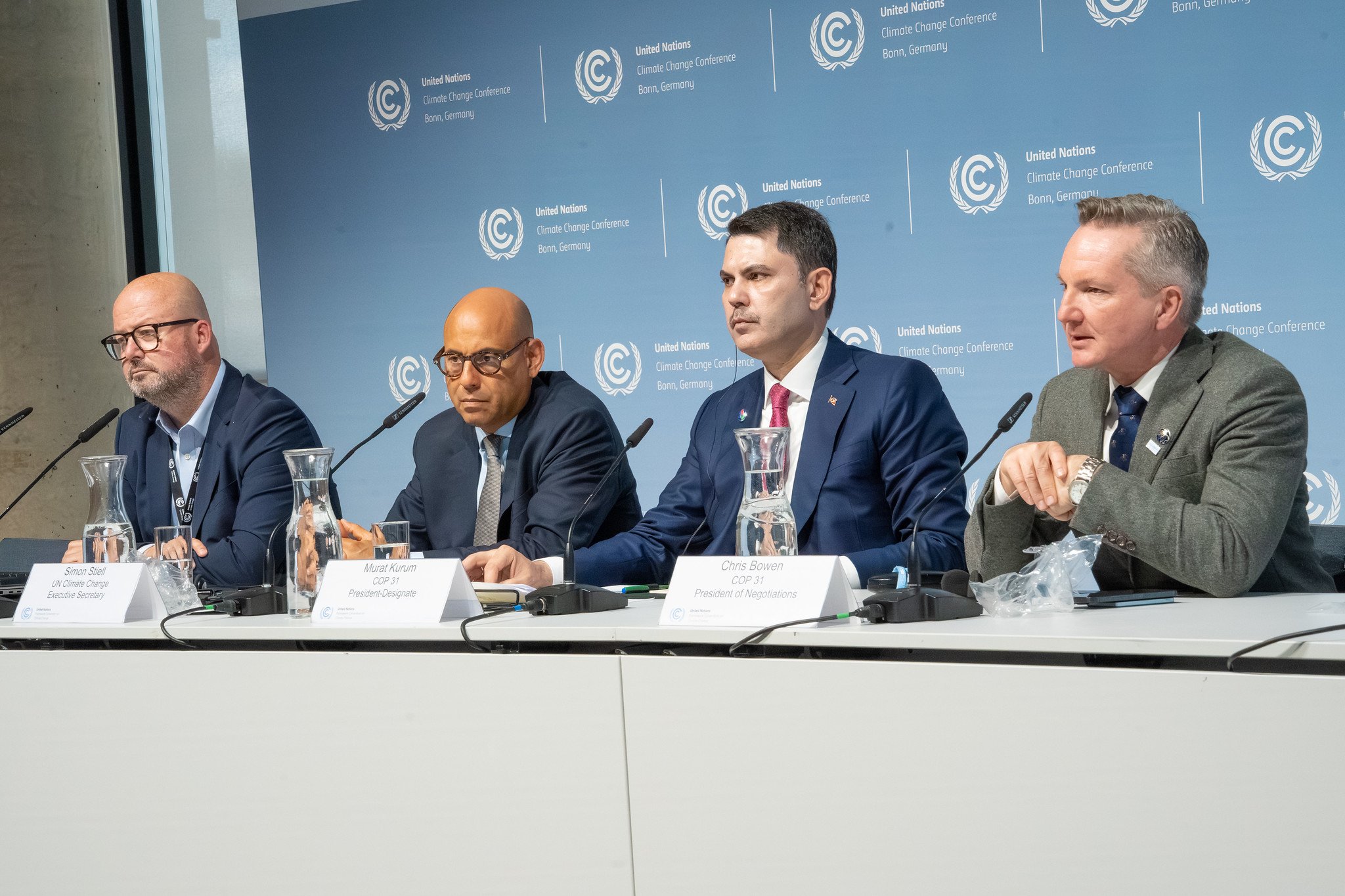
UN climate leadership during a session at the Bonn climate talks in June 2026. | UNFCCC
This year’s midyear climate summit ended without breakthroughs in most negotiations, only delivering procedural progress for some negotiated items, omitting others entirely from the formal agenda and introducing voluntary initiatives that will shape the agenda for COP31 in Türkiye in November this year.
Bonn 2026 was supposed to be a place where commitments made at last year’s COP30 in Brazil started to take shape. Implementation was big on the agenda. On that score, the summit failed. And on other scores, notably loss and damage, mitigation, and inclusion.
In the end, delegates from developing country blocs who had arrived in Bonn with hope for a better future for frontline communities back home left with a bitter taste in their mouths.
“Developed countries spent the two weeks in Bonn trying to erase from the record a commitment they made just months ago in Belém to triple adaptation finance.
”
On its final day, marked with heated debate and tension between Parties, the summit removed the lid on the widening gap between universal agreement on climate ‘‘implementation’’ and the actual delivery of actionable finance and concrete commitments.

Delegates engaging at SB64 in Bonn in June 2026. | PSA Media
But what did SB64 actually deliver?
Stalled Negotiations: Global Goal on Adaptation
This was one of the most volatile discussions at SB64. After agreeing on 59 indicators at COP30 last year, Bonn was expected to provide a platform for Parties to translate political goals into concrete technical outcomes. Discussions also sought to track international provision of adaptation finance and support.
Throughout the week, however, developed and developing countries couldn’t reach a consensus on how to fund and measure progress in adaptation. They also couldn’t agree on the composition of a task force to guide this work going forward.
‘‘Developed countries are hiding behind procedural arguments by claiming adaptation finance belongs in some other room, on some other day,’’ said Adow.
‘‘But climate disasters don’t wait for the right agenda item. Africa is burning and flooding now,’’ he added.
In the end, ‘‘Rule 16’’ of the Convention was invoked, meaning no substantive decision was finalised. The matter was, therefore, deferred to COP31.
To Ana Mulio Alvarez, that decision portends danger for the future of the negotiations.
‘‘This rule is worse than a procedural outcome,’’ says the policy advisor at E3G, adding that it’s a warning sign.
“Countries have effectively pressed pause on a process that was supposed to help turn adaptation commitments into action.
”
Impasse on climate finance
In Bonn, discussions on mobilising scaled-up adaptation finance were highly contested. Developing countries pushed for more transparent delivery plans and access pathways, especially for adaptation finance.
Africa made it clear that climate adaptation is its primary priority in negotiations, saying financing is critical to roll out life-saving interventions.
‘‘We must act now,’’ said the Chair of the African Group of Negotiators, Nana Dr Antwi-Boasiako Amoah, as the negotiations were plunged into the rocks earlier in the second week.
“The AGN views with deep concern the resistance from some partners to engage concretely on the tripling of adaptation finance agreed at COP 30.
”
For Africa, climate change is not a future event; it is an ongoing emergency. ‘‘Our people cannot wait,’’ Dr Atwi noted, saying that concrete and measurable progress must be secured at COP 31 and COP 32, and that ‘‘the outcomes of this session must reflect that urgency.’’
That did not happen.
Wealthy nations continued to push discussions on process, procedure, and frameworks and resisted firm financial commitments.
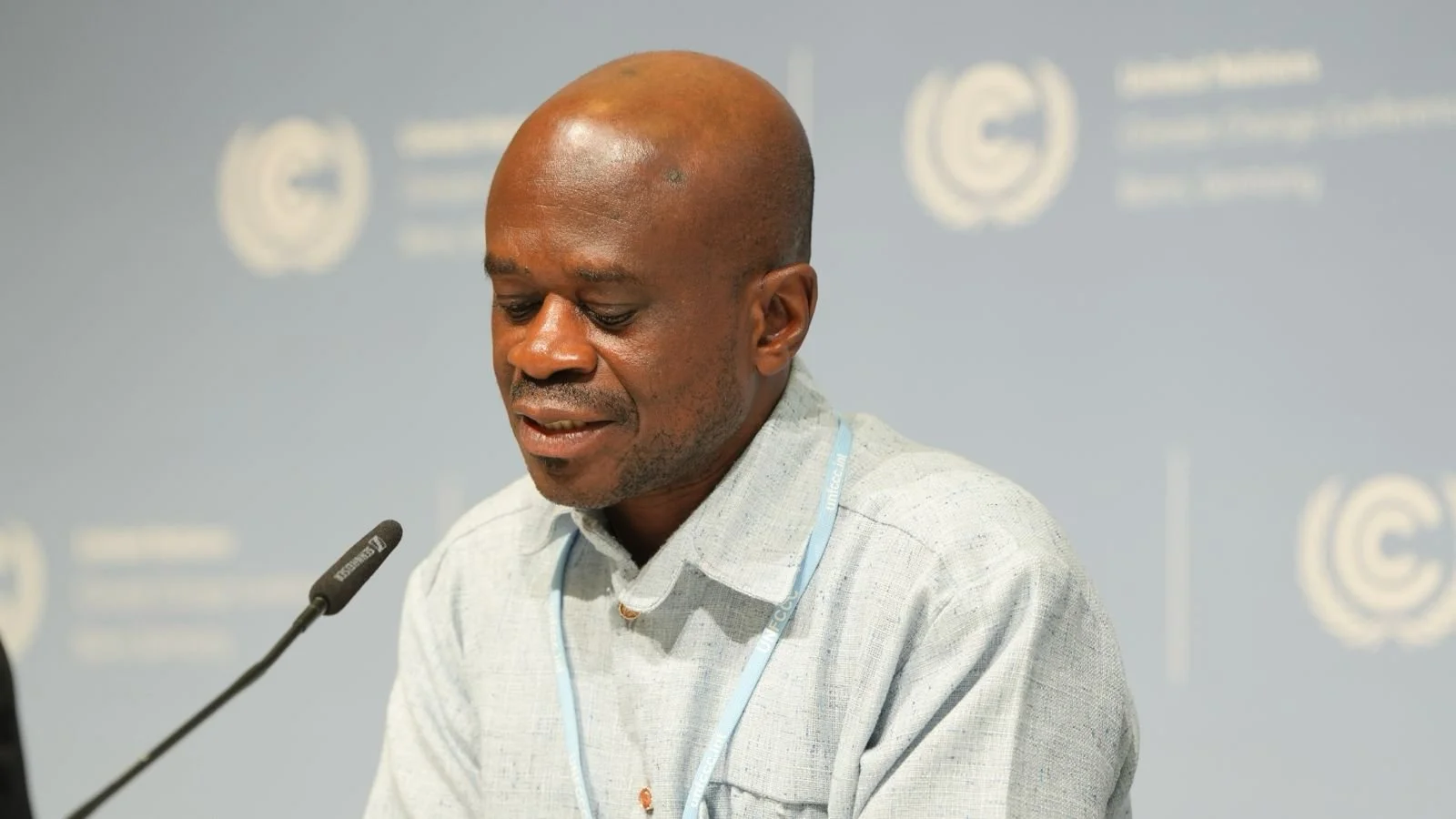
Nana Dr Antwi-Boasiako Amoah is the Chair, African Group of Negotiators. | PSA Media
‘‘It is unacceptable that this hard-won commitment is at risk of being erased from the conclusions of the current session,’’ Dr Antwi lamented.
True to form, the talks collapsed in the end.
According to Mr Adow, developed countries had, once again, betrayed their developing partners.
“You cannot arrive at a climate summit, make a promise to the most vulnerable people on earth, and then fly home and pretend it never happened.
”
Adaptation Fund - dilution
The Adaptation Fund was the only substantive agenda item aimed at finalising negotiations on new legal and institutional arrangements that would allow it to access additional resources from the carbon market mechanisms of the Paris Agreement.
However, progress was effectively stalled by developed countries, who insisted on legal technicalities that would alter the Fund’s governance structures and redefine key terminology ‘‘under the pretext of transition,’’ notes Saada Mohamed, a Climate Finance Advisor at Power Shift Africa.
“These tactics are aimed at diluting developed countries’ binding obligations to provide climate finance to their developing counterparts. They also effectively shift the burden of contributions onto vulnerable nations.
”
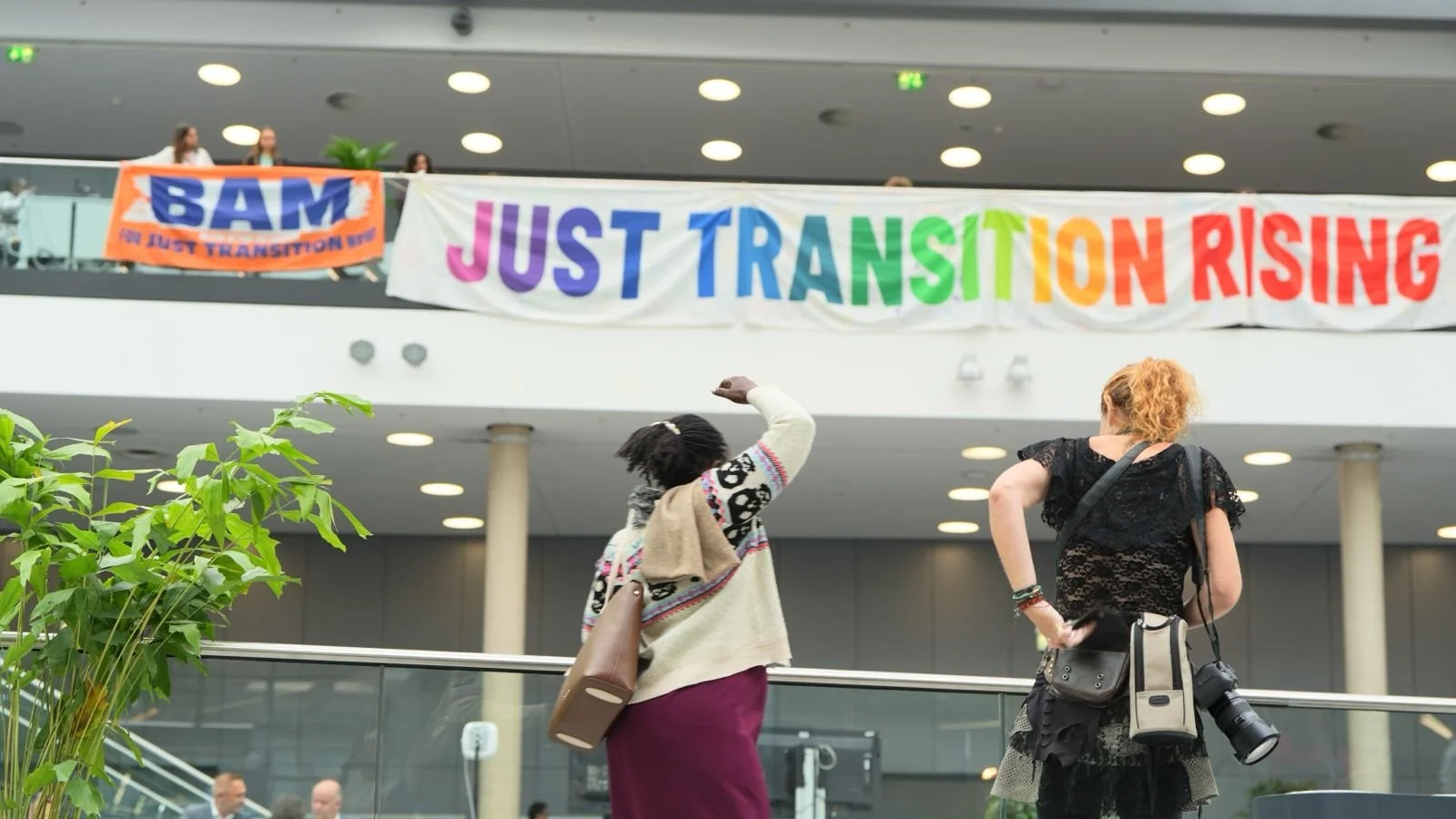
Delegates stand below a just transition banner during SB64 in Bonn. | PSA Media
Just Transition – some progress
Negotiators made moves toward operationalising the Belém-Antalya Mechanism (BAM) for a Just Transition, establishing a framework to help countries incorporate social equity considerations into national climate actions.
For two weeks in Bonn, delegates worked to advance the architecture of the BAM, which will shape just transition partnerships, climate finance delivery, and equitable implementation pathways.
Negotiators also debated how to directly mobilise public finance and technical assistance to ensure transitions do not disproportionately burden developing nations.
“Bonn was often slow and frustrating, but it produced the foundations for a meaningful outcome at COP31.
”
The real work, though, is in the future, Rosemberg warns.
‘‘The next three months will determine whether governments can build a mechanism that supports workers, communities, and countries through the transition, or settle for another space for dialogue.’’
Loss & Damage - No formal agenda
No formal agenda item was dedicated specifically to Loss and Damage at the UN June Climate Meetings (SB64) in Bonn. Consequently, no overarching, formal decisions were agreed upon.
Informal talks on L&D did take place, however, focusing on defining the fund’s architecture and resource mobilisation. At the same time, the fund’s board worked to align its terms with the Paris Agreement.
Concrete decisions on full scale and replenishment will be ironed out ahead of COP31.
Still, there was some good news coming out of the Loss and Damage talks. In Bonn, Kenya became the second country globally and the first ever in Africa to receive a support package from the Santiago Network, securing $700,000 to map out climate impacts experienced in the country over the last 10 years.
Three years since the Loss and Damage Fund was operationalised at COP28 in Dubai, the facility remains undercapitalised, with less than $1 billion in pledges.

Developed country blocs pushed for increased adaptation funding at SB64 in Bonn. | STOCK
Of finance and fiction at SB64
So, which way for implementation without finance?
Marlene Achoki likens it to bad fiction. ‘‘Commitments to provide Adaptation finance cannot simply disappear when it is time to deliver on them,’’ says the Global Climate Justice Policy Lead at CARE International.
‘‘Families are already facing impossible choices as climate impacts intensify. The looming threat of a turbo-charged El Niño, combined with record-breaking temperatures, droughts, and increasingly unpredictable rainfall, risks worsening hunger, reducing access to clean water and essential health services,’’ Ms Achoki adds.
To her, there is no two ways about it. Developed countries must provide a ‘‘clear and transparent’’ pathway for delivering adaptation support to vulnerable countries. This finance must also come from public sources.
“This finance must be provided as grants rather than loans, and reach the communities on the frontlines of the climate crisis.
”
COP31 Presidency Initiatives
The incoming COP31 Presidency put forward its Global Climate Action Agenda, targeting global electrification from 20 percent to 35 percent by 2035, waste reduction, and urban resilience. These initiatives are, however, non-binding under the UNFCCC regime.
Turkey, the host of COP31, is in a race to build ‘‘a strong global coalition’’ for this voluntary ambition that doesn’t require approval by Parties to the Paris Agreement.