CLIMATE FRAMING: AFRICAN MEDIA MUST RETHINK DISASTER REPORTING
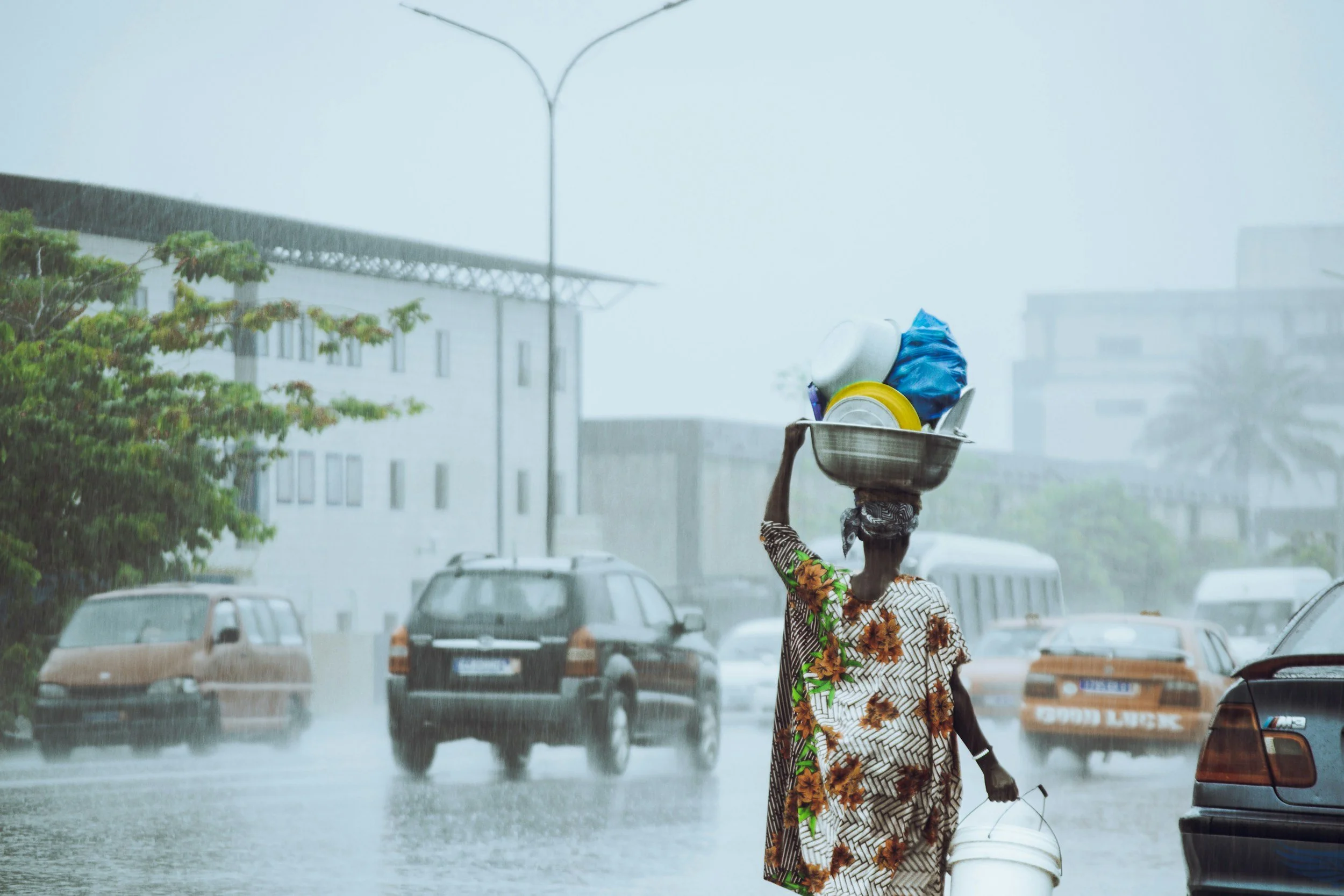
An African woman walks in a flooded street | STOCK
BY PATIENCE AGYEKUM
Several parts of Accra experienced flooding on Sunday, March 29, 2026, following heavy rains that left major roads inundated, disrupting movement.
This is an excerpt from a news report in one of the Ghanaian dailies on the recent floods. It went on:
Residents and commuters reported that sections of roads were submerged, making it difficult for vehicles and pedestrians to move freely. In some locations, traffic built up as drivers struggled to navigate through the floodwaters.
There is no mention of climate change in the story. This omission is evident in how floods in Mozambique, Ethiopia, and Kenya earlier this year were reported.
Flooding in African cities has become a routine that hardly surprises anymore. It starts with a heavy downpour. Then the streets disappear under floodwater. Soon, transport and drainage systems collapse. Shops shut down. Livelihoods stall. When the floods end, life goes back to normal. Until the next flood.
Reinforcing an Incomplete Narrative
These extreme weather events are repeatedly reported in the media as humanitarian crises rather than impacts of climate change. Dead livestock. Destroyed farmlands. Damaged roads and homes. Fatalities. The urgent need for food and temporary shelter. Never the results of the climate crisis.
While this framing has helped drive the provision of emergency relief for disaster-stricken communities, the narrative it reinforces is incomplete.
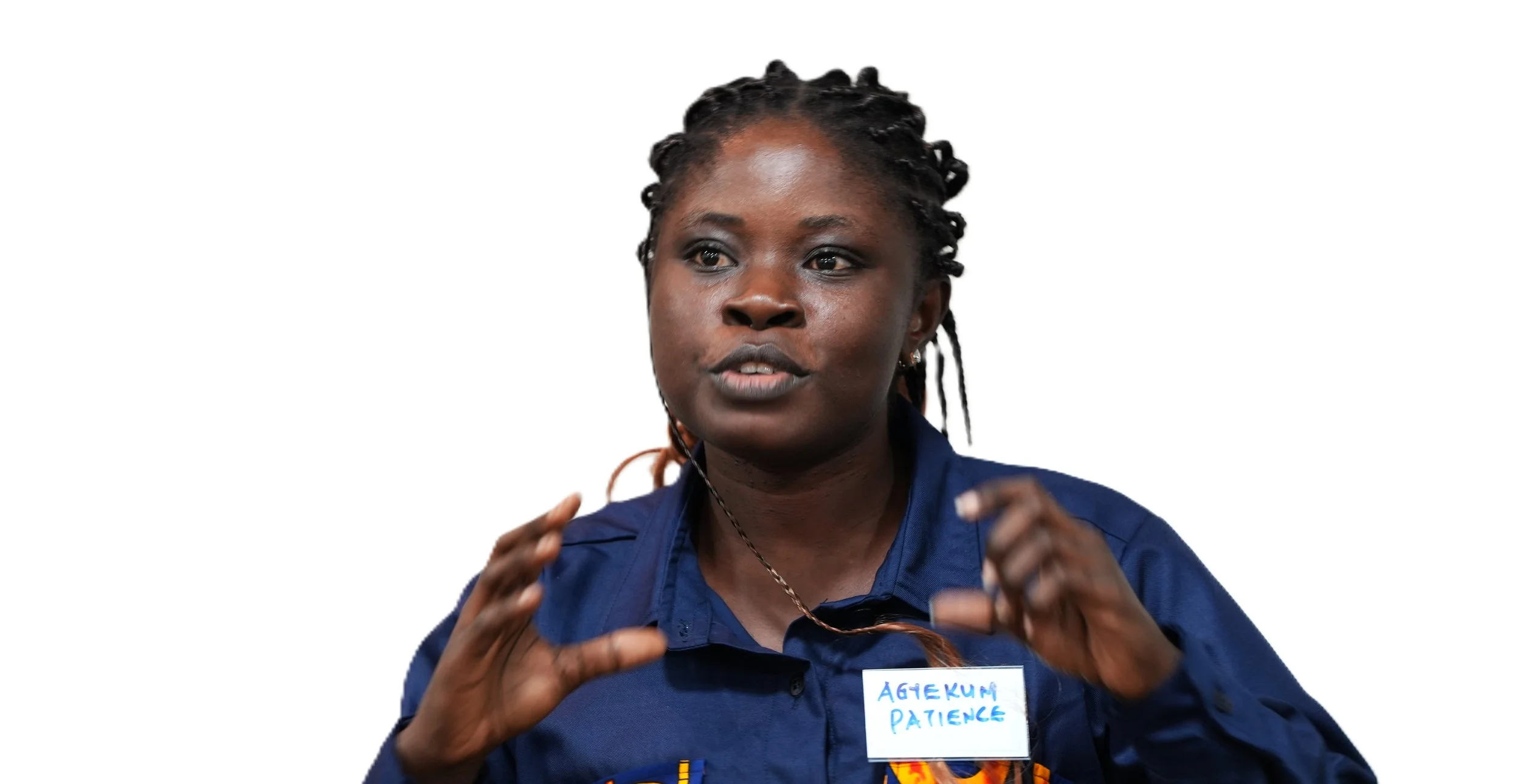
Patience Agyekum is an Adaptation Policy and Campaigns Officer at Power Shift Africa. | PSA Media
“When floods, heatwaves, or droughts are framed only as humanitarian emergencies, their deeper drivers are often ignored. ”
The connection between global fossil fuel extraction, rising emissions, and the growing intensity of weather disasters is often missing from news reports.
This narrative gap, dominant particularly in the traditional media of many developing countries, has allowed the global system that fuels climate change to remain largely unchallenged for decades. Framing weather disasters purely as humanitarian crises blurs primary responsibility. Countries that developed largely by extracting and burning fossil fuels tend to respond with sympathy clothed in solidarity and short-term relief through emergency funds. The countries, however, fall short of taking responsibility for their role in accelerating these impacts.
“For communities in Accra, Nairobi, and Kampala, climate change is not an abstract concept. It is an everyday lived reality.
”
Yet the climate conversation has been confined to formal forums and international conferences for decades. Never in ordinary spaces for these ordinary people. Efforts should be made to break through the barriers of formality by involving regular people.
This begins with the quality of climate reporting. But also the quality of interventions.
Ending the Vicious Cycle of Climate Vulnerability
For decades, humanitarian aid has been the default response to disasters. This approach ‘excuses’ wealthy nations from providing grant-based, predictable, and accessible climate finance to their poor, climate-vulnerable counterparts to build resilient human and social systems.
As a result, vulnerable communities are trapped in a cycle of damage, loss, relief, and recovery. Meanwhile, their vulnerability rises.
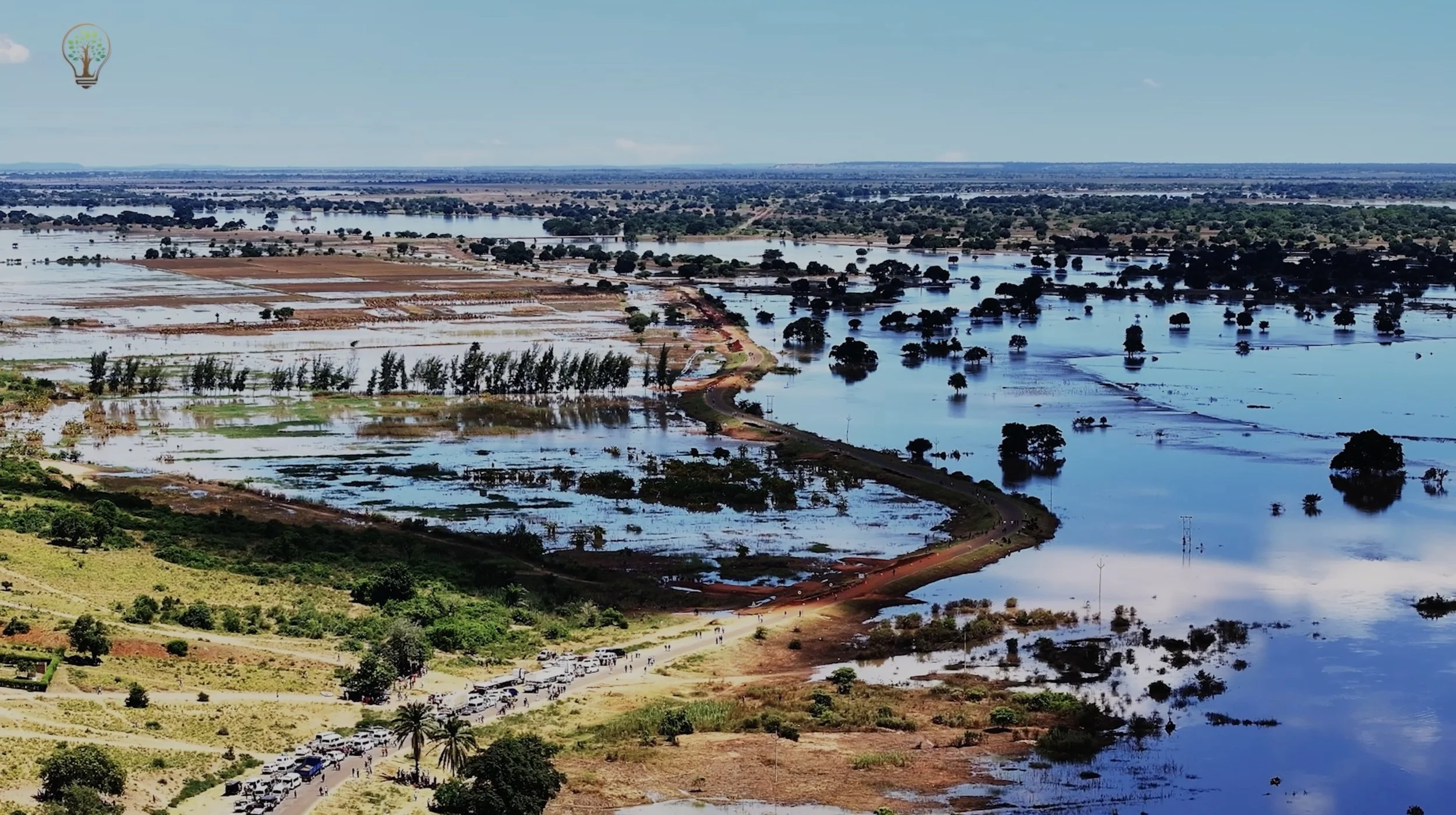
A flooded plain in Gaza Province, Mozambique. | PSA Media
Reporting weather disasters through a climate lens is the first step in addressing this gap and exposing the drivers of climate vulnerability, together with the systems that benefit from the suffering of African frontline communities.
“The connection between climate change and the social constructs that shape vulnerability must be examined together.
”
Strengthen Africa’s Case for Climate Finance
Equally important, the design of cities, the distribution of settlements, waste management, and human behaviour must be analysed and communicated appropriately, as these constitute the main drivers of city flooding.
When disasters are framed as climate impacts, responses do not stop at emergency relief. They include both hard and soft, deep and system-wide adaptation strategies. Responses span resilient infrastructure, improved drainage systems, and better urban planning.
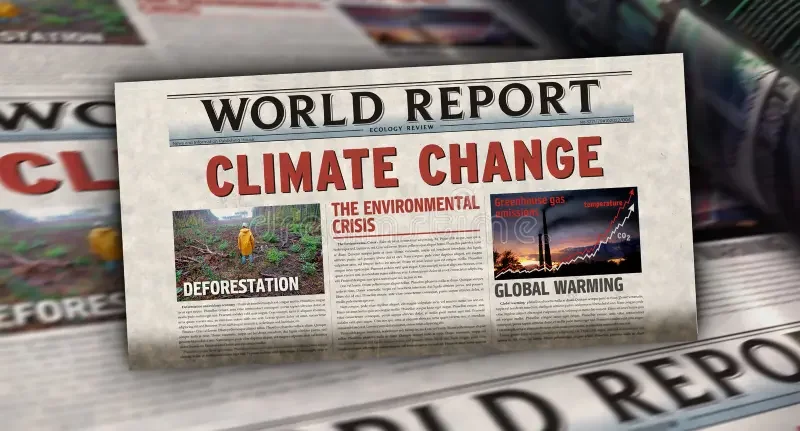
A newspaper story on climate change. | STOCK
In such an ecosystem, citizens have improved access to early warning systems to drive anticipatory action beyond reactive measures during disasters. Ultimately, this reduces the destruction of property and loss of life.
Crucially, a deliberate shift in the framing of extreme weather events will strengthen Africa’s demand for climate finance and other solutions, such as technology transfer and capacity building for our people and institutions.
Growing Body of Scientific Evidence
For this to happen, however, stronger collaboration between scientists, researchers, and government agencies is nonnegotiable. As climate evidence grows stronger, institutions responsible for providing climate data and adaptation planning must work ever more closely with the media.
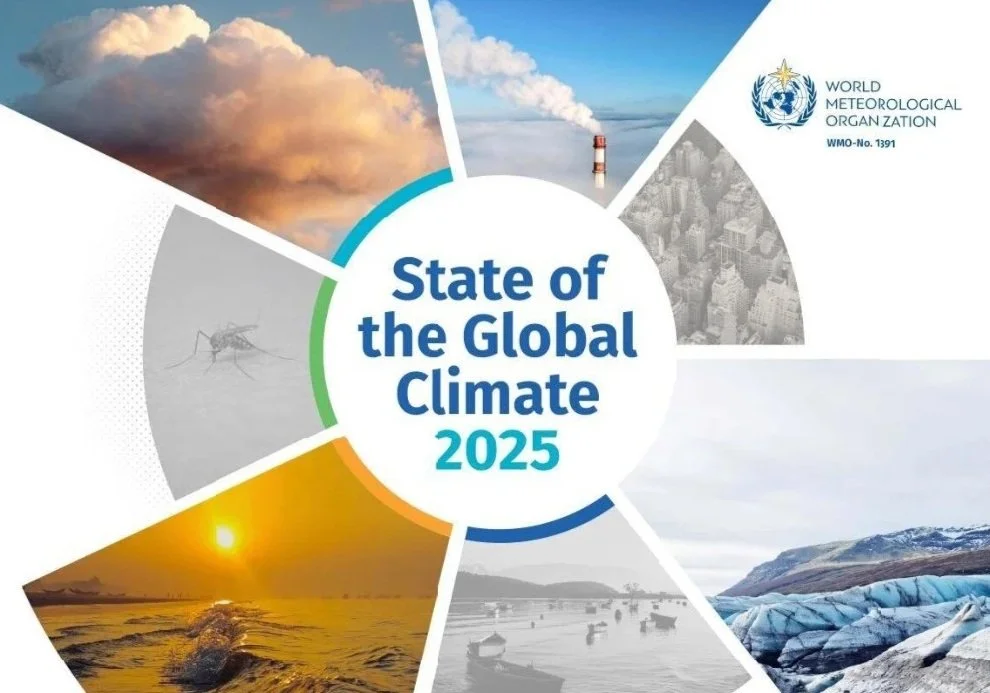
Cover of the State of the Global Climate 2025 report by the World Meteorological Organisation (WMO) | STOCK
Notably, attribution science has grown steeply in recent decades. This has allowed scientific bodies like the Intergovernmental Panel on Climate Change (IPCC), World Weather Attribution (WWA), and World Meteorological Organisation (WMO) to connect specific extreme weather events to human-caused climate change. This has, in turn, led to more precise, rapid, and quantified climate findings. Media reports must reflect this accurate data.
Urgent Need to Shift Climate Reporting
Today, most countries have climate experts who can help people understand better the connection between climate change and extreme weather events. Engaging them only strengthens the quality of news reports. By working together, government agencies and other actors would build more resilient systems that can withstand climate shocks and protect people from loss and damage.
“Climate change shouldn’t be an exclusive subject. It must evolve beyond summits and involve the people who bear the brunt of its impacts.
”
For this to happen, climate reporting must also shift. Floods and droughts must stop being reported as humanitarian crises. News reports must start to reflect the historical responsibility of developed nations.
Articulating the relationship between fossil fuels, rising temperatures, and the increasing rate of extreme weather events is the first step in this shift. If done right, climate journalism can open the door for accountability and set in motion systemic solutions that reduce vulnerability and enhance the resilience of African cities, communities, and economies.
Patience Agyekum is an Adaptation Policy and Campaigns Officer at Power Shift Africa