COMMENTARY: NAIROBI ADAPTATION FINANCING AND DEBT SUSTAINABILITY FORUM
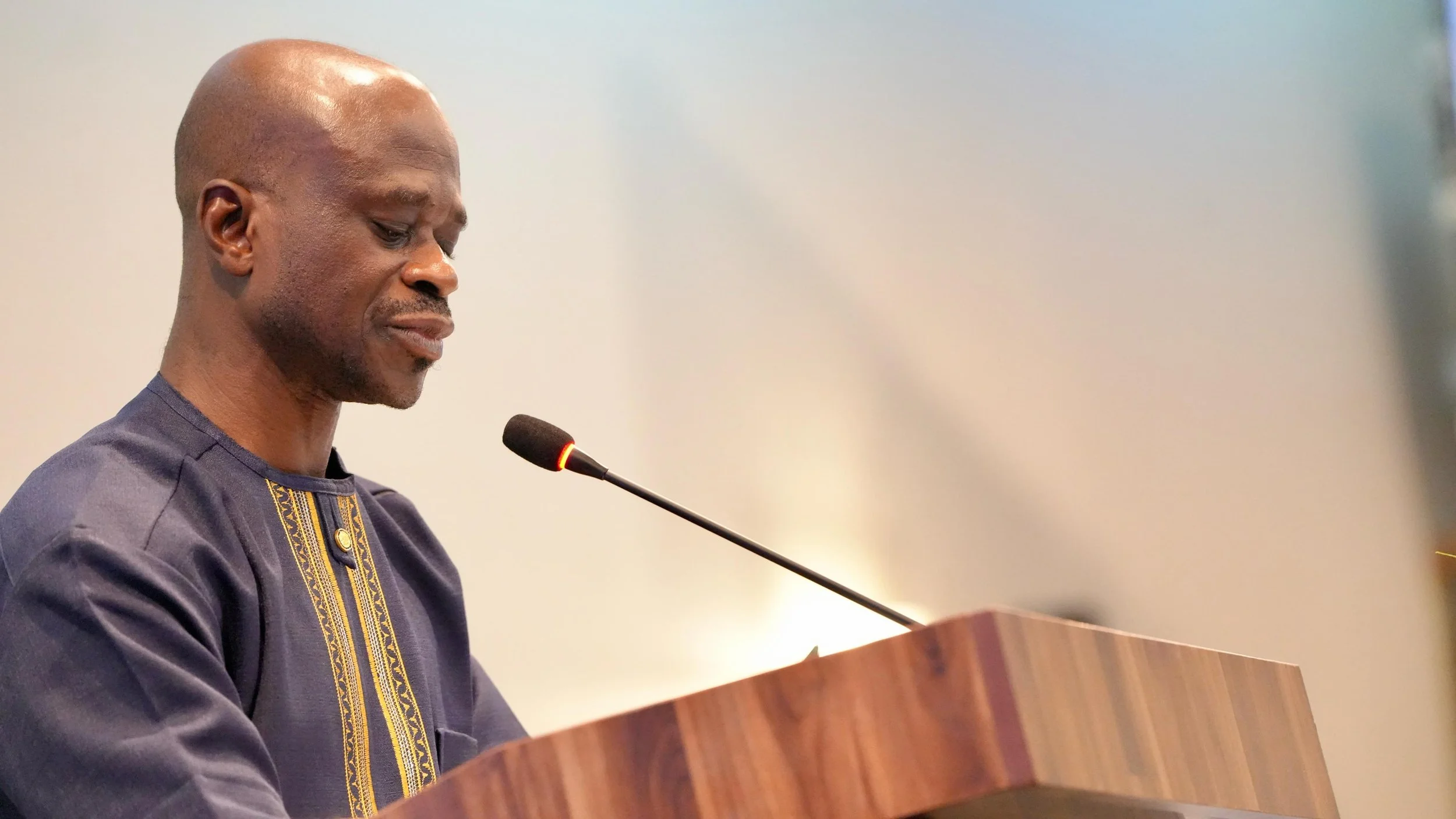
Dr Antwi-Boasiako Amoah is the Chair of the African Group of Negotiators. | PSA Media
There is a quiet satisfaction, almost a collective exhale, in hearing the African Group of Negotiators (AGN) chairperson Nana Dr Antwi-Boasiako Amoah say it out loud. Not because it is new, but precisely because it isn’t.
We all knew it. And now, finally, it has been spoken from the centre of Africa’s climate negotiating machinery.
For years, African climate discourse has been caught in a loop of diagnosis. Vulnerability statistics have been refined, loss narratives sharpened, and financing gaps quantified to the decimal point. The story has been told, retold, and told again, often to audiences already convinced. What Antwi has done is not to dismiss that history, but to interrupt it.
“I’m not happy when we continuously talk about problems,” he said in Nairobi last week during a workshop on adaptation financing in Africa organised by Office of Kenya’s Special Envoy for Climate Change and AUDA-NEPAD. His words should land not as a rebuke, but as permission to structure a different kind of conversation. Because beneath the surface, Africa’s adaptation community has long understood that the bottleneck is no longer awareness, but alignment.
Spoken like the chief he is: The gentle sting in Dr Antwi’s words
Antwi’s intervention reframes the central problem of adaptation finance from scarcity to coherence. Not that money is irrelevant, but that finance, in its current form, struggles to land meaningfully in systems that are fragmented, siloed, and poorly connected to the knowledge that already exists. His point about “the interface between technical and political formations” is deceptively simple, but it cuts to the heart of the issue.
To put it more bluntly, Africa does not lack expertise, but permeability.
Technocrats produce strategies, data, and models; politicians articulate visions, mandates, and priorities; yet, somewhere in between, a membrane that is sometimes institutional, sometimes cultural, and often invisible, forms, and through it ideas struggle to pass. Antwi’s metaphor of “shields” is telling. It suggests not hostility, but insulation. A system designed, perhaps unintentionally, to prevent friction also prevents synthesis.
And yet, as he insists, “the vision of our leaders is the same as that of the experts.” This is a profound claim. It rejects the easy narrative of political indifference or technical arrogance. Instead, it points to a structural misalignment, and we think this can be fixed. This is where the shift from problems to solutions moves away from being rhetorical to architectural.
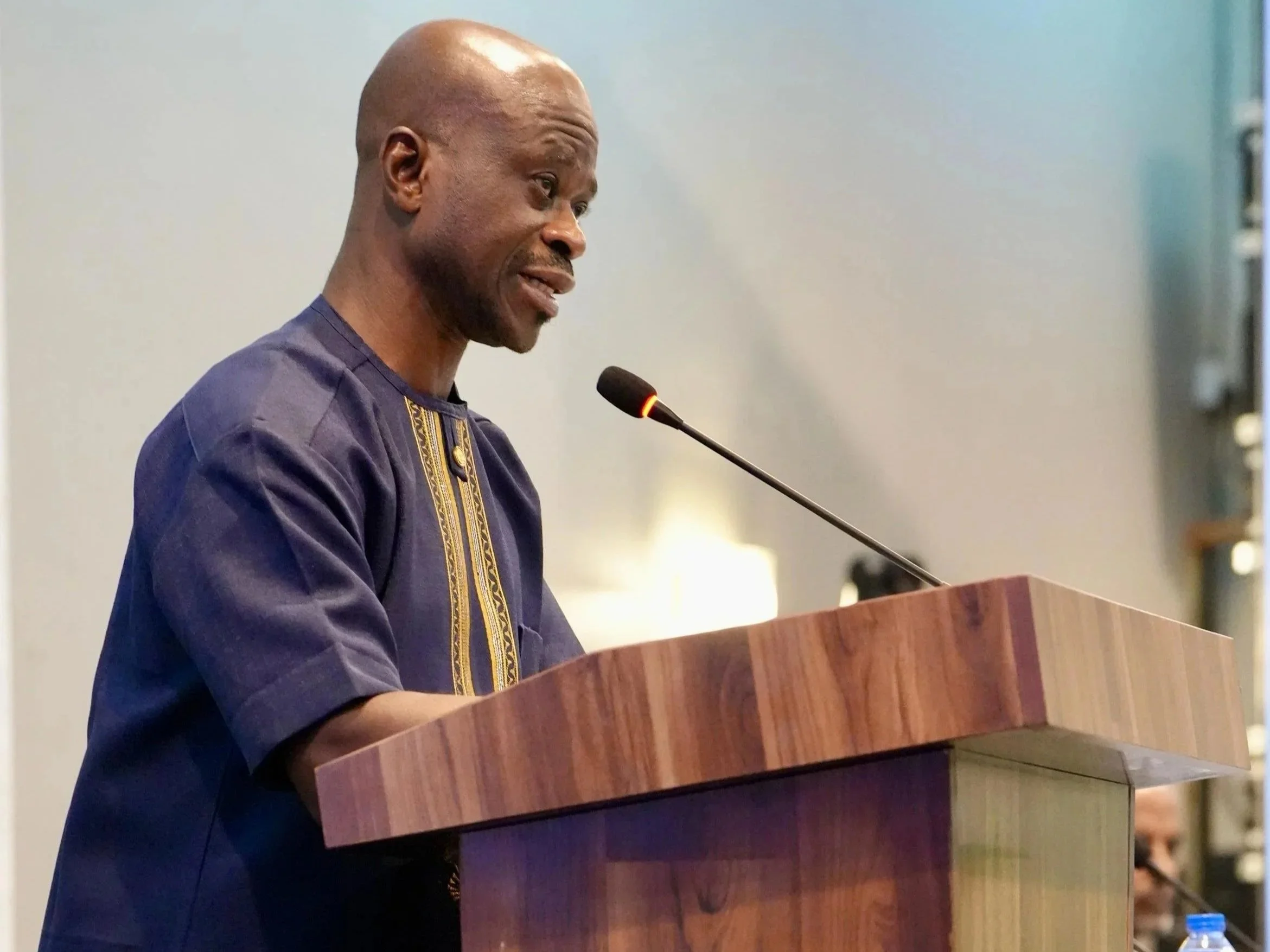
AGN Chair Dr Antwi-Boasiako addressing a recent gathering of African climate negotiators in Accra, Ghana. | PSA Media
Participants at the workshop explored a range of financing pathways, including blended finance, de-risking investments, and crowding in public and private capital for adaptation. Also discussed were Initiatives such as country platforms for adaptation (pooled funding mechanisms) and adaptation benefits mechanisms, currently hosted by AfDB.
None of these, of course, is conceptually new. What is new, or at least newly urgent, is the insistence that they must be embedded within coherent national and regional systems, rather than deployed as isolated experiments.
Why Africa should rethink adaptation action
The critique of project-by-project adaptation is not new either, but Antwi’s framing gives it political weight. When he speaks of siloed economies, say, of agriculture, infrastructure, and finance, operating in parallel rather than in concert, he is describing a kind of epistemic fragmentation that bogs down progress and duplicates effort. As each sector solves its own problem, optimises its own metrics, and reports its own successes, the result is activity without transformation.
Breaking those silos, as he suggests, requires a “common lever” that binds sectors together. In practice, this could mean aligning National Adaptation Plans with fiscal policy, infrastructure investment, and debt management strategies. It could mean treating adaptation not as a project category, but as a development paradigm.
And, in our view, this is where the philosophical undertone of Antwi’s remarks becomes apparent. He is not simply calling for better projects or more funding, but for a different way of thinking about action itself. To move from diagnosis to solutions is to accept uncertainty. Problems can be described with precision; but solutions should be tested, iterated, and scaled. They require risk, and risk requires trust between institutions, disciplines, and people.
Cultural shift is as good as a technical shift
His call for “informal and continuous dialogue” may seem modest in comparison to the scale of the challenge, but it is, in fact, foundational. Formal negotiations, whether under the United Nations Framework Convention on Climate Change or within national planning processes, are structured, time-bound, and often adversarial. Informal spaces, by contrast, allow for experimentation, relationship-building, and the slow alignment of perspectives.
In a sense, Antwi is advocating for a cultural shift as much as a technical one. A move away from performative urgency, where the repetition of crisis signals seriousness towards constructive urgency, where the focus is on what can actually be done, by whom, and how.
We all knew the system wasn’t working as it should. We all knew about the fragmentation, the silos, the endless recycling of problem statements. What Antwi has done is to collapse the distance between that private knowledge and public articulation. And in doing so, he has nudged the discourse, ever so gently but decisively, towards something more generative.
Not away from the problem, but through it.
And that’s how the narrative is shifting.