
DIALOGUE ON NAVIGATING NEW GLOBAL DISORDER
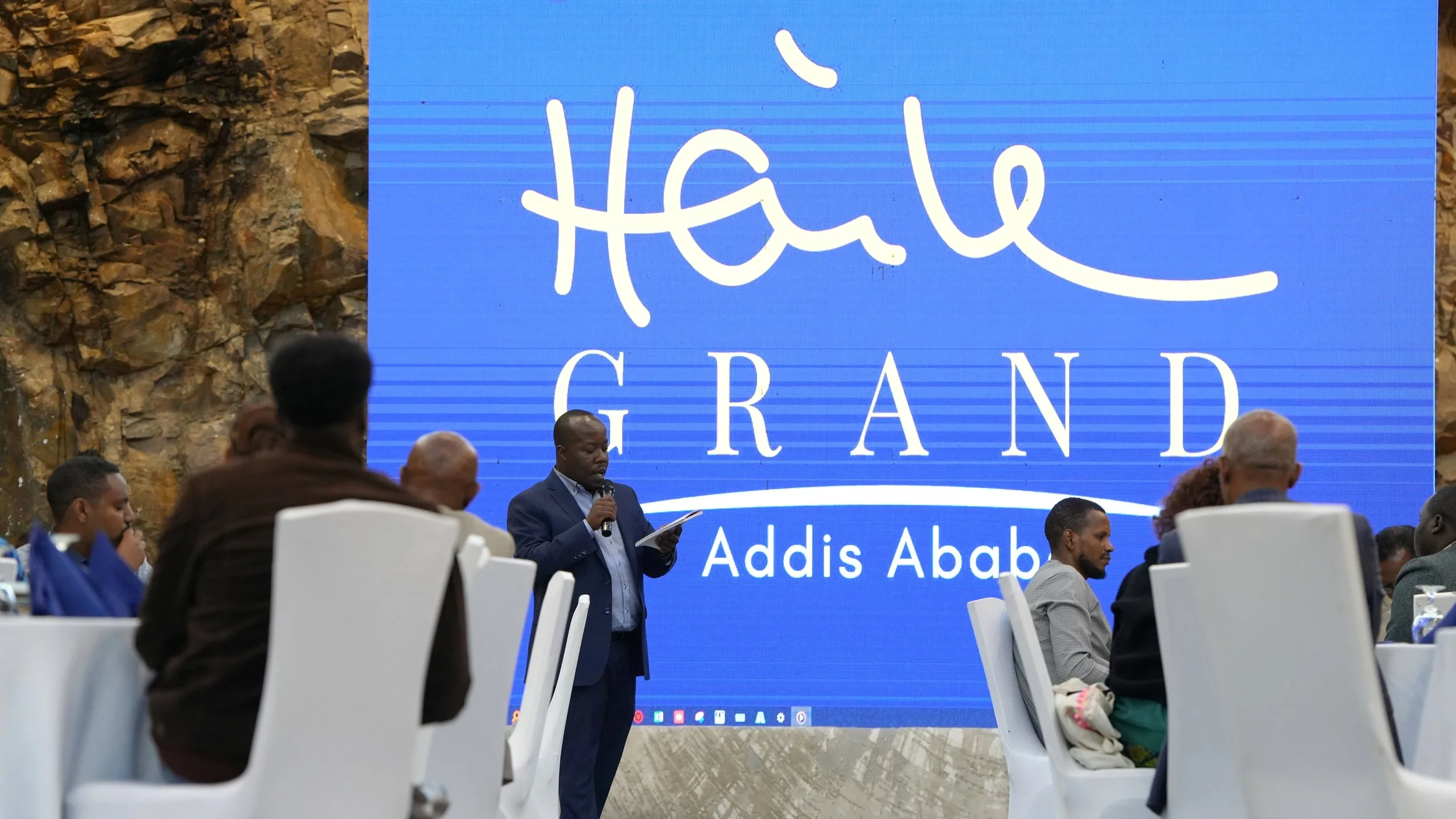
Power Shift Africa and Christian Aid led high-level roundtable.
“The multilateral order that promised stability and solidarity is weakening.”
On a cool February evening on the margins of the 39th Ordinary Session of the African Union Assembly in Addis Ababa, Ethiopia, a select group of policymakers, economists, diplomats and civil society leaders gathered for a closed-door dinner conversation that many described as both urgent and overdue.
Convened by Power Shift Africa and Christian Aid, the high-level roundtable, titled Building the Foundations of Resilience: Navigating the Current Global Disorder, sought to chart solutions pathways from the quagmire of the worsening of Africa’s climate crisis at a time when the global order that once promised cooperation and predictable finance is fragmenting.
Participants noted that, across the continent, droughts, floods and food system disruptions are no longer isolated humanitarian emergencies, but structural macroeconomic shocks that are eroding fiscal spaces, intensifying debt pressures, straining energy systems and disrupting industrial planning.
The gathering heard that African ministries of finance are increasingly dealing with climate fallout as a budgetary line item rather than a contingency. In many parts of the continent, disaster response costs are rising, infrastructure repairs becoming routine, insurance premiums escalating, agricultural productivity is under strain, and energy generation is facing volatility. In that context, adaptation is no longer simply about resilience in vulnerable communities, but macroeconomic stability and national security.
Yet as climate impacts intensify, the external environment for development cooperation is shifting in ways that complicate Africa’s options. Participants described a global landscape marked by strategic rivalry, supply chain competition, and bilateral deal-making. Climate finance flows, they argued, are increasingly shaped by geopolitical interests and industrial strategy in advanced economies. The result is a narrowing of policy space as Africa is positioned as a supplier of critical minerals for the global green transition, while adaptation finance remains insufficient, slow-moving and heavily conditional.
Amos Wemanya of Power Shift Africa captured the tone of the evening in his opening remarks, noting that Africa is entering a decisive moment where climate devastation collides with weakening multilateral cooperation.
“Droughts, floods and food system disruption are draining public budgets, destabilising energy systems, slowing industrialisation and straining regional integration,” he said. “At the same time, the multilateral order that promised stability and solidarity is weakening.”
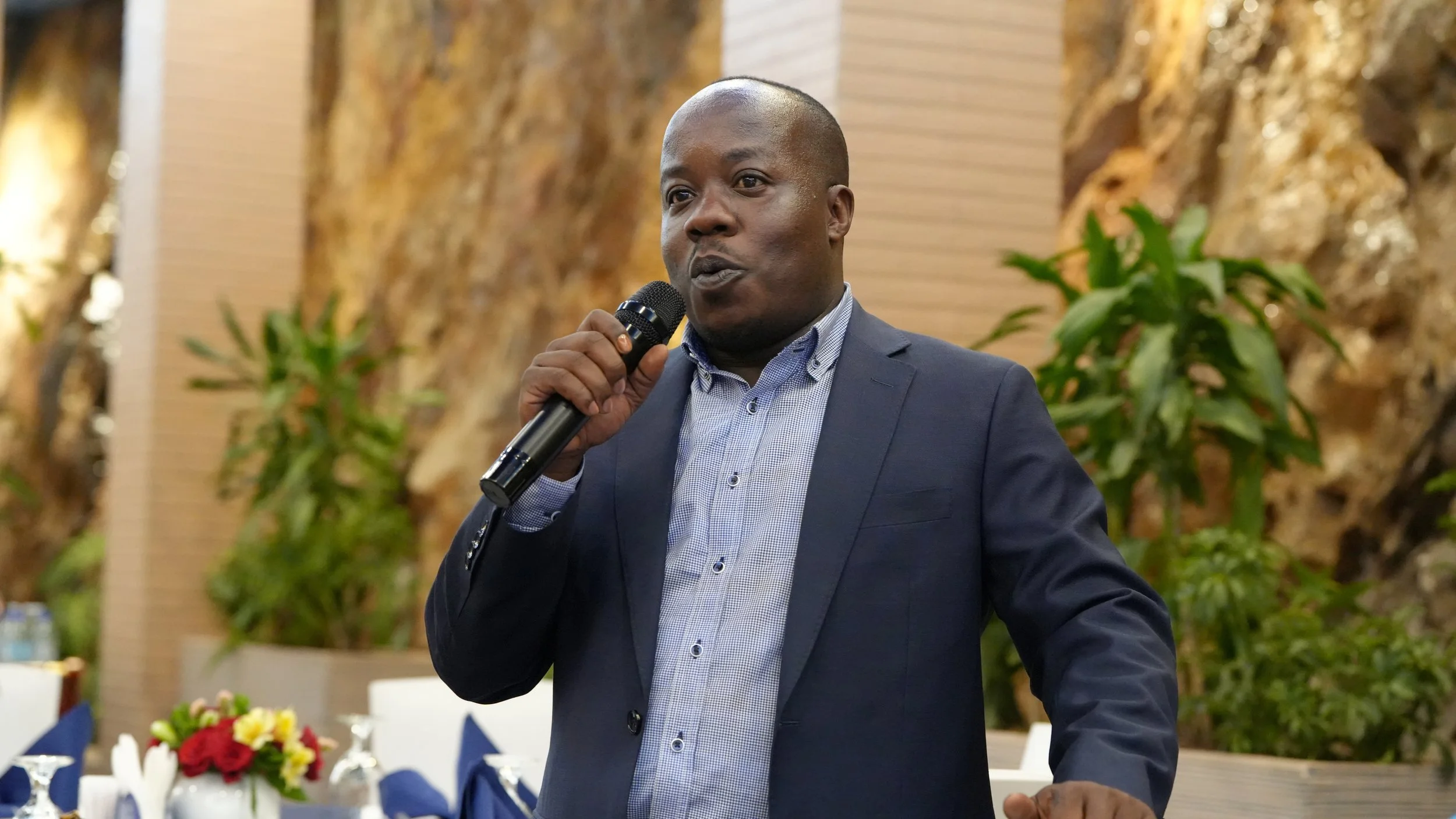
Amos Wemanya delivered opening remarks at the dinner dialogue.
Climate finance, he warned, is increasingly shaped by narrow national interests. Too often, it conditions Africa’s development pathways while reinforcing patterns of raw material export and value extraction.
Martha Bekele, co-founder of Development Transformations, noted that the global discourse on climate has already fragmented along geopolitical lines, and argued that since major powers are shaping climate cooperation around strategic interests, Africa must be equally strategic in how it frames its adaptation narrative across different negotiating spaces.
She referenced the “great rupture” described recently by the Canadian Prime Minister at Davos, noting that the era of predictable globalisation may not return. In that context, she added, Africa cannot rely on abstract pledges or aspirational communiqués, but must articulate concrete, enforceable positions in its engagements with climate funds, development banks and bilateral partners.
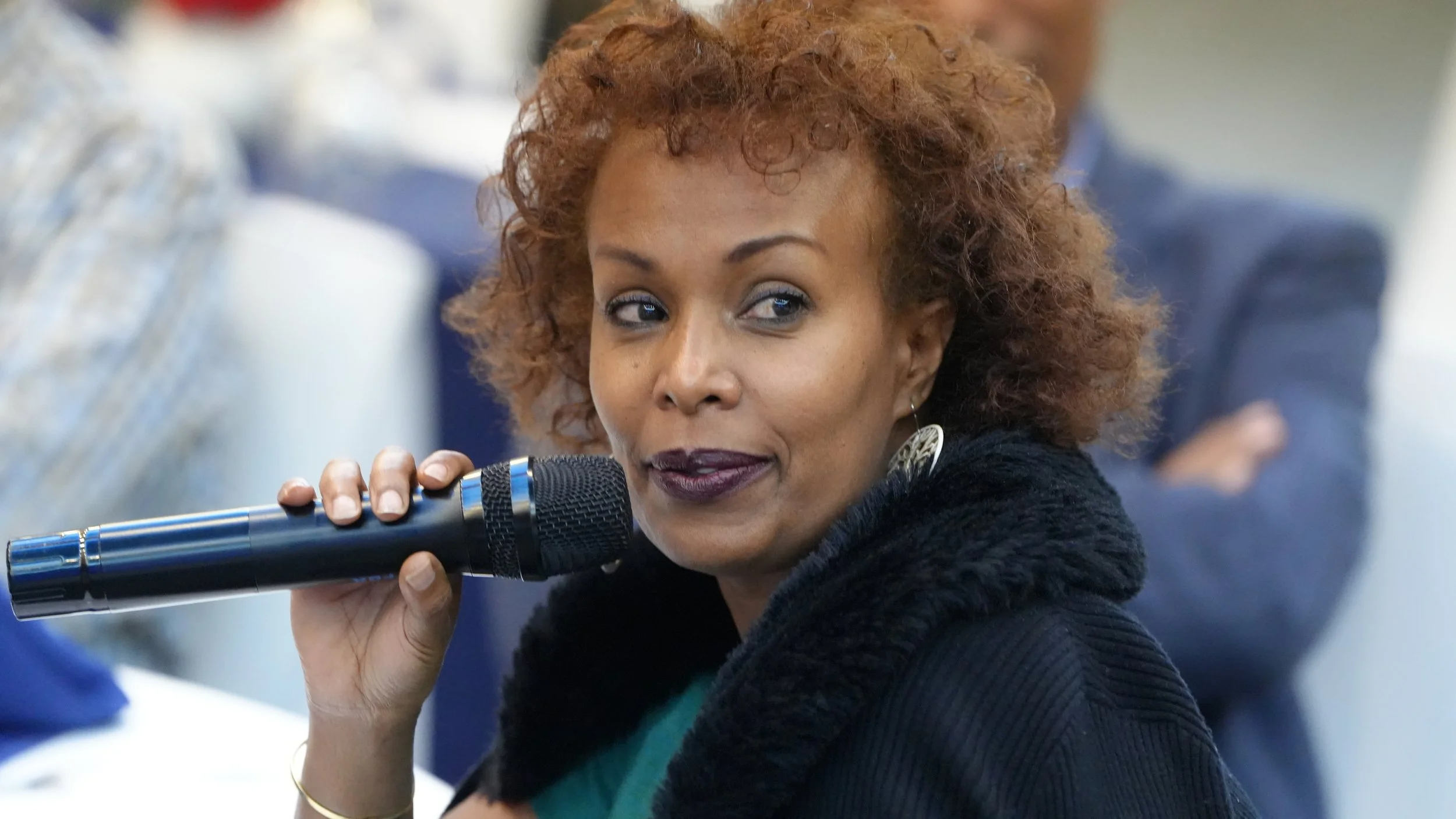
Martha Bekele spoke on why Africa must be strategic in how it frames its adaptation narrative.
Africa sits at the centre of the global green transition. The continent holds substantial reserves of critical minerals essential for renewable technologies, possesses vast solar and wind potential, and has a young and growing labour force. Regional markets are expanding, supported by frameworks such as the African Union’s African Green Industrialisation Initiative (AGII) and the African Continental Free Trade Area.
These initiatives reflect a political ambition to move beyond extractive models; to industrialise with value addition at home, build regional value chains and position Africa as a rule-shaper in the emerging green economy rather than a rule-taker. However, participants cautioned that these ambitions remain vulnerable without a fundamental shift in how adaptation finance is conceptualised and delivered.
One recurring theme was the need to treat adaptation finance as core economic infrastructure. Investments in water systems, climate-resilient transport corridors, drought-resistant agriculture and early warning systems should be viewed with the same urgency and strategic priority as power plants or industrial parks.
Without scaled, predictable and grant-based adaptation finance, several speakers argued, Africa’s green industrial push risks being derailed by recurring climate shocks. Industrial zones cannot function if transport networks are washed away. Manufacturing supply chains falter when energy systems are destabilised by extreme weather. And fiscal consolidation plans unravel when emergency spending becomes permanent.
Dinner discussions turned to the architecture of global climate finance. Participants expressed frustration with the complexity, fragmentation and slow disbursement of existing funds. Some pointed to the role of international financial institutions in shaping fiscal frameworks that prioritise debt sustainability metrics while underweighting climate risk exposure.
Omar Elmawi led discussions at the dinner.
At the same time, leverage emerged as a central concept. Global competition over minerals, clean energy technologies and manufacturing capacity is intensifying. Rather than passively accommodating external demand, Africa, participants argued, should use this competition strategically by negotiating for local processing, technology transfer, workforce development and long-term industrial partnerships.
The roundtable also grappled with internal challenges. Several speakers cautioned that ambitious continental initiatives often falter due to political transitions and shifting domestic priorities. Climate leadership, one participant observed, remains too closely tied to individual political champions. To address this, participants urged the strengthening and resourcing of continental institutions capable of sustaining policy continuity beyond electoral cycles. Some suggested deeper institutional linkages with multilateral bodies to anchor initiatives in more durable frameworks.
Throughout the evening, the emphasis returned repeatedly to alignment. Climate adaptation, green industrialisation and regional integration cannot proceed in isolation. Under AGII and AfCFTA, resilience investments should be designed to support industrial corridors, energy systems and cross-border trade networks; while national industrial policies should internalise climate risks rather than treat them as an external variables.
As the dinner concluded, organisers insisted on the reframing of adaptation as economic sovereignty, development of coordinated continental positions ahead of key engagements with international financial institutions, embedding of resilience within green industrial strategies, and leveraging of geopolitical competition to secure fairer terms of engagement.
The gathering did not produce formal resolutions. It was not intended to. Instead, it functioned as a strategic sounding board, a space for candid reflection at a moment when the stakes for the continent are unusually high. As Bekele noted, in a global environment defined by uncertainty and competition, Africa’s room for manoeuvre “will depend less on rhetorical commitments from partners and more on its own strategic clarity”.
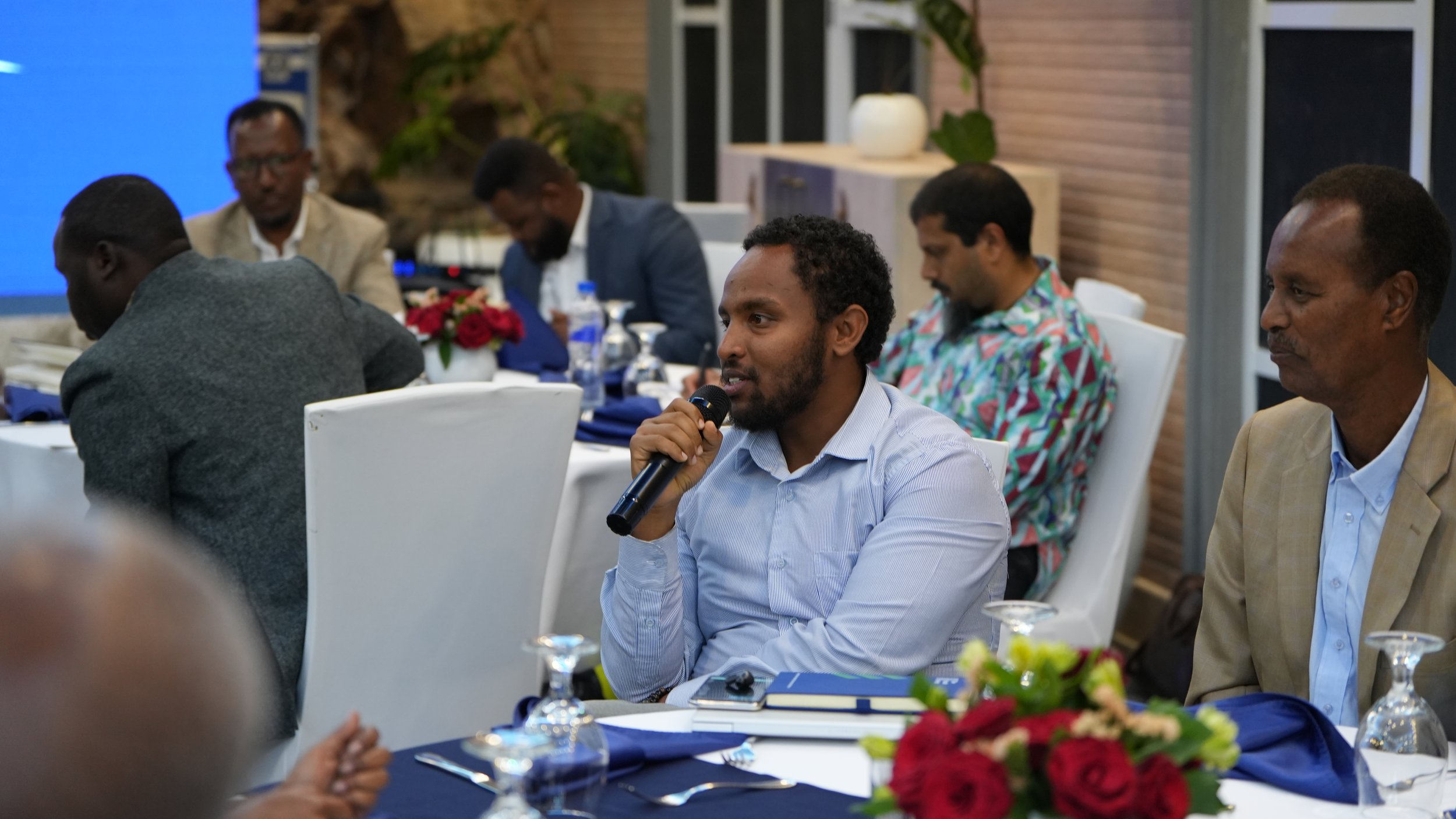
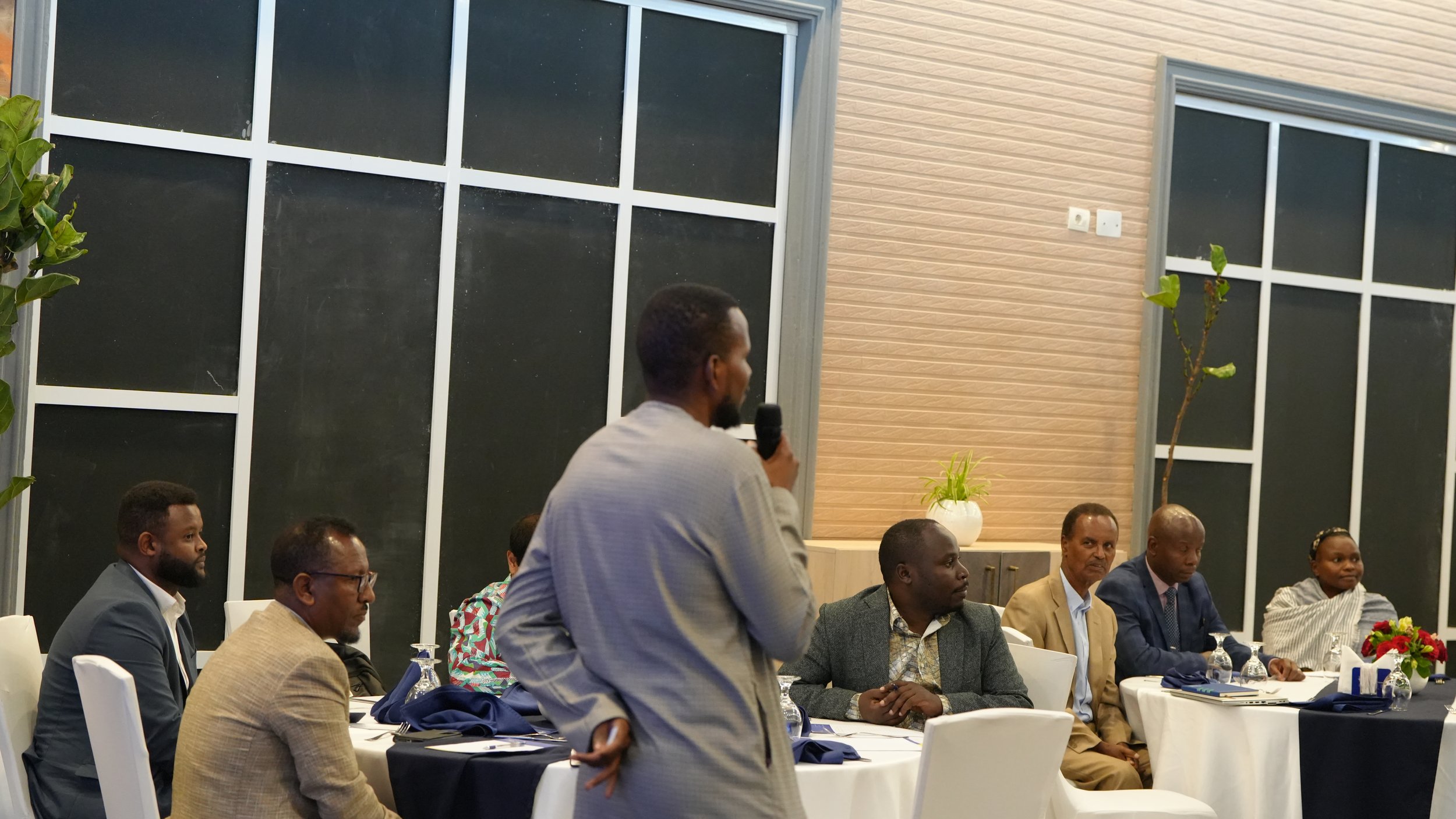
Audience reacts.