GREEN CLIMATE FUND SIGNALS HOPE IN A WARMING WORLD
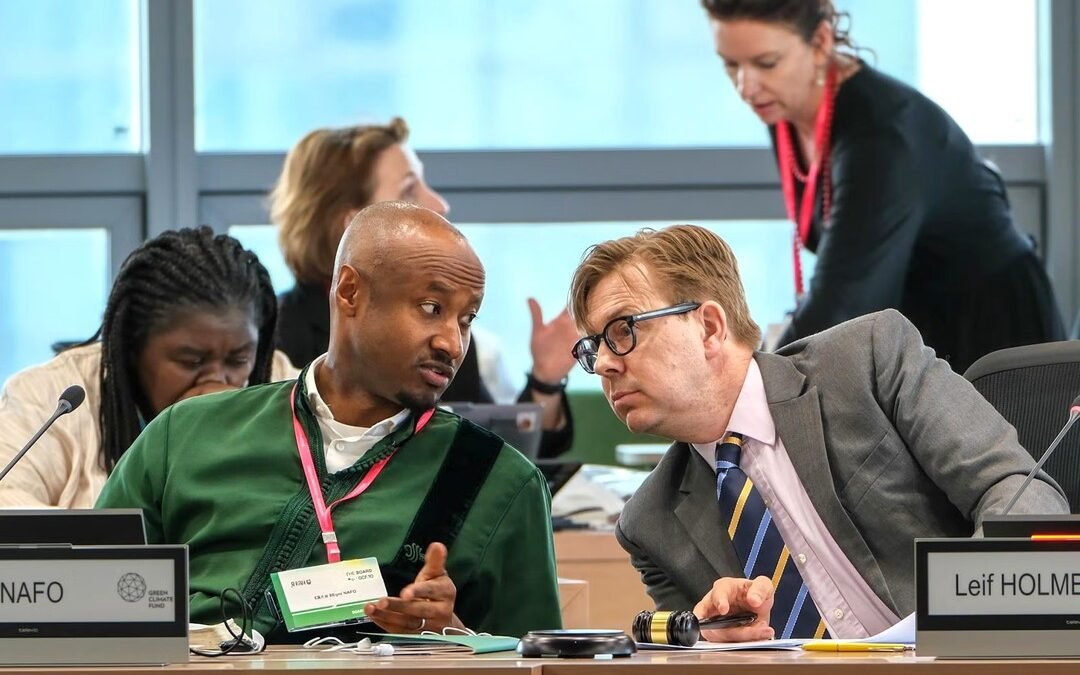
The board of the Green Climate Fund (GCF) met in Dushanbe, Tajikistan, in July 2026. | GCF
BY AMOS WEMANYA
Just as delegates concluded the Green Climate Fund (GCF) board meeting in Dushanbe, Tajikistan, in July 2026, nature was delivering a painful reminder that climate change is moving much faster than climate finance.
Throughout the world, extreme weather intensified under the influence of a rapidly strengthening super El Niño. Europe sweltered under record temperatures that exceeded 40°C in some places. The United States battled crippling heatwaves, flash floods and infrastructure failures. A powerful typhoon tore through the western Pacific.
Here in Africa, communities were once again paying the highest price, with severe floods in Ghana displacing families, destroying homes and disrupting livelihoods, adding to a growing list of climate disasters that have become all too familiar across the continent.
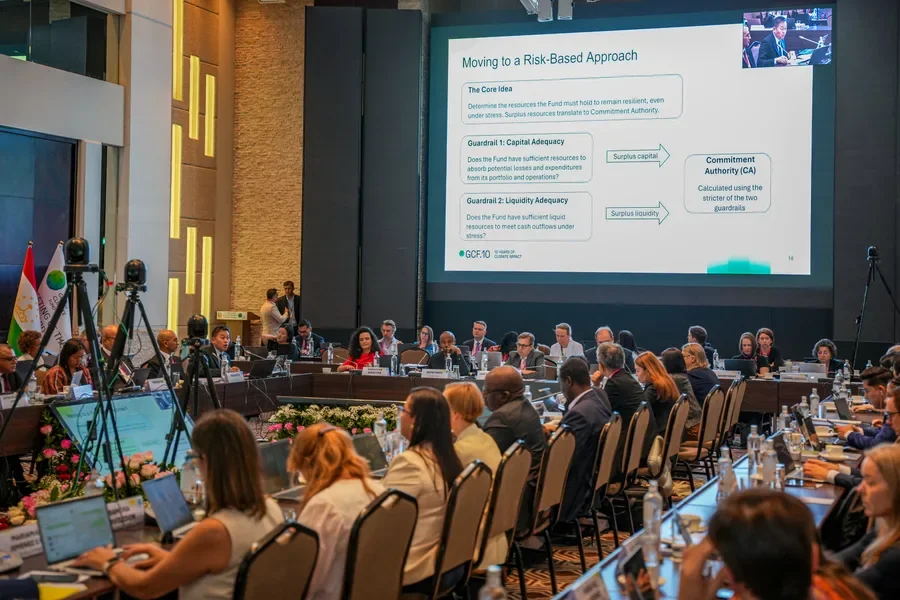
The approval of US$369 million in new climate finance for developing countries across 10 climate adaptation projects signals a welcome shift towards building resilience. | GCF
These events are signs of a new climate reality in which losses and damages are increasing faster than countries can recover from them. It is in this context that the outcomes of the GCF board meeting deserve recognition.
The approval of US$369 million in new climate finance for developing countries across 10 climate adaptation projects, all prioritising climate adaptation interventions, signals a welcome shift towards building resilience.
Out of this, 50 percent is in grant finance, targeting critical adaptation projects in three African countries. At the same time, the board approved the first-ever GCF project in the Central African Republic, allocating $USD 69.1 million to strengthen climate-resilient water, sanitation, and disaster management systems for the country’s most vulnerable children.
Cote d’Ivoire secured $40 million to enhance sustainable land management and climate-resilient Agri-food systems, while Togo received $42.8 million to build the resilience of its national health system and that of vulnerable communities to climate-sensitive health outcomes.
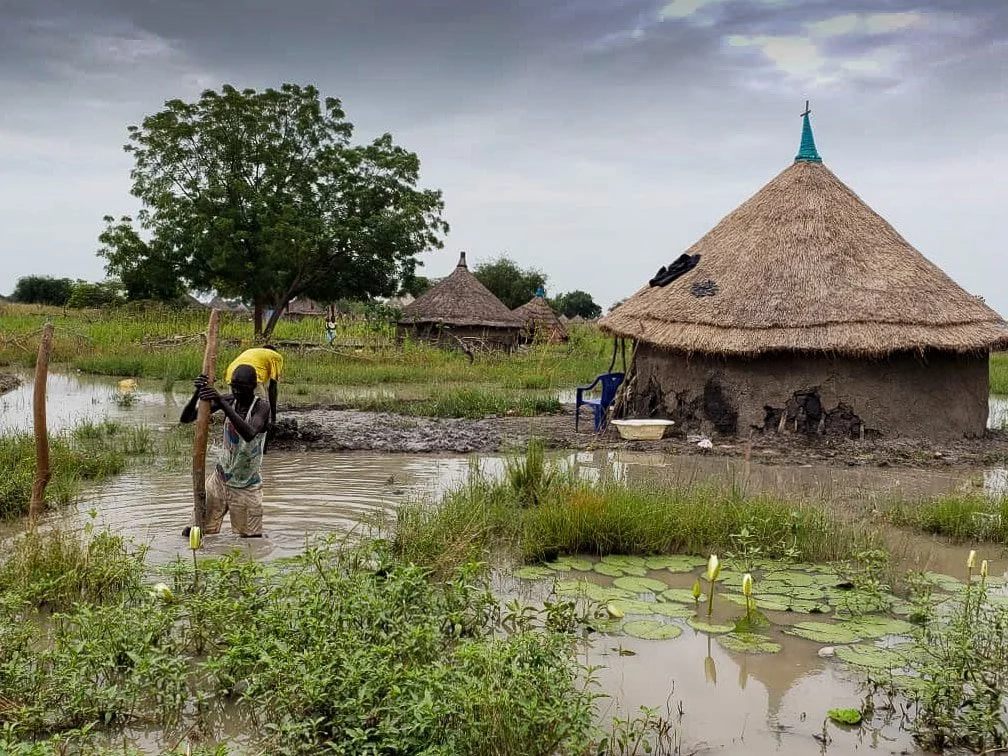
Africa currently receives an estimated US$13–26 billion in adaptation finance annually against needs estimated at more than US$100 billion each year. | STOCK
This builds on the Board’s recent landmark decision to establish two regional offices in Africa— in Kenya and Côte d’Ivoire— which has been lauded as a pivotal institutional reform designed to address the long-standing accessibility concerns voiced by developing countries.
The accreditation of Kenya’s Equity Group Holdings and Mali’s Mali-Folkecenter NYETAA as direct access entities is equally significant, bringing climate finance closer to local institutions that understand community needs. The board also launched the GCF’s third replenishment process and adopted reforms intended to improve efficiency, country ownership and gender-responsive programming.
However, these positive developments cannot obscure the uncomfortable truth that climate finance is not keeping pace with climate impacts. Africa currently receives an estimated US$13–26 billion in adaptation finance annually, while the continent’s adaptation needs are already estimated at more than US$100 billion each year.
“Investing in climate-resilient infrastructure, early warning systems, water security, and ecosystem restoration are essential to reduce future losses and strengthen national development.
”
Globally, adaptation needs are projected to rise to between US$300 billion and US$365 billion annually by 2035. Even more concerning, adaptation finance declined between 2022 and 2023 instead of increasing, despite worsening climate impacts and repeated international commitments to scale up support.
The picture is even more alarming for the Fund for Responding to Loss and Damage, whose board met last week in Manila, Philippines. By mid-2025, only about US$788.8 million had been pledged globally to the dedicated Loss and Damage Fund, with US$582.5 million in actual contributions. This is a fraction of what vulnerable countries require, with losses and damages already measured in hundreds of billions of dollars annually.
The economic losses from just one week of extreme weather across multiple regions are likely to dwarf the value of the projects approved in Dushanbe. Every flood that washes away roads, every drought that destroys crops, every wildfire that consumes homes and every storm that damages hospitals pushes vulnerable countries further into debt while eroding decades of development gains.
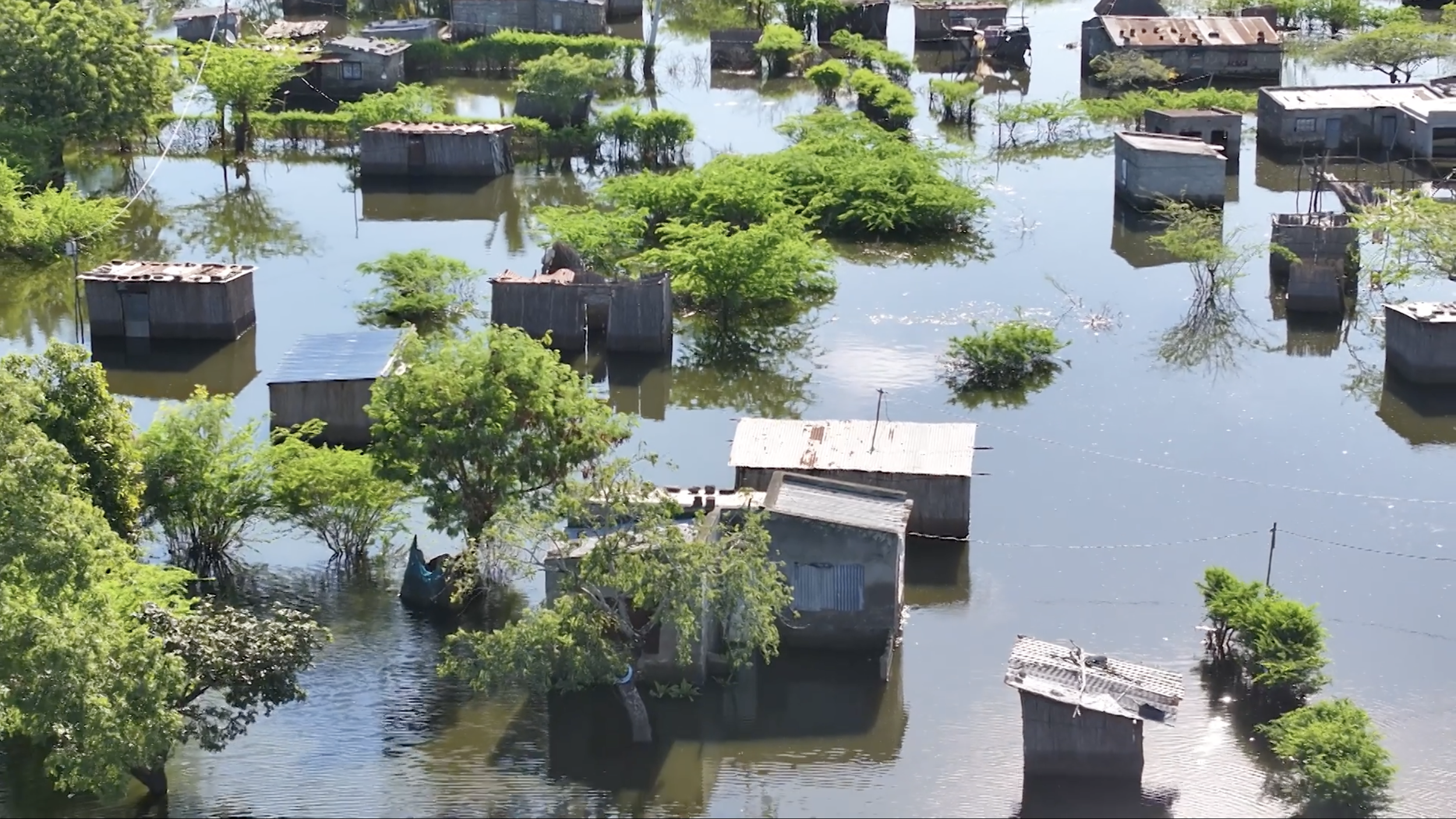
Communities need a climate finance system that recognises the scale of today’s crisis, not yesterday’s. | PSA Media
In Africa, countries are increasingly forced to divert scarce public resources towards disaster response instead of investing in health, education and economic transformation. The answer to this should not simply be more emergency aid after disasters strike. It should be a decisive shift towards financing resilience before disasters occur.
As governments prepare for COP31 and contributors negotiate the GCF’s next replenishment, they must match their political ambition with financial ambition. Adaptation and resilience funding must increase substantially, become more predictable and reach local institutions much faster.
There is no point in just sympathising with communities on the climate frontline every time disaster strikes. Communities need a climate finance system that recognises the scale of today’s crisis, not yesterday’s.
As losses and damages continue to rise, resilience is no longer just a climate priority; it is the foundation of development. Without it, the cost of inaction will continue to grow, measured not only in dollars but in lives, livelihoods and lost opportunities.
Amos Wemanya is a Senior Climate Advisor and strategist at Power Shift Africa