INSIDE THE MOMBASA DECLARATION OF THE 11TH OCEAN CONFERENCE

Former US Climate Envoy, John Kerry, addressing the 11th Oceans Conference in Mombasa, Kenya. | STOCK
BY MARY KYANYI
After 3 days of discussions at last week’s Our Ocean Conference, countries from around the world adopted the Mombasa Declaration, paving the way for more coordinated marine conservation and governance efforts between nations.
Held under the theme of “Our Ocean, Our Heritage, Our Future’, the 11th Oceans Conference in Mombasa, Kenya, brought together delegates from Africa, Europe, the Pacific, the Caribbean, and Asia to work out practical ways to protect the world’s oceans.
The declaration proposes several measures towards realising Sustainable Development Goal 14 (SDG14).
Global Charter for Fisheries Transparency
The Ocean Conference committed to advancing this tool to enhance and enable sustainable fisheries globally. As a call to support the adoption of the tool, the conference called upon governments to enact the 10 principles embedded in the Global Charter to combat illegal fishing.
This tool will enhance transparency and accountability across supply chains across the world and harmonise fishing operations and regulations.
Means of Implementation
More than 320 commitments were announced at the conference, with about $6.4 billion in pledges from different countries. The World Bank committed to investing $1billion to support developing countries in building their blue economies, while Canada pledged $682 million to support coastal economic activities, including Small Craft Harbours.
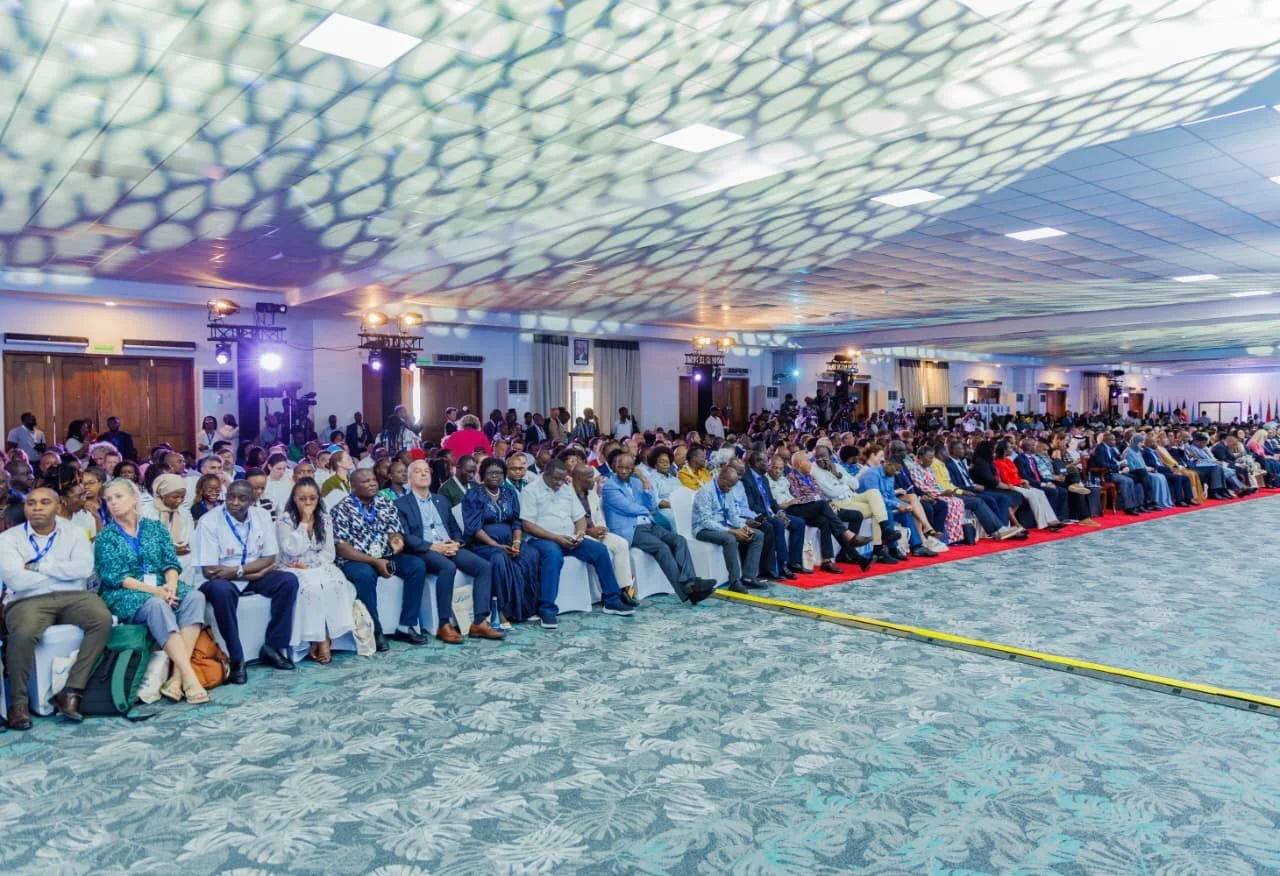
Delegates following proceedings at the 11th edition of the Oceans Conference in Mombasa, Kenya. | STOCK
Meanwhile, host Kenya committed to a $200 million toward electronic monitoring systems for all industrial fishing vessels in its waters to support and combat illegal fishing. This milestone encourages nations to continue strengthening their capacities and sharing marine knowledge to enhance the monitoring of fisheries for a sustainable blue economy.
Since 2010, only $30 billion out of the required $175 billion has been allocated towards SDG14. Bridging this financial gap and building capacity for nations is essential to attain the goal. Unmet promises and mere commitments will not deliver the goal.
Promote Ocean Observation and Open Data
The 11th Ocean Conference further committed to elevating actions that provide global marine information and data to inform policies, regulations, and practices that ensure sustainable ocean governance.
Accelerating Ocean Global Commitments
During the conference, the Regional Seas Convention Action Plans (RSCAPs) outlined their strategy to support 30% of marine areas outlined under the Kunming Montreal Global Biodiversity Framework (KMGBF).
Since 1974, RSCAPs have supported regions in monitoring ocean pollution and conserving the marine environment through training, communications, and partnerships with institutions across ocean regions.
The conference also reflected on the importance of implementing the Biodiversity Beyond National Jurisdiction Agreement (BBNJ) to scale up marine conservation efforts, critical to the achievement of the global 30x30 target of the world’s oceans by 2030.
Community Led Conservation Efforts
The importance of a bottom-up approach to marine conservation and protection was a key highlight of the event in Kenya.
Through the Pan African Vision for the Environment (PAVE), the conference advocated for the inclusion of young Africans in ocean governance, marine research, and technology.
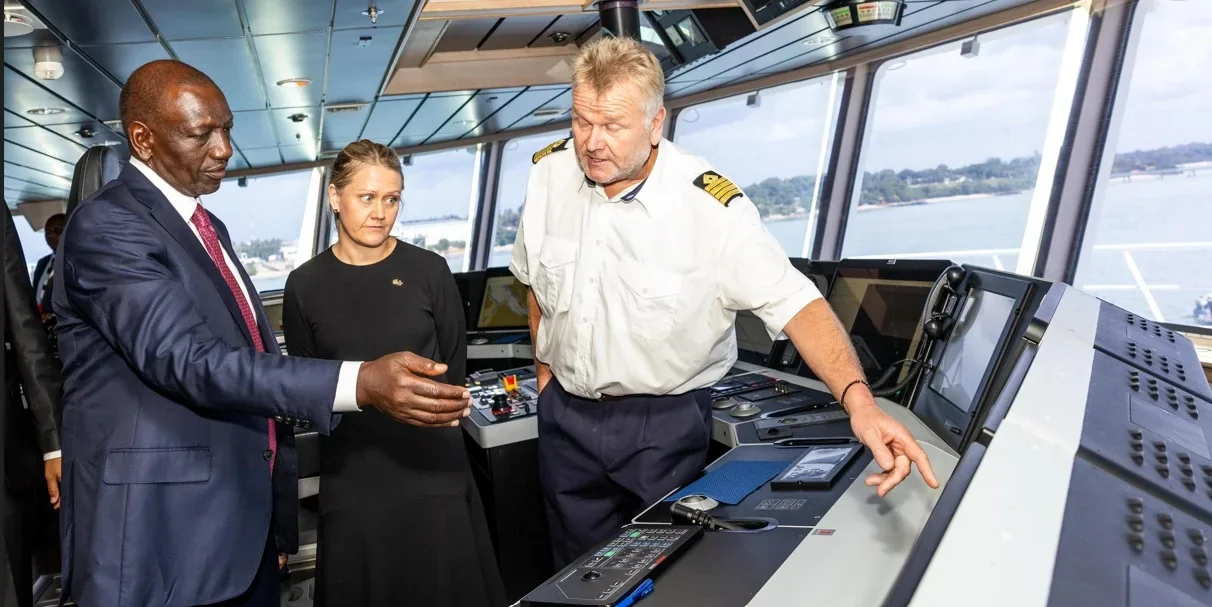
Kenya’s President William Ruto tours the Dr. Fridtjof Nansen marine research vessel at the Port of Mombasa, Kenya. | PSC Kenya
At the same time, more than 100 youth delegates from the Kenya Youth Transition Initiative (KYTI) attended the conference, underscoring the need to secure a sustainable blue economy for the future.
With more than 3 billion people worldwide depending on oceans for food, tourism, employment, and maritime operations, the coastal frontline communities remain at the backbone of marine conservation and protection.
Mary Kyanyi is an adaptation and resilience fellow at Power Shift Africa