Is this the Conference That Will End Fossil Fuel Dependence?
It came when it mattered the most.
The days were dragging on, and negotiations at COP30 in Belem, Brazil, were becoming more tense. The more the nations haggled, the slimmer the possibility of a deal to establish a global roadmap to phase out fossil fuels grew. By the start of the final weeks of the talks, the mechanism was facing long odds.
Saudi Arabia, Russia, and India were hellbent on protecting their national interests, fervently opposing strong commitments on the phaseout. While some nations threw in the towel, others stood tall.
Amidst the sizzling heat of the Amazon and the din of the summit, Colombia and the Netherlands were quietly fashioning a solution. A conference. The first-ever meetup that would bring world nations together to explore ways to phase out oil, gas, coal, and other dirty fuels responsible for igniting the climate crisis.
The International Conference on the Just Transition Away from Fossil Fuels, to be held in Santa Marta, Colombia, this April, is one of a kind. It is the first intergovernmental forum that complements the Paris Agreement and the UN climate process.
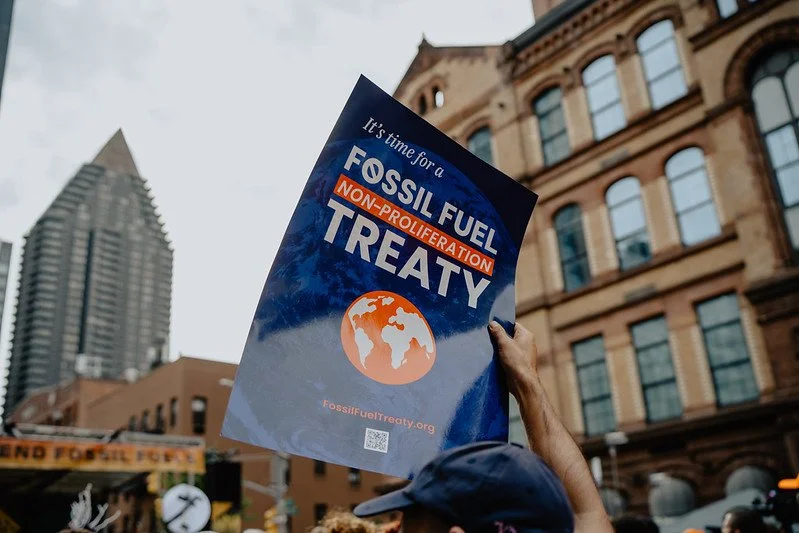
Global campaign Fossil Fuel Non-Proliferation Treaty describes the conference as a ‘‘strategic space for dialogue’’ among a broad range of stakeholders, including governments, rural and Indigenous Peoples, civil society, climate advocates, industry, and academia, to explore viable, fair, and equitable pathways for transitioning to sustainable, diversified, and accessible energy.
Its organisers say the summit will facilitate ‘‘a planned, just, and sustainable’’ phase-out of fossil fuels while promoting a structural shift in socioeconomic models around the world.
But why does a conference matter? Why now?
Building Political Momentum. The conference demonstrates there’s a growing ‘‘coalition of the willing’’ among world nations to drive action beyond the the UN climate process under the United Nations Framework Convention on Climate Change (UNFCCC). UN climate decisions are made by consensus, making it harder for all nations to agree on every issue on the table. Many hope this will help unlock gridlocks that often characterise climate negotiations.
“There is a clear momentum to phase out fossil fuels, and now is the time to capitalise on it,’’ says Sophie Hermans, deputy prime minister of the Netherlands.
Historically, fossil fuel interests have infiltrated the process through lobby groups, blocking stronger commitments and slowing progress at climate talks. By meeting outside of the UN process, countries will build the required momentum to accelerate the transition from fossil fuels.
Charting Practical Phaseout Pathways. The organisers of the summit say it tallies with the objectives of the Paris Agreement. It also aligns with the recent advisory opinion of the International Court of Justice. In July last year, the ICJ stated that countries have a ‘‘legal obligation to protect the climate’’, including by cutting emissions. The conference, therefore, aims to identify concrete legal, economic, and social pathways for this phaseout. These pathways include mechanisms for financial and technological support for vulnerable countries, economic diversification, and labour reskilling for workers to ensure no country or community is left behind in the transition.
Fostering Inclusive Cooperation. Coming at a time when the United States is reneging on international cooperation on climate, this conference underscores the importance of global multistakeholder collaboration to combat climate change. It will bring together a broad range of actors, notably governments, Indigenous Peoples, civil society, technical experts, and industry leaders for the talks, thus promoting a diversity of voices in shaping a just, equitable future for all.
“As difficult as it can be, we also know that this conversation cannot end here. We must keep the momentum, lead with bravery, rise to the challenge, and build a coalition of the willing,’’ says Irene Vélez Torres, Colombia’s minister for environment.
Reinforcing Legal Obligations. The ICJ’s historic Advisory Opinion in 2025 confirmed that world nations have binding legal duties to prevent significant climate harm, requiring them to facilitate ‘‘deep, rapid, and sustained’’ emission cuts. The opinion clarified that states must act with due diligence to protect human rights from climate impacts, cooperate globally, regulate corporations, and address historical responsibilities, setting a precedent for litigation and policy, and grounding policy in international law. By bringing countries together to develop a roadmap for ending fossil fuels, the conference aligns with and reinforces this legal opinion.
Many experts view this conference as a historic step that will help develop a specific, binding international mechanism to manage a global, equitable, and permanent transition away from the fossil fuel era, essential for humanity's and the planet's survival.
Amos Wemanya, the senior climate advisor at Power Shift Africa, says this conference confronts the ‘‘central contradiction’’ of our time.
‘‘Oil, gas, and coal are driving climate breakdown, conflict, and public health crises. Yet powerful countries led by a resurgent US appetite for oil and aggressive geopolitical posturing are doubling down on extraction,’’ Wemanya says, calling the renewed global rush for oil a warning rather than an opportunity.
Fossil fuels, he notes, have failed to deliver universal energy access, and instead locked countries into volatile commodity cycles while driving devastating social and ecological damage, especially in the Global South.
‘‘As wealthy nations weaponise energy and secure supply through militarised diplomacy and corporate expansion, Global South countries risk being pushed into a new era of extractive dependency just as climate impacts intensify,’’ .Wemanya warns.
To him, the conference in Colombia offers a ‘‘critical counter-narrative’’ that true energy security, development, and sovereignty lie not in more drilling, ‘‘but in a planned, just and equitable exit from fossil fuels.’’
At COP30, more than 80 countries supported the Belém Declaration on the Just Transition Away from Fossil Fuels, an initiative spearheaded by Colombia and other nations to accelerate the shift from fossil fuels to clean energy. Key pillars of the declaration include equity, inclusion, support for affected workers and communities, and financial support for developing nations.
Colombia is one of the countries
Coming at a moment when oil is being marketed as humanity’s destiny, Wemanya says this meeting offers a choice. ‘‘We do not have to sacrifice people, ecosystems, and the future to fuel another global oil boom,’’ Wemanya notes.