
Kenya Floods: 5 Things You Need to Know
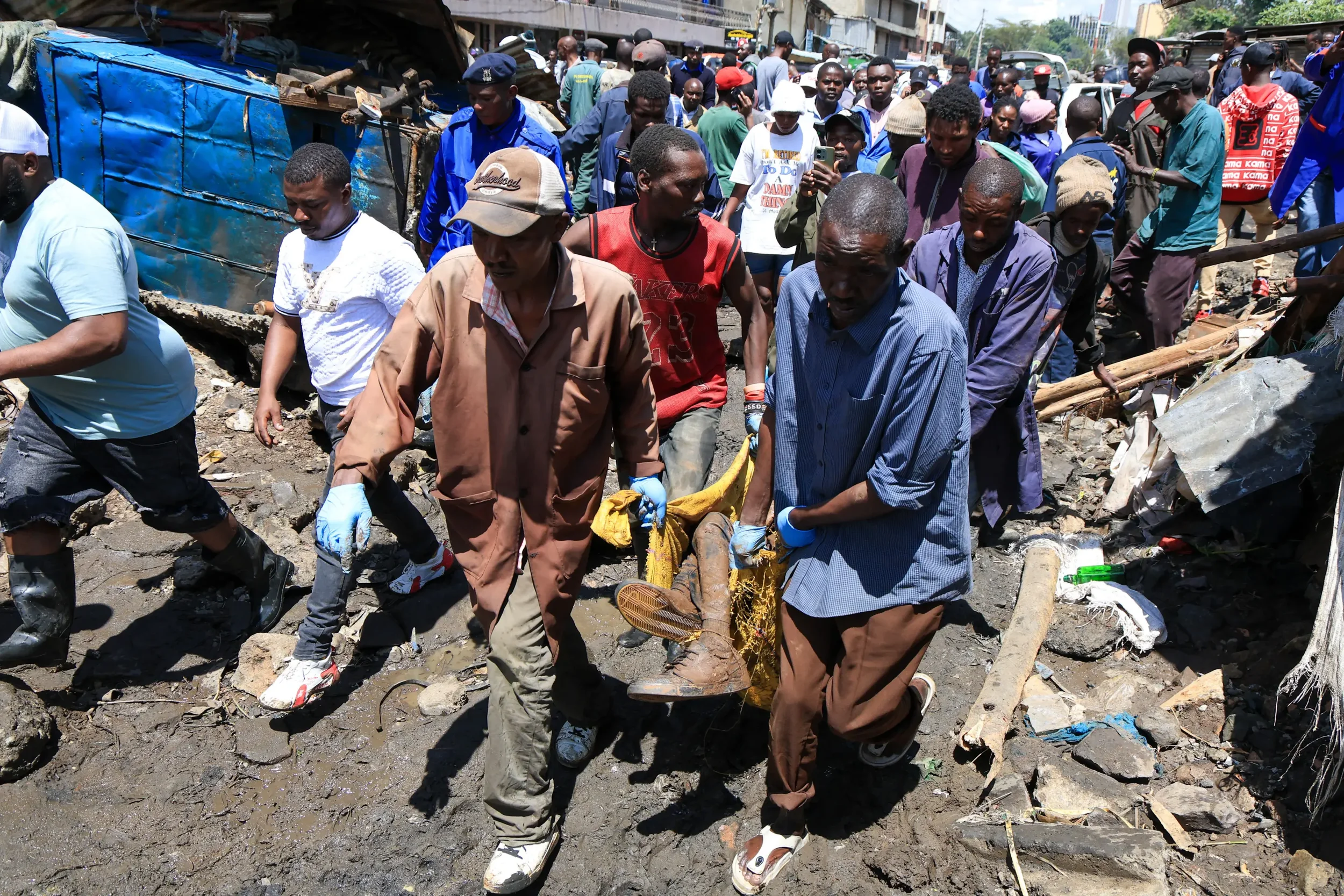
Volunteers carry the body of a flood victim in Nairobi, Kenya | Courtesy AP NEWS
BY JAMES KAHONGEH
Death toll: So far, more than 40 people have died from the floods that have rocked Kenya since Friday last week. More than 26 fatalities are from the capital, Nairobi, alone. By Monday morning, scores of people were still unaccounted for. More than 50000 others have been displaced after floodwaters either destroyed or submerged their homes.
Climate-induced Extreme Weather Events: The period between March and May is the long rains season in Kenya. Most parts of the country have been receiving climate change-induced, heavier-than-usual rainfall, leading to flooding. In their forecast, the Kenya Meteorological Department says heavy rainfall will continue across the country this week, with further risk of flooding.
Urban Planning, Vulnerability and Resilience: Nairobi is built on swampy ground. The capital started as a railroad depot for the Uganda Railway line, rather than an area of dense human habitation. Whenever it rains, the ground becomes waterlogged, blocking the free flow of water and causing flooding. While there have been efforts to expand the existing drainage system, this has largely been outpaced by the rapidly growing population in the sprawling metropolis. Most parts of the city are either underserved by the sewerage system or are without any at all. Nairobi is notorious for the encroachment of riverine areas, with some neighbourhoods built entirely on riparian land. These become flood flashpoints during the rainy season.
Disaster Preparedness: Like most African countries, Kenya is highly prone to floods and other climate-related extreme weather events, with roads, walkways, and neighbourhoods exposed to the risk of damage during floods. proof. Over the last four years, the Government of Kenya has allocated about KES 35 billion ($27 million) to combat floods. To date, however, most parts of Kenya remain vulnerable to flooding during the rainy season, putting lives, livelihoods, and infrastructure at risk of loss and damage.
What the Experts are Saying: Mohamed Adow says this tragedy is another ‘‘stark reminder’’ that extreme weather is intensifying across Africa, putting rapidly growing cities like Nairobi on a knife-edge.
“Drainage systems built for past rainfall patterns are now struggling to cope with heavier, more unpredictable storms,’’ says the director of Power Shift Africa.”
Adow adds that without urgent investment in climate-resilient urban planning, early warning mechanisms, and disaster preparedness, these disasters will become more frequent, the damage more widespread.
“Strengthening urban resilience and investing in climate adaptation must become an urgent priority,’’ he says. ”