What’s the Role of the Private Sector in Africa’s Just Transition?

A Standard Bank building in Johannesburg, South Africa | Courtesy
BY KARABO MOKGONYANA
There is a growing orthodoxy in global climate and development circles: that the private sector will drive the just transition. From multilateral development banks to G7 communiqués, climate summits, and investment forums, the refrain is the same: public finance is insufficient and, therefore, private capital must lead.
In Africa, this narrative has taken on a particularly forceful note. With an annual climate finance gap estimated at $200 billion and an energy access deficit affecting about 600 million people, the scale of this challenge is undeniable.
Yet scale alone does not justify surrendering the architecture of Africa’s just transition to market logics. If anything, Africa’s developmental realities demand the opposite: a public finance-led transition in which private capital plays a disciplined, clearly bounded role.
“A just transition in Africa is fundamentally different from decarbonisation in industrialised economies.
”
In Europe, the transition often means replacing existing fossil fuel infrastructure. In Africa, it means building entirely new systems while expanding access, industrialising economies, creating jobs for the youth, and addressing structural inequality.
The African Union’s Africa Energy Transition Strategy and Action Plan 2025–2063 frames the transition as one that must simultaneously ensure universal energy access, economic diversification, energy security, and climate resilience. This is not a narrow emissions exercise; it is a development project.
Public finance is, therefore, not optional. It is foundational.

An electric train in Cape Town, South Africa | Courtesy
Energy access expansion, grid infrastructure, regional power pools, public transport systems, and climate adaptation measures are classic public goods. They generate multiple long-term social returns but often limited financial returns in the short term. Private capital, accountable to shareholders and quarterly earnings, is structurally ill-suited to anchor such investments without heavy public de-risking. Even globally, more than 70 percent of climate finance flows originate from public sources, including concessional funding, development banks, and state-owned enterprises.
In Africa, public actors continue to shoulder the bulk of large-scale infrastructure risk.
“Acknowledging the primacy of public finance does not deny the role of the private sector. It means correctly situating it.
”
The sector’s role in Africa’s just transition should be catalytic and complementary, not directive. It can bring efficiency, innovation, technology transfer, and additional capital. It can accelerate renewable energy deployment through independent power producers. It can invest in green manufacturing, electric mobility, battery storage, and digital energy solutions.
Additionally, African private enterprises, particularly small and medium-sized firms, can localise supply chains, provide services, and create jobs within renewable ecosystems.
There is, however, a profound difference between private sector participation and adopting a “private-sector-first” approach. The latter assumes that markets will allocate capital optimally and that profit incentives align naturally with social welfare. In Africa’s political economy, this assumption is deeply flawed.
Private capital tends to gravitate toward bankable projects, such as utility-scale solar plants with sovereign guarantees, export-oriented green hydrogen corridors, or high-return mineral extraction ventures. It is far less inclined toward rural mini-grids serving low-income communities, workforce retraining programmes for coal-dependent regions, or climate adaptation projects that prevent losses without generating revenue streams.
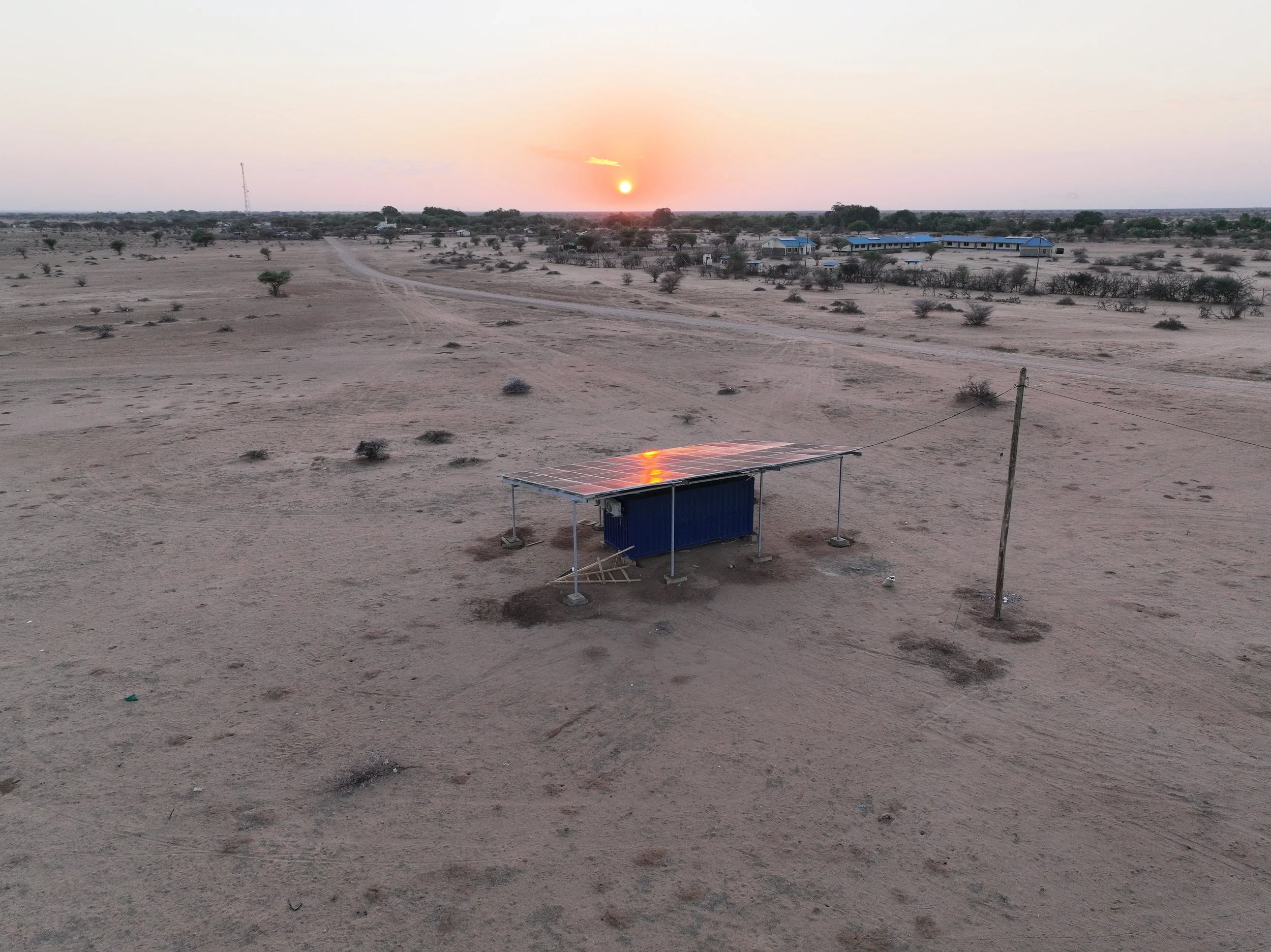
A solar mini grid in Garissa County in Northern Kenya | Power Shift Africa
The tension between profit and people is not abstract. In the minerals space, for example, international corporations seek stable fiscal regimes, minimal export restrictions, and rapid project approvals to secure supply chains for electric vehicles and renewable technologies. African governments, by contrast, need value addition, local beneficiation, job creation, and technology transfer.
“Without deliberate guardrails, private investment risks reinforcing extractive patterns: raw lithium or cobalt exported, refined elsewhere, profits repatriated, and communities left to grapple with a degraded environment and limited industrialisation. ”
Similarly, in the energy sector, independent power producers may prioritise grid-connected projects with guaranteed off-take agreements while neglecting decentralised systems that are essential for universal access. The economics of scale favour concentrated investments; the ethics of justice demand dispersed inclusion. A private-sector-first transition risks widening spatial and social inequality, clean power for urban industrial hubs, and continued marginalisation for rural populations.
The question of sovereignty is hard to overlook. Blended finance models, guarantees, and risk-sharing instruments often shift public resources toward de-risking private investors. While this can mobilise additional capital, it can also socialise risk and privatise returns if poorly structured.
As such, African governments must be wary of arrangements where public balance sheets absorb downside exposure while upside profits accrue externally. In heavily indebted countries, excessive reliance on private finance can deepen fiscal vulnerability rather than alleviate it.
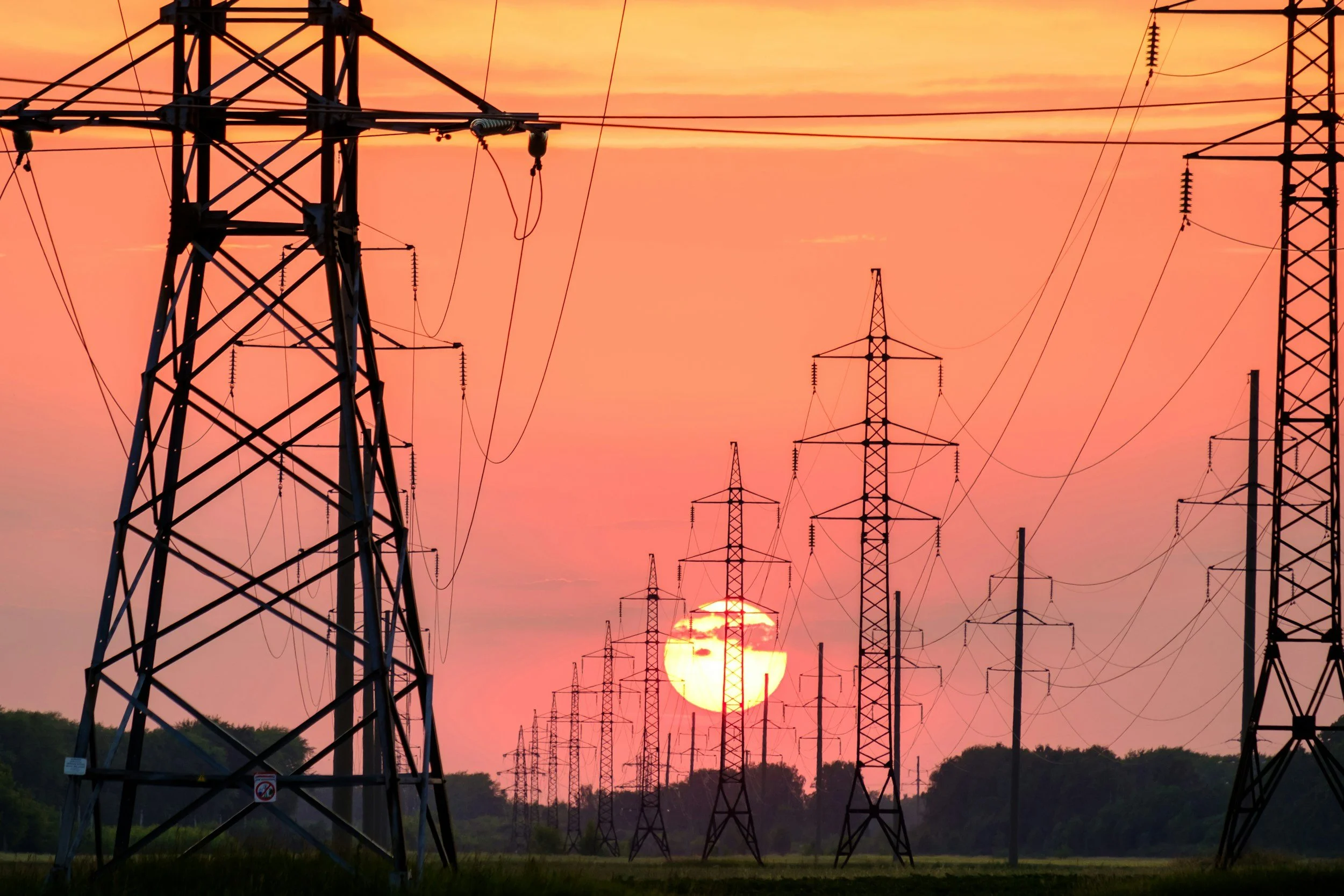
Power lines captured at moonlit dusk | Courtesy
None of this negates the fact that private capital will be present. The global clean energy economy is projected to exceed $4 trillion annually by 2030. Africa cannot isolate itself from these flows. The challenge is how to position the continent in a way that shapes this economy.
To this end, the private sector’s legitimate role should focus on areas where commercial incentives align with public goals: renewable generation under clear regulatory frameworks, local manufacturing linked to industrial policy, energy efficiency technologies, and green entrepreneurship ecosystems.
Domestic private actors in particular should be prioritised through access to concessional credit, procurement support, and regional market integration under the African Continental Free Trade Area (AfCFTA).
If the private sector is to participate in Africa’s just transition responsibly, certain guardrails are non-negotiable.
How to Make Private Finance Work for Africa’s Just Transition
Foremost, public finance must lead strategic planning. National and regional transition plans should define priorities before capital arrives. Investment should respond to public strategies, not dictate them.
Secondly, development impact conditionalities must accompany private participation. Access to public guarantees, concessional loans, and tax incentives should be contingent on measurable outcomes: local job creation targets, skills development commitments, domestic procurement thresholds, and technology transfer provisions.
Thirdly, value addition and localisation requirements should be embedded in contracts, particularly in renewable energy manufacturing and critical minerals processing. Africa cannot remain an exporter of raw inputs in a green economy.
Fourthly, strong environmental and social safeguards must be enforced domestically, not merely referenced through international ESG frameworks. Communities must have binding rights to consultation, benefit-sharing, and redress.
Fifthly, profit-sharing and revenue transparency mechanisms should ensure that gains are equitably distributed and reinvested into public services, infrastructure, and diversification funds.
Sixthly, regional coordination through African Union frameworks should prevent a race to the bottom in regulatory standards. A pan-African lens strengthens bargaining power and protects collective interests.
Finally, debt sustainability must guide financing structures. Private capital cannot be allowed to exacerbate sovereign risk through opaque guarantees or contingent liabilities.
Africa’s just transition is too solemn to be outsourced. It is not simply about installing solar panels or building wind farms. It is about reshaping economies, correcting historical injustices, and expanding human opportunity. Public finance, domestic budgets, development banks, and climate funds must remain the backbone of this sacred effort because justice is not a market outcome; it is a political choice.
The private sector has a role, but it is a bounded one. It can innovate, invest, and scale solutions. It cannot define the social contract. In Africa’s just transition, profits may participate, but people must lead.
Karabo Mokgonyana is the Energy Co-Lead at Power Shift Africa