
ON THE TRAIL OF THE LIMPOPO: MOZAMBIQUE FLOODS EXPOSE THE CASE FOR LOSS AND DAMAGE FUND
In early February of 2026 a team of Power Shift Africa filmmakers spent a week in flood-devasted regions of Mozambique, cataloguing the damage, interviewing destitute families, and talking to helpless government officials. This report, alongside a full-length documentary, forms part of our exclusive coverage of these floods… and, most importantly, links the carnage to the moral obligation of loss and damage
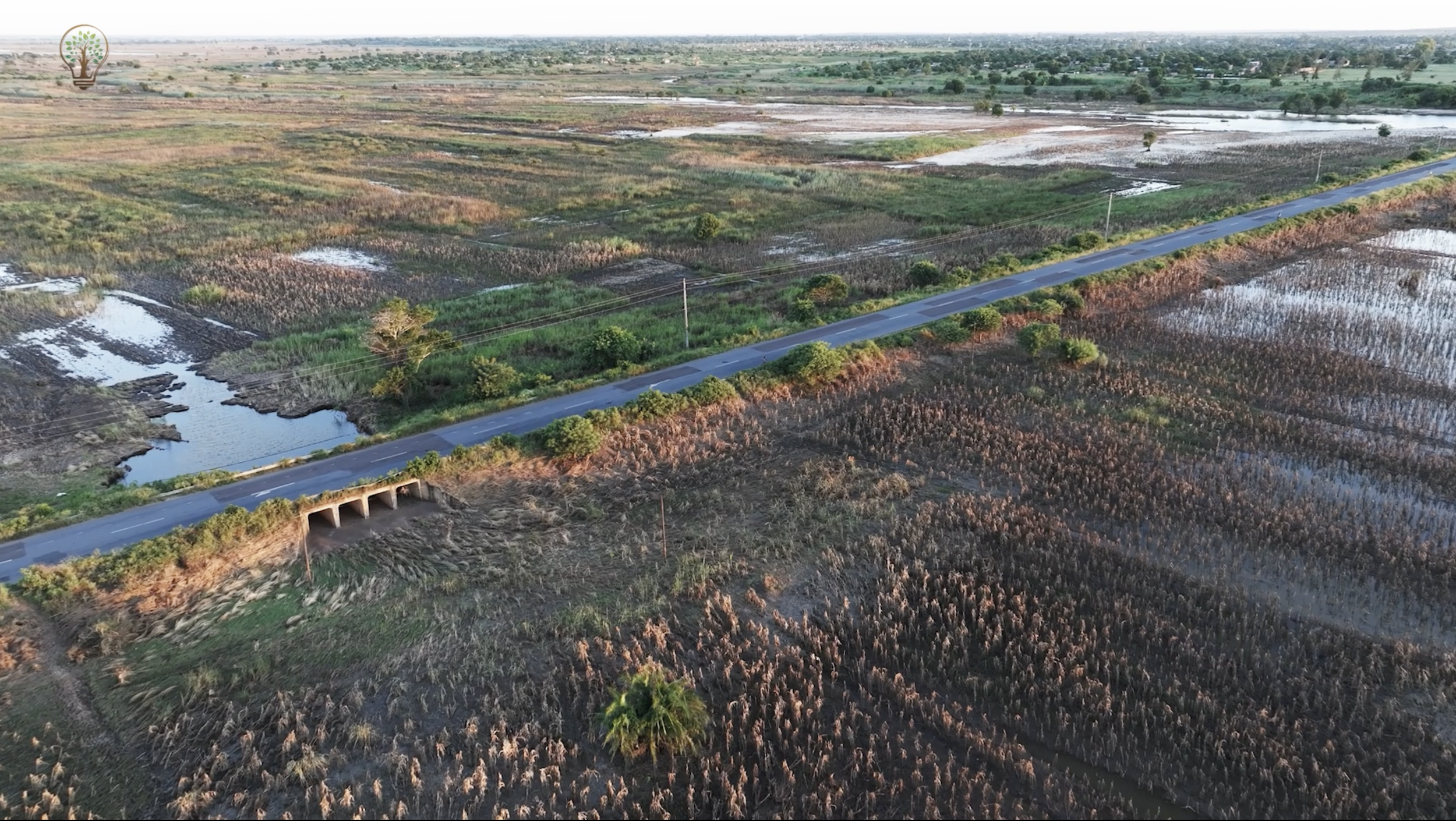
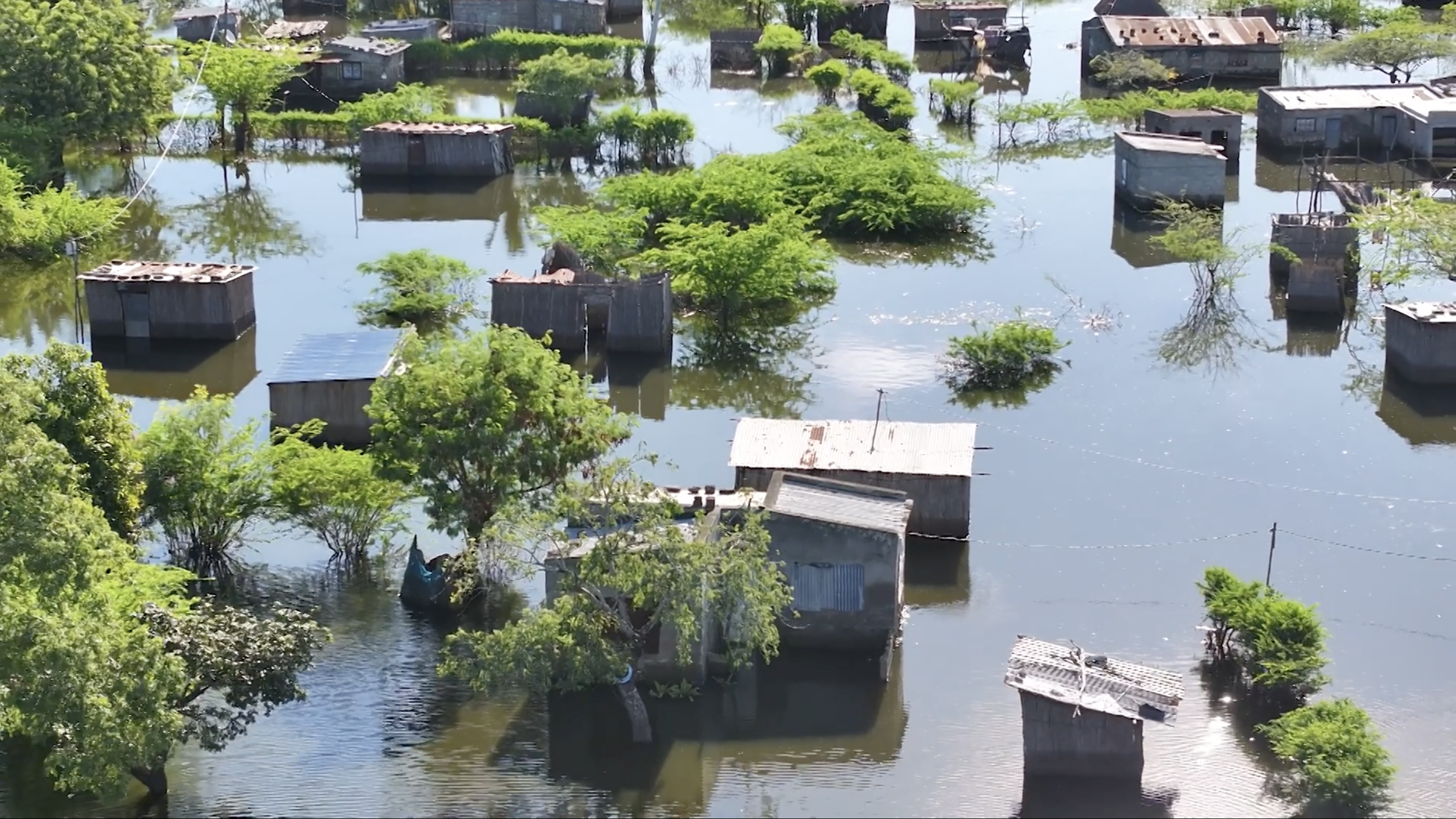
From the air, the landscape in southern Mozambique on this warm February morning bears little resemblance to the agricultural plains that normally sustain this region. What was once a mosaic of cultivated fields, gravel roads, irrigation canals and clustered villages has been transformed into a vast brown inland sea stretching to the horizon.
Rooftops protrude through the water like scattered islands, occasional trees break the surface, and faint lines in the muddy currents hint at roads and fences that once structured daily life. Beneath that water lie kitchens where families once shared meals, fields where maize and rice once grew in careful seasonal cycles, and the fragile infrastructure that connects rural communities to markets and services.
Across southern Mozambique, floods that began in early January have left destruction on a scale that is still unfolding. Government estimates indicate that more than 150 people have died and nearly one million have been displaced after the Limpopo River burst its banks following weeks of heavy rainfall across southern Africa from mid-December. Entire districts in Gaza Province, particularly around the regional capital of Xai-Xai and the agricultural hub of Chókwè, have been transformed into submerged landscapes where homes, businesses and farmland have disappeared beneath muddy floodwaters.
Among those displaced is a young mother, Estefânia Tomaz Julião.
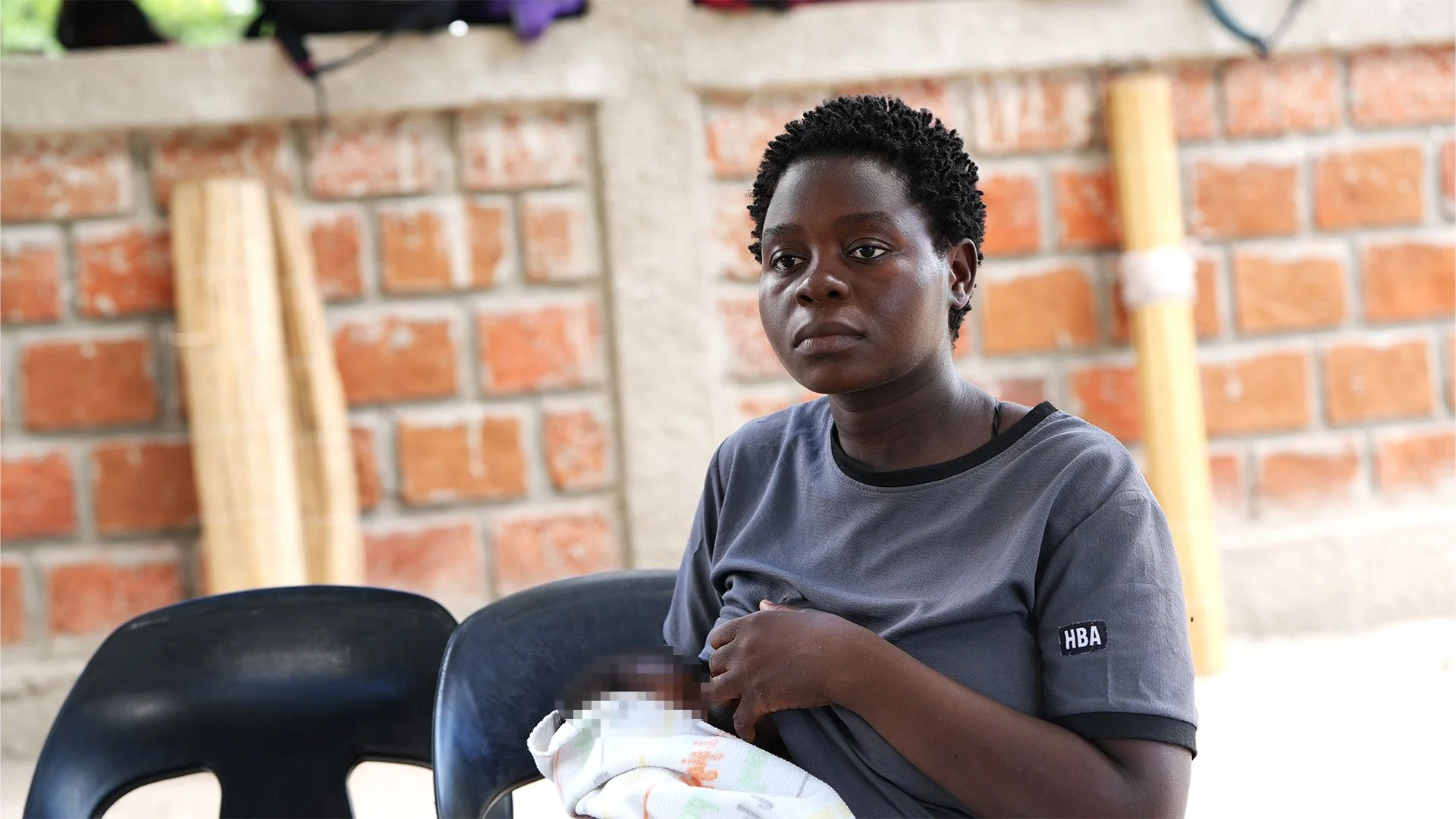
When we meet her, she is walking slowly along a dusty path that cuts across the floodplain near Chaquelane, a small settlement about 30 kilometres from Chókwè. In one arm she cradles a newborn wrapped in a faded cloth, while her other hand steadies her toddler daughter, who stumbles beside her in confusion and distress. The walk is short, barely two kilometres, yet for Estefânia, the distance feels far longer because she gave birth to her son only five days earlier and her body has not yet recovered.
Each step is tentative and painful, but she keeps moving because the small church she is heading to offers the only shelter currently available to her and her children.
Says Estefânia: ‘‘I was heavily pregnant and traumatised when we arrived at the camp. It isn’t the start I had in mind for the new year,’’
And obviously not the manner she wanted to bring her son to the world.
Until recently, Estefânia’s life followed a rhythm familiar to millions of rural families across southern Africa. She cultivated vegetables, sold produce at local markets, and carefully balanced household finances in a modest but stable economy that depended on the seasonal cycles of the Limpopo floodplain. Those cycles have always shaped life here, because the river, which rises in South Africa and flows more than 1,700 kilometres across southern Africa before emptying into the Indian Ocean in Mozambique, has long been both a source of fertility and a recurring threat.
For generations, communities have learned to live with that duality. The river nourishes irrigation systems and replenishes fertile soils, yet in years of exceptional rainfall it can also overflow dramatically, inundating vast low-lying plains. In late December and early January, unusually heavy rains across the southern African raised river levels across the Limpopo basin, sending surges of water downstream into Mozambique’s already saturated floodplains. By the time the water reached Gaza Province, the river had become an unstoppable force.
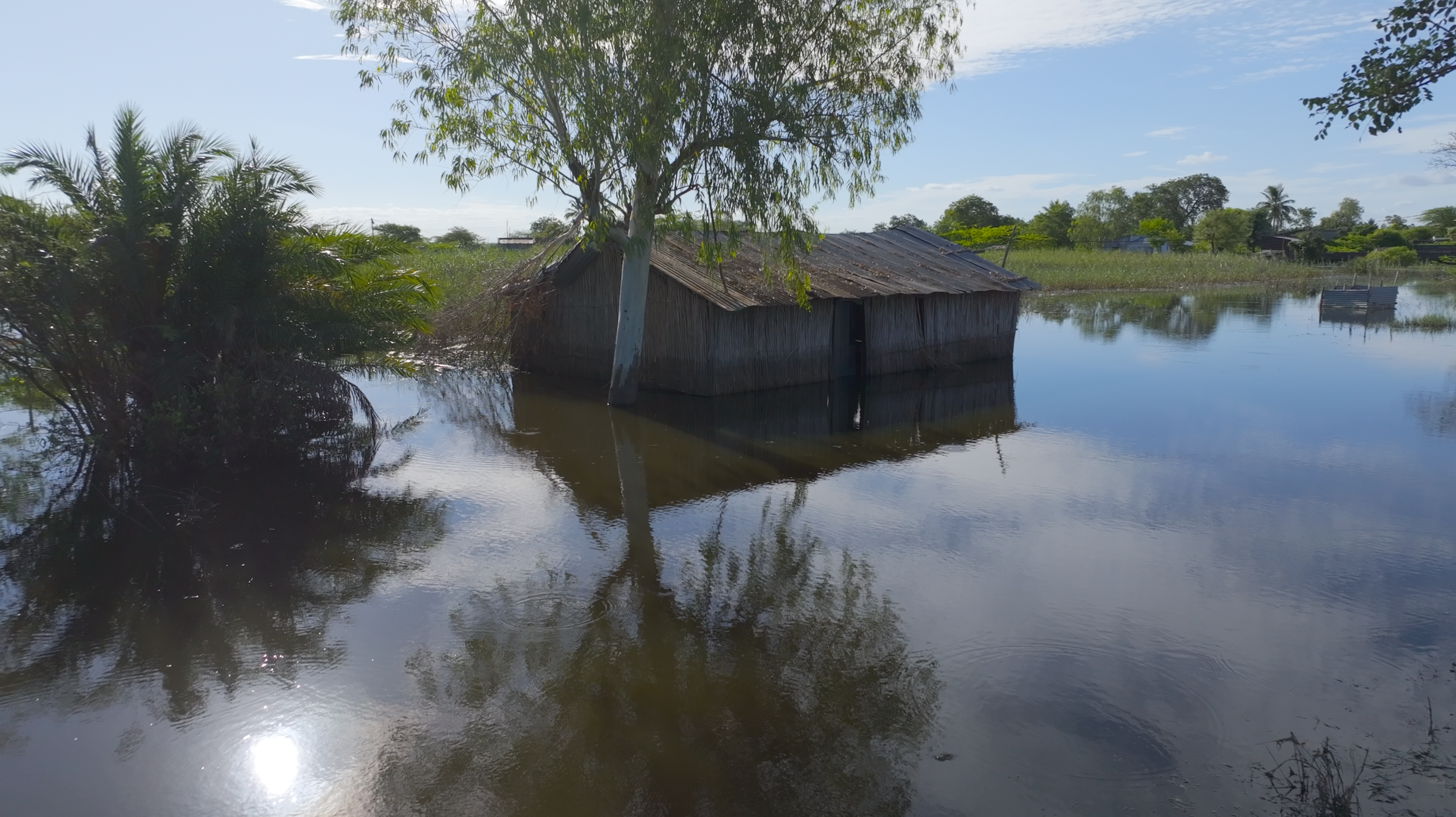
Estefânia’s house stood only a few kilometres from where she now walks, but it is now under water. The church, her new home, is a simple open-walled structure that barely shields her and her two children from the elements. Inside, families have strung sheets between the pews to create fragile partitions that function as temporary rooms. Children sleep on borrowed mats while adults attempt to reconstruct fragments of daily life within a shared space that offers little privacy but considerable solidarity. During the day, hymns echo through the open building as congregants gather to pray or simply sit together in quiet reflection, and in the evenings, when the heat fades and the wind softens, the church becomes a place of whispered conversations and subdued resilience.
Her story is repeated across southern Mozambique at the time of our visit. In Gaza Province, particularly around the city of Xai-Xai, floodwaters have transformed entire districts into shallow lakes. From above, the visual pattern is striking: rooftops dot the water’s surface like stepping stones while submerged roads and agricultural plots disappear beneath opaque brown currents. Homes, schools, businesses and fields have all vanished under water that, in some places, stretches for kilometres.
The scale of the disaster has inevitably prompted comparisons with earlier catastrophes in Mozambique’s recent history, particularly the devastating floods of 2000 and the catastrophic deluge of 1977. Although it is too early to determine whether the current disaster will surpass those events in overall severity, early assessments suggest that the combination of rainfall intensity, basin-wide runoff and floodplain exposure may rival some of the worst episodes ever recorded in the Limpopo system.
Mozambique has experienced multiple extreme weather events over the past two decades, most notably Cyclone Idai in 2019, which killed at least 1,500 people across southern Africa and destroyed large parts of the coastal city of Beira. In the aftermath of that disaster the country invested heavily in strengthening early warning systems, including meteorological radar installations, satellite monitoring networks and community-based alert systems designed to warn residents of approaching storms and floods.
Those investments have undoubtedly improved disaster preparedness, but the floods unfolding across the Limpopo basin illustrate the limits of early warning when hydrological systems themselves become overwhelmed by extreme rainfall events occurring across multiple countries simultaneously.
In a flooded neighbourhood near Xai-Xai, Cecília Belmiro Nuvunga stands ankle-deep in sludge inside what remains of her home. It is the fifth week of the floods, and her house is barely habitable; the walls are soaked, the foundations weakened, and the air thick with the smell of sewage and decaying debris.
‘‘I have lived in Xai Xai for 49 years. I don't have a plan or means to move elsewhere. If I had a plot on higher parts of the city, I would move my family there,’’ Cecília tells us.
Like hundreds of her neighbours living in low-lying parts of the city, she was ordered by the government to vacate her home at the onset of the floods.
‘‘My future is bleak,’’ she says. ‘‘All my belongings were destroyed in the floods. After the floods, I hope is to go back to my food business in the city.’’
Elsewhere in the city, authorities have established police barricades to prevent residents from returning to unsafe areas where buildings risk collapse and contaminated water poses serious health hazards. The restrictions are intended to prevent further tragedy, but they have also created emotionally charged confrontations between officials and displaced residents who wish to salvage belongings or assess damage.
At one such roadblock on the outskirts of Xai-Xai, a small crowd gathers around police officers who are attempting to maintain order. Among them is, Chipo Ncube, a trader originally from Zimbabwe who, over the years, built her livelihood from small profits in a local market now destroyed by floodwaters. Standing only metres away from the neighbourhood where her business once operated, she pleads with officers to allow her through the barricade. Her voice trembles between frustration and grief, but the officers refuse, insisting that the flooded district remains too dangerous.
‘‘I have been stuck here since the floods started. My passport is in my flooded house, and can't access it. I don’t know if it’s been spoiled by floodwaters,’’ says Ncube, on the brink of tears.
Before the floods, Ncube would bring wares from her country to sell in Mozambique and buy others to trade back home. ‘‘We moved and traded freely. When the floods came, I left all my merchandise in the house, and I haven’t been back to check if it’s still intact.’’ The trader has been in the same dress since fleeing the floods.
Moments like this illustrate how disasters create new forms of tension between public safety measures and individual desperation.
Across the river lies Chicumbane, a small frontier town roughly ten kilometres from Xai-Xai that normally functions as a busy trading hub linking rural farmers with urban markets. Under ordinary circumstances, minibus taxis shuttle passengers across the Limpopo while traders transport vegetables, grain and livestock between villages and the coastal city. But now that connection has been severed.
Shops remain shuttered and market stalls stand empty. Delivery trucks no longer arrive. Without reliable access to Xai-Xai, the town’s economy has effectively stalled, demonstrating how quickly rural commerce can collapse when a few critical transport routes are disrupted.
Further inland, roughly 200 kilometres away, lies Chókwè, one of Mozambique’s most important agricultural centres. The region’s irrigation schemes and fertile plains along the Limpopo River have for decades supplied rice and maize to markets across southern Mozambique, including the capital, Maputo. Today, much of that farmland lies submerged in floodwaters.
Entire neighbourhoods have been inundated and businesses destroyed, including a supermarket whose shelves collapsed after days of standing water flooded the building.
Its owner, Aníbal Dacio, surveys the damage with visible frustration.
“We lost more than 200,000 meticais in the floods,” he explains. “The floods damaged our lives. We are still figuring out how and where to restart, but it will be difficult because there has been no help coming from anywhere. Our fellow traders are in the same situation, and right now it feels like we are on our own.”
He also points to a deeper regional problem.
“The Limpopo brings a lot of water from South Africa,” he says. “Our upstream neighbours should warn us when floods are coming so that we can manage the water more safely. This is a political issue that needs attention from both governments.”
Dacio’s frustration reflects a broader challenge facing countries that share transboundary river systems. Because the Limpopo basin spans several countries, including South Africa, Botswana, Zimbabwe and Mozambique, rainfall patterns upstream can dramatically influence flood conditions downstream. Effective flood management therefore depends not only on local preparedness but also on regional cooperation in monitoring river flows and coordinating responses.
For decades, Chókwè symbolised agricultural productivity and rural opportunity. Today, it demonstrates how vulnerable those systems remain when extreme weather overwhelms both infrastructure and planning.
It was here that Estefânia built the life she once knew. She married young, and together with her husband gradually established a modest household economy rooted in farming and small trade. Their ambitions were practical rather than extravagant as they thought of expanding their small business, saving for their children’s education and improving their home step by step. Then the Limpopo erased those plans in a matter of days.
Across the vast floodplain, temporary camps now shelter thousands of displaced families. Rows of tents and tarpaulins stretch across elevated fields, while long queues form daily for food distributions and water deliveries.
For decades, the river sustained agriculture across this region through irrigation canals and carefully managed water systems that allowed farmers to cultivate maize and rice on a predictable seasonal schedule. Now those same waters have erased an entire growing season.
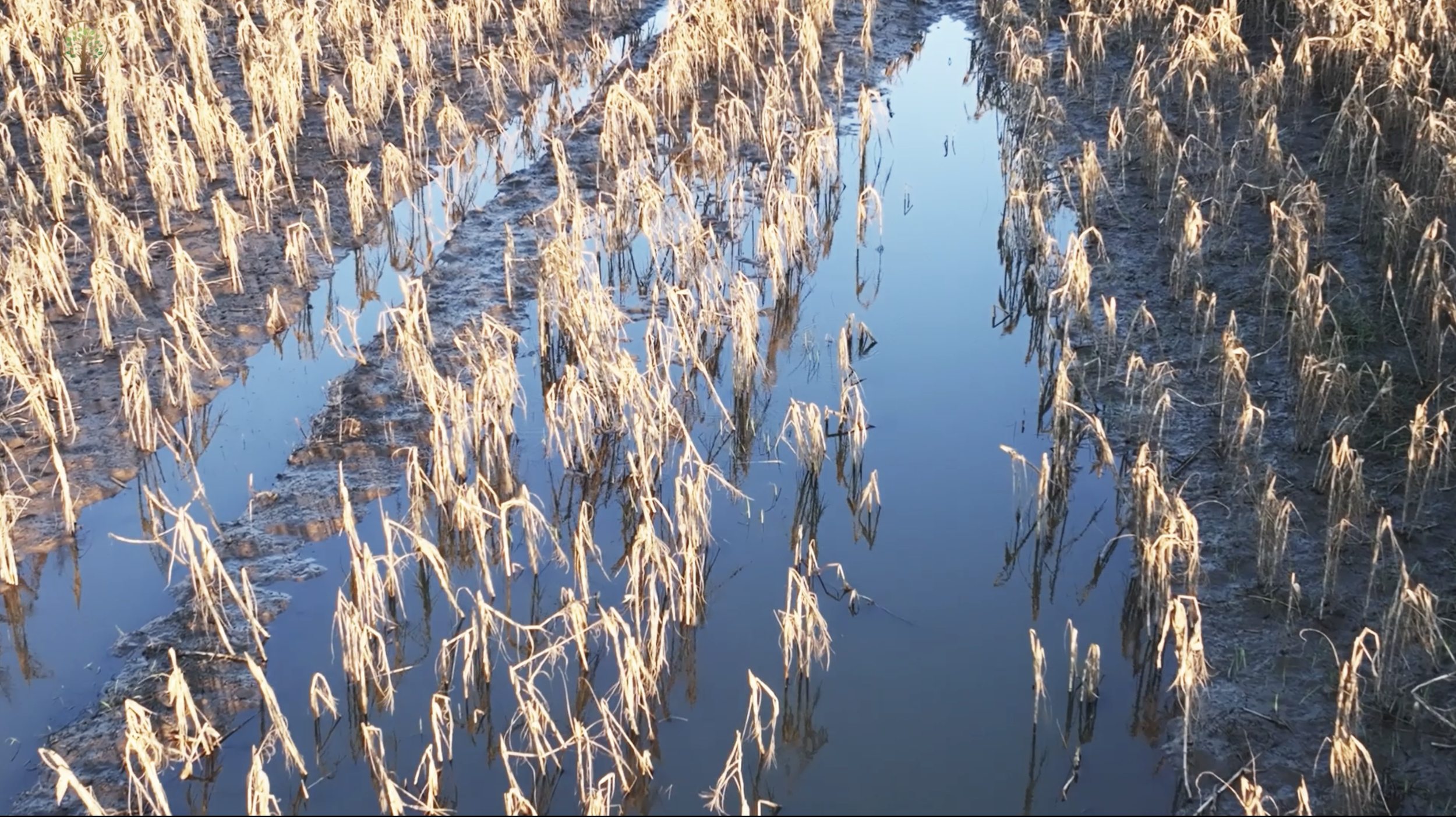
Fields of maize lie submerged beneath opaque currents while rice paddies have dissolved into indistinguishable swamps. Months of labour and investment vanished almost overnight, leaving farmers without crops, income or certainty about when cultivation might resume.
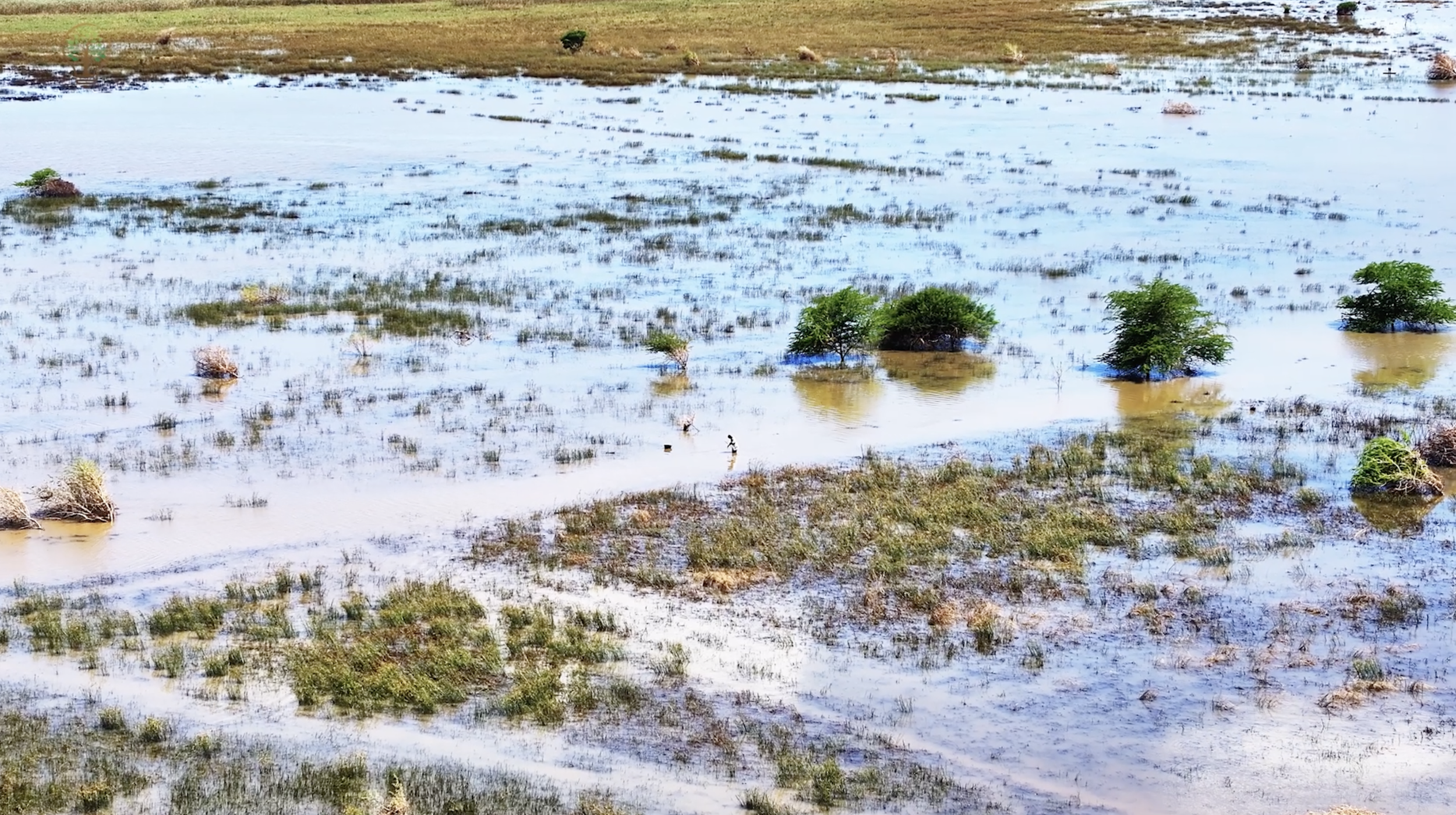
Yet even within this devastation, new forms of improvisation are emerging. Along the flooded plains men now wade through shallow water casting fishing nets into areas that were farmland only weeks earlier. The floods have displaced fish from the river’s main channel, creating an unexpected resource that struggling farmers have begun exploiting to survive. Nearby, women smoke the catch over makeshift kilns and transport dried fish to roadside markets that remain accessible.
This is adaptation, but not the gradual, evolutionary adjustment often discussed in environmental science. Instead, it is a compressed and improvised response to immediate necessity.
Mozambique’s government estimates that the floods have caused billions of dollars in damage, with roads, bridges, electricity networks and water systems all severely affected.
“This is not small destruction,” says Abdul Issufo, the National Commander of the Mozambique’s Fire Service, whom we find surveying the flooded districts of Xai-Xai. “Half of the city is practically underwater, and there is a lot of work that needs to be done, including cleaning drainage systems and clearing riverbeds so that water can flow normally. These are cyclical events, so we must prepare better.”
He adds that the government is planning to relocate the affected families to higher ground but does not say when or at what cost.
For many of the people of Mozambique, the most profound losses in these last three months cannot be easily quantified. In international climate negotiations, the phrase “loss and damage” is often used to describe harms that cannot be prevented through mitigation or adaptation alone. Mozambique contributes only a tiny fraction of global greenhouse gas emissions, yet communities along the Limpopo increasingly face extreme floods and unpredictable rainfall patterns that scientists link to a warming climate.
For residents like Estefânia, those debates remain distant, but their consequences are immediate. Loss is the maize crop destroyed before harvest, damage is the bridge that isolates her town; loss is a child missing school, damage is a clinic without electricity.
As evening settles over the vast floodplain, the camps gradually fall quiet. The sky glows orange before fading into darkness while crickets begin their steady chorus. Inside the church, Estefânia carefully lowers herself onto the concrete floor. Her newborn son sleeps in her arms, unaware that the first days of his life have unfolded without a home. Her daughter curls beside her, unsettled by unfamiliar surroundings and flickering shadows cast by a mobile phone’s light.
There are no doors to close here, no locks to turn, and no certainty about what tomorrow might bring. Outside, somewhere beyond the darkness, the Limpopo River continues its slow and indifferent flow.