STATE OF THE WORLD AS LEADERS MEET FOR UNGA 81, NEW YORK CLIMATE WEEK
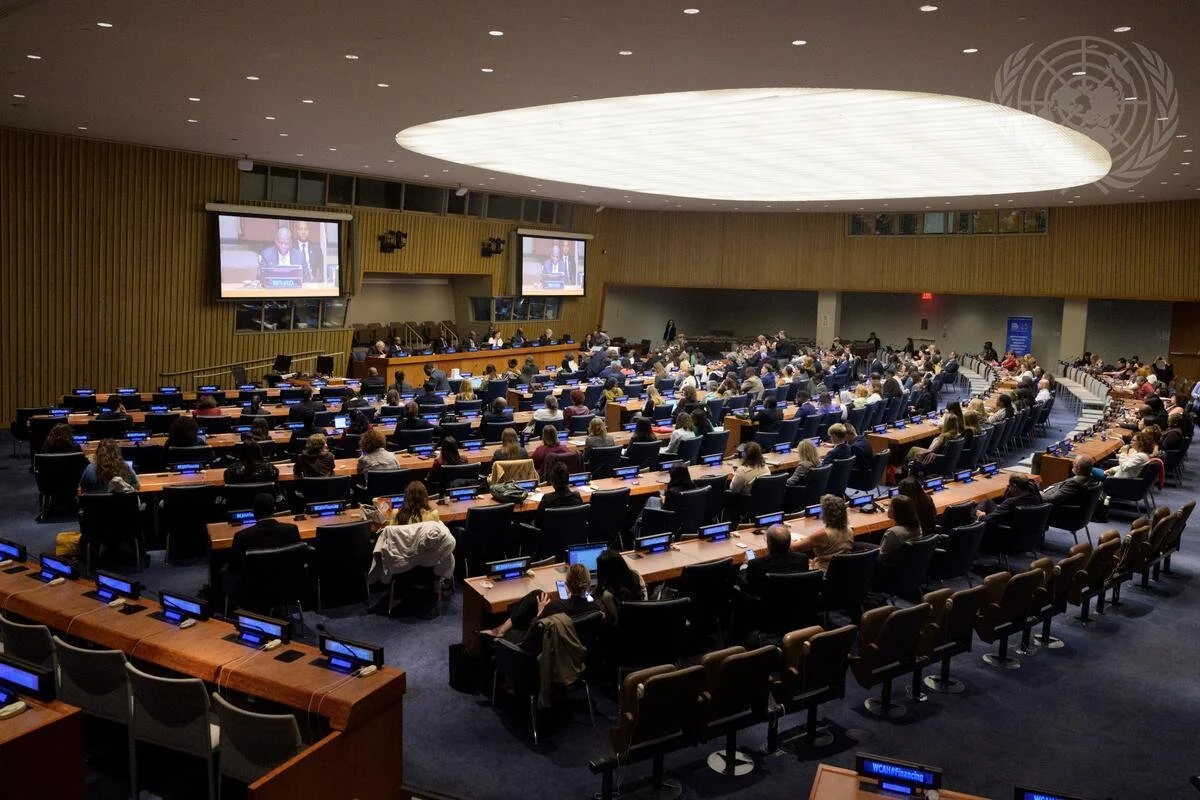
Delegates attending a session on Financing for Women's, Children’s and Adolescents’ Health at the UN General Assembly (UNGA 81) in New York City, US. | United Nations
Two climate stories are happening concurrently. One is extremely hopeful, and the other is terrifying.
Renewable energy is booming, technology is improving, and the economics of clean energy increasingly make sense. No one needs to make a moral argument for clean energy anymore.
Similarly, climate impacts are accelerating faster than global political and financial systems are responding. The urgency of a planet hurtling down a climatic precipice hasn’t translated to more action—the dangerous irony.
As world leaders gather in the United States this week for the UN General Assembly (UNGA 81) and Climate Week NYC 2026, the director of Power Shift Africa, Mohamed Adow, says, ‘‘New York must bring those two stories together.’’
This year’s edition of the assembly is a key political moment for climate diplomacy. It is the final edition for outgoing UN Secretary-General António Guterres, who will be eager to cement his legacy by pressing for climate action and defending multilateral cooperation.
Responding to a UN Environment Programme report earlier this month on the breach of the 1.5C temperature threshold, Guterres noted that this summer’s scorching heat, raging wildfires and deadly floods warn of a deadlier future.
‘‘We must make the overshoot above 1.5 degrees as small and short as possible. That demands an overshoot of ambition.’’
— António Guterres, UN Secretary-General
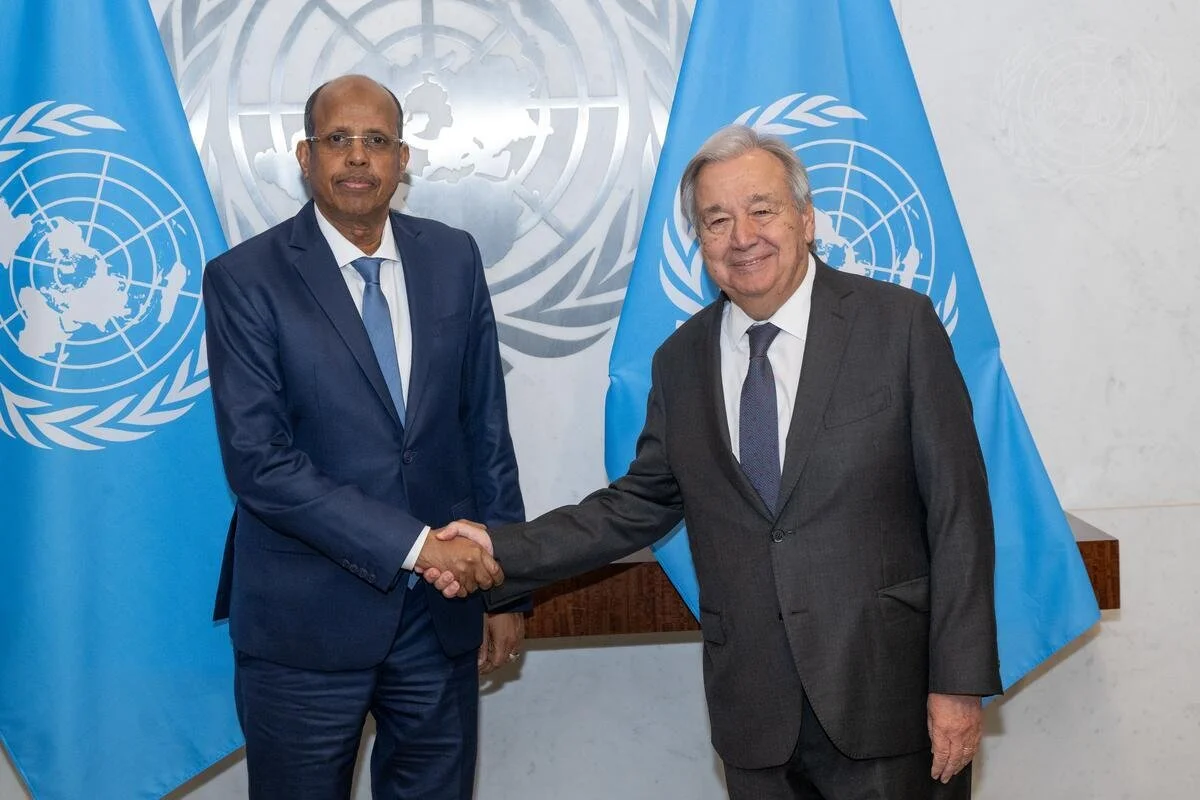
Outgoing UN Secretary-General Antonio Guterres with the Chairperson of the African Union Commission (AUC), Mahmoud Ali Youssouf, at the UN General Assembly in New York in September 2026. | United Nations
Throughout his tenure, Guterres has rallied world leaders to work together to address global crises and navigate this ‘‘era of deep uncertainty.’’
He says: ‘‘At a time when the world faces three existential threats, international cooperation is more necessary than ever.’’
Those threats are climate, artificial intelligence, and growing inequalities worldwide, and some of the issues on the table in New York this week.
Growing Climate Extremes
For years, the 1.5°C threshold has been a red line for the planet. Now that threshold is about to be breached. Permanently. That could happen within the next few years.
In Limiting Overshoot, the United Nations says that exceeding 1.5°C is now widely considered unavoidable. The report identifies an ‘overshoot, peak, and decline’ pathway as the best remaining option to minimise the magnitude and duration of this overshoot.
According to the report, the ‘most optimistic’ scenario puts the temperature rise peak at 1.8°C above pre-industrial levels, well above the goal of limiting warming to 1.5°C, set in 2015 under the Paris Agreement.
Other scenarios in the report predict higher peaks.
A warmer world, even by a fraction of a degree, portends unthinkable danger for the planet. It means more frequent and intense droughts and floods, harsher heat waves, worsening wildfires, and fast-rising seas. For Africa, these changes are already happening, altering lives and livelihoods, and upending economies.
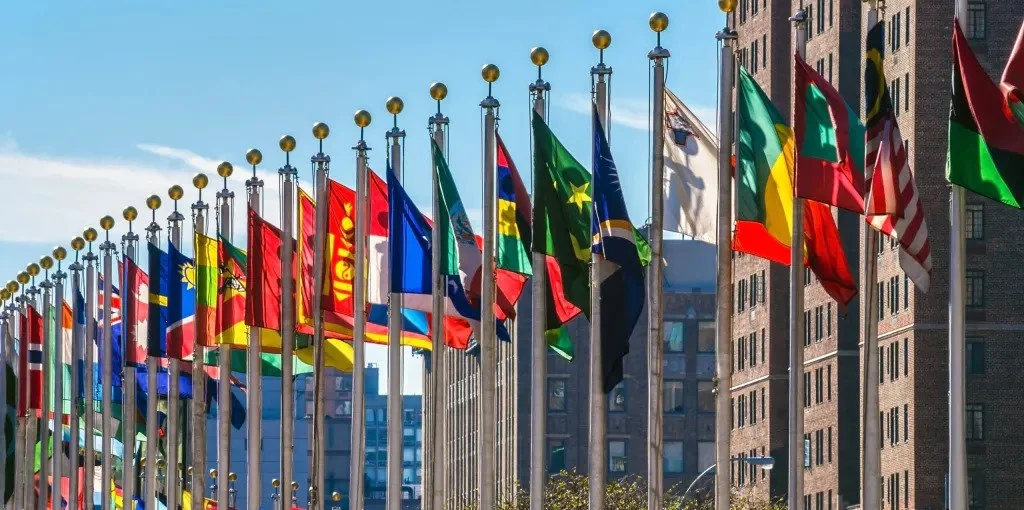
Flags of different world nations fly at the United Nations headquarters in New York City, US. | STOCK
There’s worse still. Infrastructure will come under greater pressure and ecosystems could experience potentially irreversible damage.
‘‘There’s another climate reality that can no longer remain in the background: adaptation,’’ Adow says, adding that the world is no longer adapting to a future climate crisis. ‘‘We are adapting to a crisis that is already here.’’
READ: We Have Crossed the 1.5C Red Line
Backsliding on Climate Commitments
The world’s major economies are either backsliding, stalling, delaying, or weakening their official climate commitments and green transition policies due to economic pressures, political shifts, and energy security concerns.
The United States has already withdrawn from the Paris Agreement. The Trump administration has also rolled back numerous federal environmental and carbon-reduction regulations while renewing support for expanding domestic oil and gas production.
Meanwhile, Germany is expanding its domestic natural gas infrastructure and maintaining fossil-fuel subsidies.
In May, the UK government announced it was halving its £1.6 billion contribution to the Green Climate Fund for the 2024-2027 period as it sought to spend more on security.
Cumulatively, these decisions have fragmented global cooperation and deflected diplomatic capital away from environmental targets.
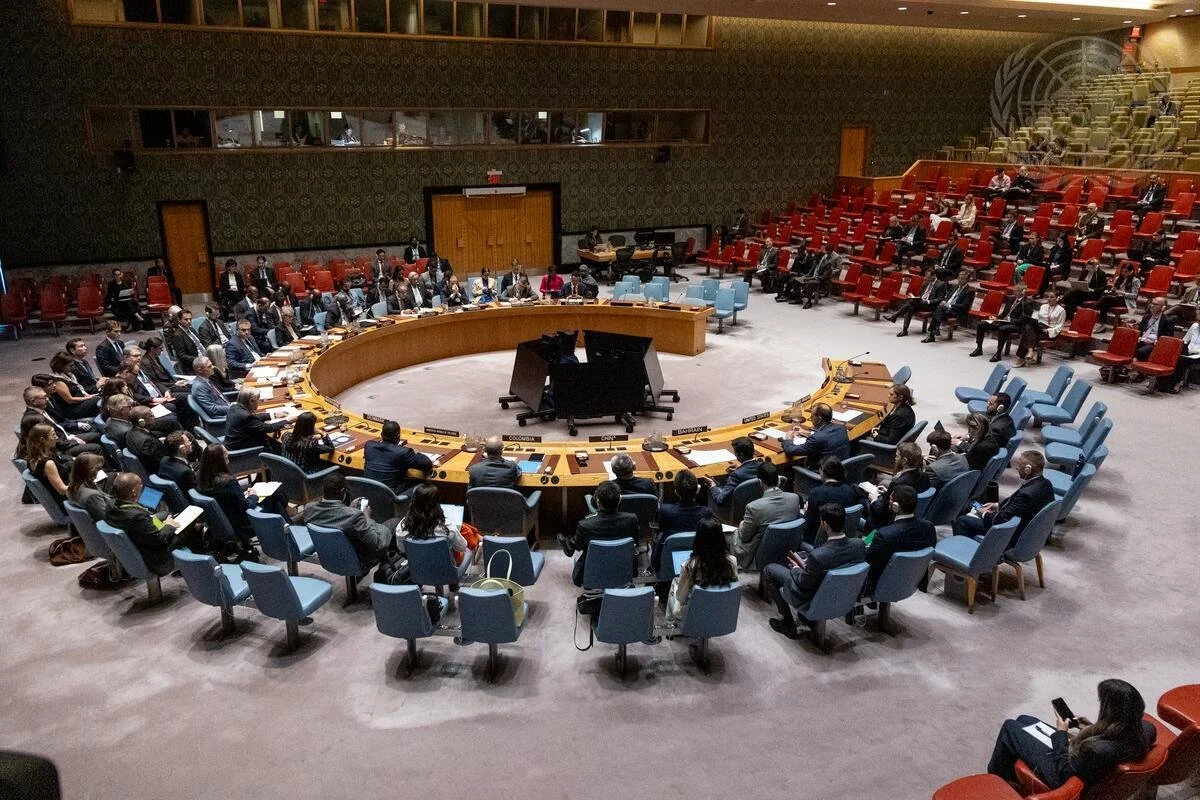
A meeting of the United Nations Security Council (UNSC) at the United Nations General Assembly (UNGA 81) in New York in September 2026. | United Nations
Global Polarisation and Conflict
Different parts of the world are witnessing armed conflict, including protracted wars in the Middle East, Ukraine, DRC, and Sudan, with destruction of infrastructure, massive population displacements, and needless civilian deaths.
These wars have strained international institutions, paralysed collective security systems, and forced a shift from broad cooperation toward fragmented, regional power alignments as perpetrators blatantly violate International Law.
Meanwhile, global governance has been eroded, and public confidence in cooperative conflict resolution has declined, as international bodies continuously fail to stop ongoing wars or protect lives.
From Climate Politics to Legal Obligation
In a historic May resolution, the UN General Assembly overwhelmingly affirmed that nations have a binding international legal duty to protect people and the environment from greenhouse gas emissions.
This followed an advisory opinion from the International Court of Justice (ICJ) in July 2025, which declared that all nations have ‘‘a strict, legally binding obligation under international law to protect the climate system and prevent environmental harm.’’
While the resolution was supported by 141 countries, the vote also saw 28 abstentions. Major emitters, the U.S., Russia, Iran, and Saudi Arabia, were among eight nations that opposed the push.
Still, the world expects New York to provide a way out of these crises.