
THE CLIMATE HAS CHANGED, SPORTS MUST ADAPT
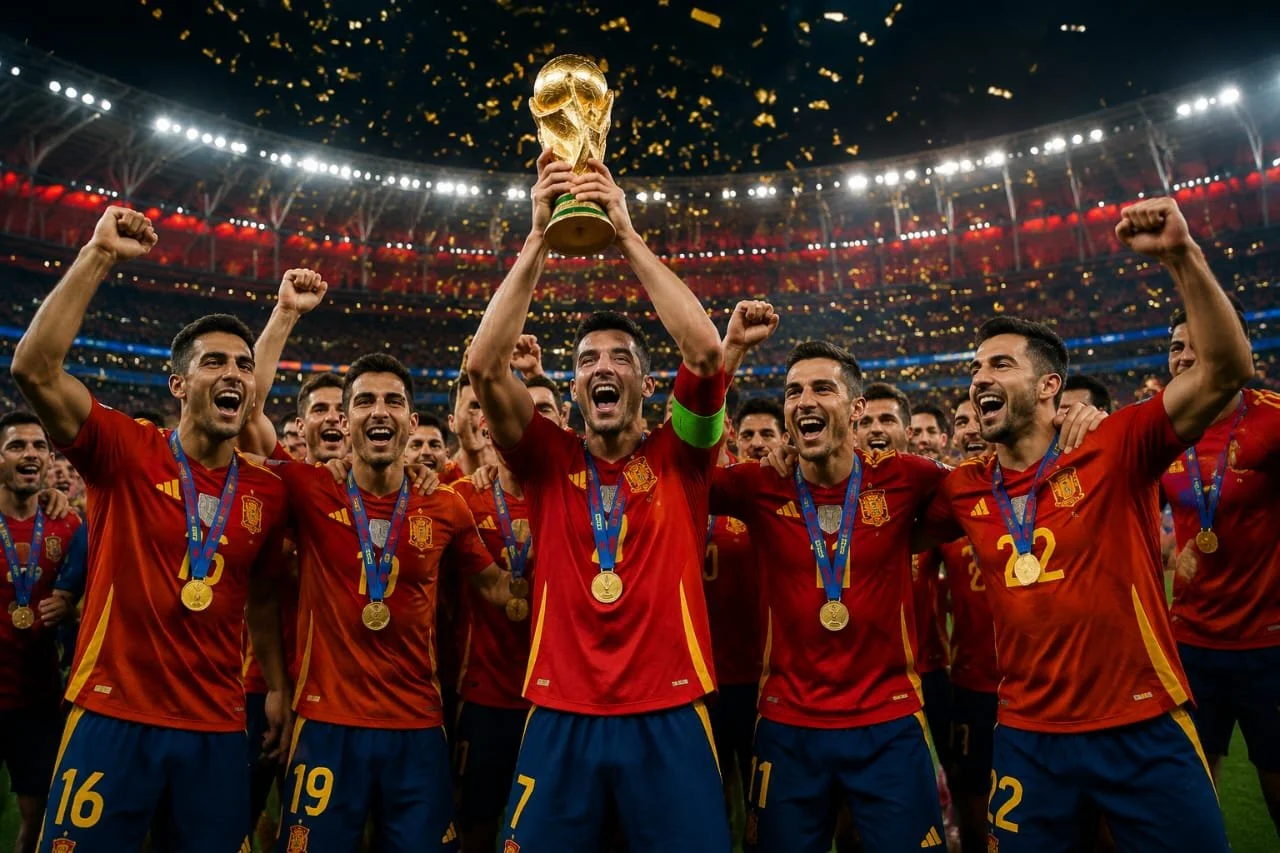
Spain men’s football team celebrates with winning the 2026 FIFA World Cup in July 19, 2026. | STOCK
The 2026 FIFA World Cup has been the most extraordinary sporting event in history. You also know that the tournament had more than 48 contestants. In the end, the most unlikely, vicious contestant won: climate change.
After their imperious, possession, and high-attacking brand of football that has defined their style for two decades, Spain claimed the ultimate glory. Even among neutrals, this victory was as emphatic as it was deserved. When they lifted the trophy at MetLife Stadium (New York-New Jersey Stadium), there was little doubt that football had won.
Yet this World Cup was unlike any other tournament in its 96-year history. From match delays due to unendurably high temperatures to the unpopular hydration breaks, boiling arenas and an unusually packed match schedule, this was a World Cup extraordinaire.
Granted, it was summer in North America. A summer like no other. That this showpiece coincided with El Niño disrupted any semblance of normalcy that it could have clung on to. As a result, climate change slowed games and reduced player performance at nearly every match.
This tournament offered plenty of lessons and insights into how the planet isn’t what it was when the first whistle went during the inaugural tournament in Uruguay in 1930. But it also showed the power of sports to bring the world together. When we cheer our teams, nothing can divide us.

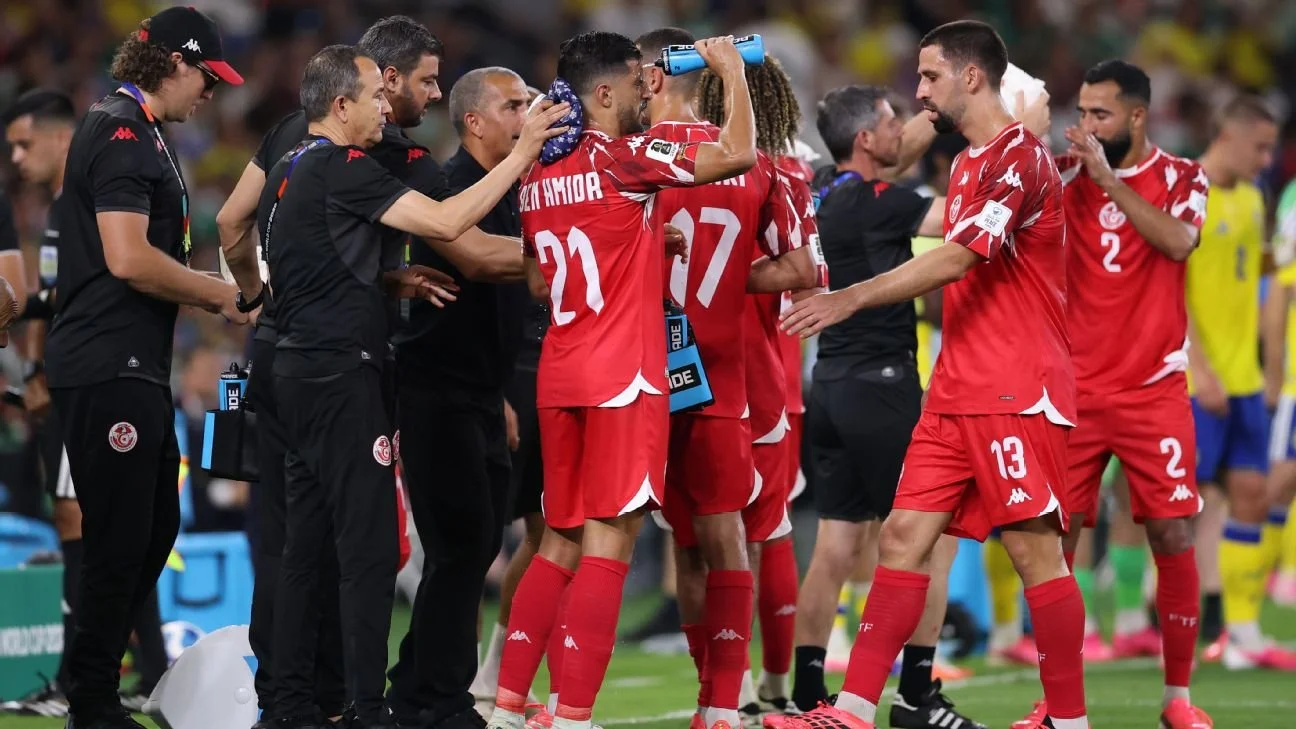
Footballers hydrate midmatch at the 2026 FIFA World Cup. Hydration breaks were a common feature at the tournament as climate change drives high temperatures. | STOCK
A Class Act in Multilateralism
Brazil, with more than 200 million people, was in the same World Cup as Cabo Verde, a country with a population of just over 500000. The Democratic Republic of Congo made only a second appearance in more than 50 years, and even played against perennial participants England in the knockout stages. Little-known Curacao may have been thrashed by four-time champions Germany, but they were at the tournament.
This was a World Cup for all. Minnows had their say on the pitch as did football powerhouses. Cue Canada falling to Morocco in the Round of 16. After 104 matches, it came down to a contest of fairness and justice – who went deep into the tournament and who crashed out.
If the same fairness and justice were to be applied in climate multilateralism, the most-deserving countries in the Global South would equally receive climate finance, technology transfer and capacity building to combat the climate crisis.
Expanded World Cup and Expanded Emissions
The 2026 FIFA World Cup was the largest by a mile, with 48 teams up from 32 that have traditionally competed. With an average of 40 individuals (26 players and 14 technical and medical staff) travelling per team, that is 1920 people in total. Add match officials and travelling fans and you have the most carbon-intensive and polluting tournament in football history.
Several analyses projected that this edition of the World Cup would generate up to 9 million metric tons of CO₂. That’s double the emissions generated by the 2022 World Cup in Qatar. In more practical terms, that’s equivalent to putting an extra 2 million cars on the road for one year. That some of the biggest polluters in the world were also some of the tournament’s biggest sponsors was perhaps the biggest irony of this World Cup.

Football fans queueing outside an arena before a football match during the 2026 FIFA World Cup. | STOCK
Hosting the tournament in the United States, Mexico, and Canada didn’t help the emissions either. The model of staging football tournaments in multiple countries appears to be in vogue within FIFA. The 2030 edition will be co-hosted by Morocco, Portugal, and Spain. Some matches will be played in Uruguay, Argentina, and Paraguay, to celebrate the tournament’s 100th anniversary. One World Cup. Three continents. More emissions.
Arenas Built for Yester Years
Most football arenas in the world aren’t built for climate. The report, Pitches in Peril, reveals that 14 out of 16 venues at this World Cup exceeded safe-play thresholds for extreme heat, flooding, and rainfall during the summer.
‘‘This matters because heat affects performance, decision-making, recovery, and, most importantly, player safety. Extreme heat increases the risk of exertional heat illness and can fundamentally change the way the game is played.’’
— Mohamed Adow, Director, Power Shift Africa
Many sporting venues where the matches were played weren’t designed with climate change in mind. The stadia were designed for historical climates and lack air conditioning. Today, these act as giant heat traps during hot weather as climate change defies traditional architecture. Many pitches around the world flood during the wet season, costing the authorities billions of dollars to repair damage.
Football Must Adapt…so must all Sports
We may be approaching the end of the era of flair and high tempo in sports. That is, if we aren’t there already. Unless we adapt. | STOCK
Football will never be the same. Basketball will never be the same. Skiing is changing. Golf calendars are changing. If there’s something this World Cup has taught us, it’s that climate change is forcing a structural shift in how games are scheduled, played, hosted, and even enjoyed globally.
More than 26 matches were played in sweltering conditions, with heatwaves and extreme humidity posing the risk of heat stress to both athletes and spectators.
The era of predictable kick-off time is gone. If it was agonising to wait an extra two hours for the ball to roll, wait until heat forces match cancellation altogether. They may not be a fan favourite, but hydration breaks are here to stay.
We may be approaching the end of the era of flair and high tempo in sports. That is, if we aren’t there already. Unless we adapt.
As temperatures rise, marathon records may become harder to break. Both individual and team sports have no choice. They must adapt.
Subscribe to our Weekly Climate Bulletin for free here: https://sl1nk.com/k65c9ij