THE UNFCCC IS CHANGING HOW JOURNALISTS REGISTER TO COVER EVENTS, HERE’S THE GOOD AND BAD OF IT
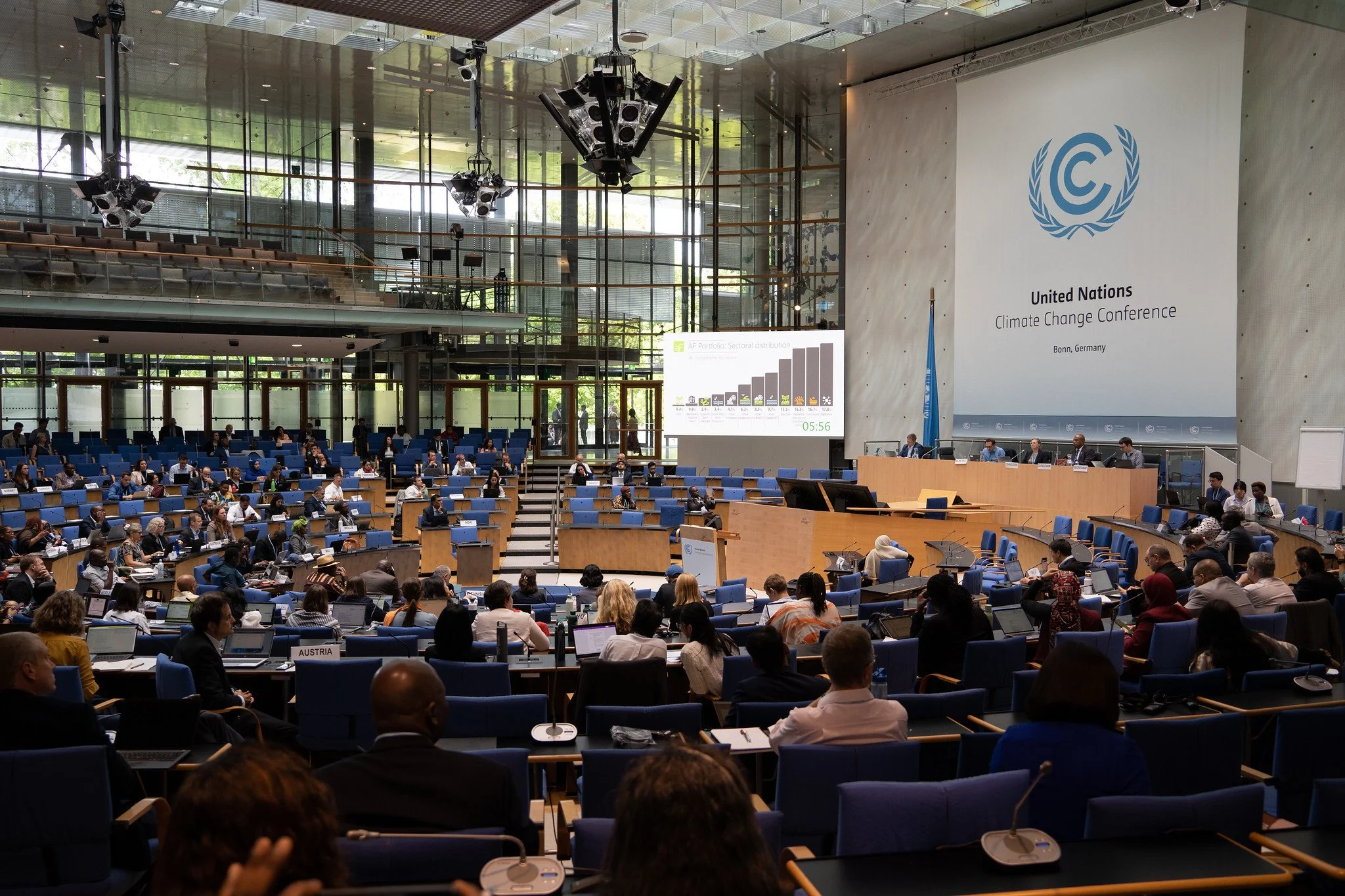
The Bonn Climate Talks are held every June in Bonn, Germany | UNFCCC
The United Nations Framework Convention on Climate Change (UNFCCC) has rolled out a new media accreditation model and is testing it on the June Climate Conference in Bonn. Administered through the Indico UN platform, the model is presented as a technical reform and framed in the language of efficiency, promising fewer duplicate submissions, faster processing, and cleaner verification.
Every media organisation planning to cover the Bonn talks must now appoint a single “media focal point” to coordinate all applications, consolidating documentation and submitting a unified list of journalists. On paper, the change is procedural, but in practice it could reshape how access to climate negotiations is structured and, increasingly, who is able to access them at all.
Media reactions to the new model have been muted, but that absence should not be mistaken for silence as accreditation systems tend to generate their sharpest critique not at announcement, but at implementation, when journalists begin to encounter the machinery in real conditions.
To understand the emerging concern, it is necessary to place the reform within a longer history of climate conference access debates. The UNFCCC has long maintained that journalists’ accreditation is reserved for “bona fide media organisations” and assessed on a case-by-case basis. This discretionary framework has been repeatedly defended as necessary for security and integrity, but it has also been the subject of recurring critique from press freedom advocates, who argue that procedural requirements often function as quiet filters of inclusion.
The new model intensifies this architecture. It does not explicitly exclude journalists, but centralises the gatekeeping function within organisations themselves. One focal point becomes responsible for coordinating all entries, ensuring consistency in naming conventions and synchronising applications across individuals. Approval of journalists is effectively tethered to the validation of that single submission.
For large, well-resourced international media outlets, this may be a manageable administrative shift. But for smaller organisations, particularly in the Global South, it introduces a different reality. Many newsrooms operate with limited administrative capacity, decentralised staffing, or freelance contributors working across borders. In such contexts, the requirement of a single coordinating focal point concentrates risk. A missed email, a mismatched organisational name, or a delayed submission can now affect multiple journalists at once.
Across previous climate summits, journalists from Africa, Latin America, and parts of Asia have repeatedly raised issues around access inequality, citing visa delays, accreditation bottlenecks, and logistical barriers that shape who can physically report from negotiation rooms. This new model appears to be an extension of that history, yet media observers and journalism scholars have long described this dynamic as a form of “soft exclusion” characterised by the accumulation of procedural requirements that disproportionately burden less-resourced actors.
The political implication is subtle but significant. Climate negotiations are not only sites of policy-making, but also places of narrative formation. What is reported, and from where, shapes global understanding of climate politics. If access becomes more dependent on institutional administrative capacity, then the geography of climate storytelling risks narrowing, even without formal restriction.
The UN maintains that the reform is designed to improve service delivery, reduce duplication, and move toward greater automation. This makes sense as accreditation systems at COPs and SBs are complex, high-volume operations under significant logistical pressure. But standardisation is never neutral in uneven systems and tends to favour those already structured to meet its demands.
We will keep our eyes on this one.