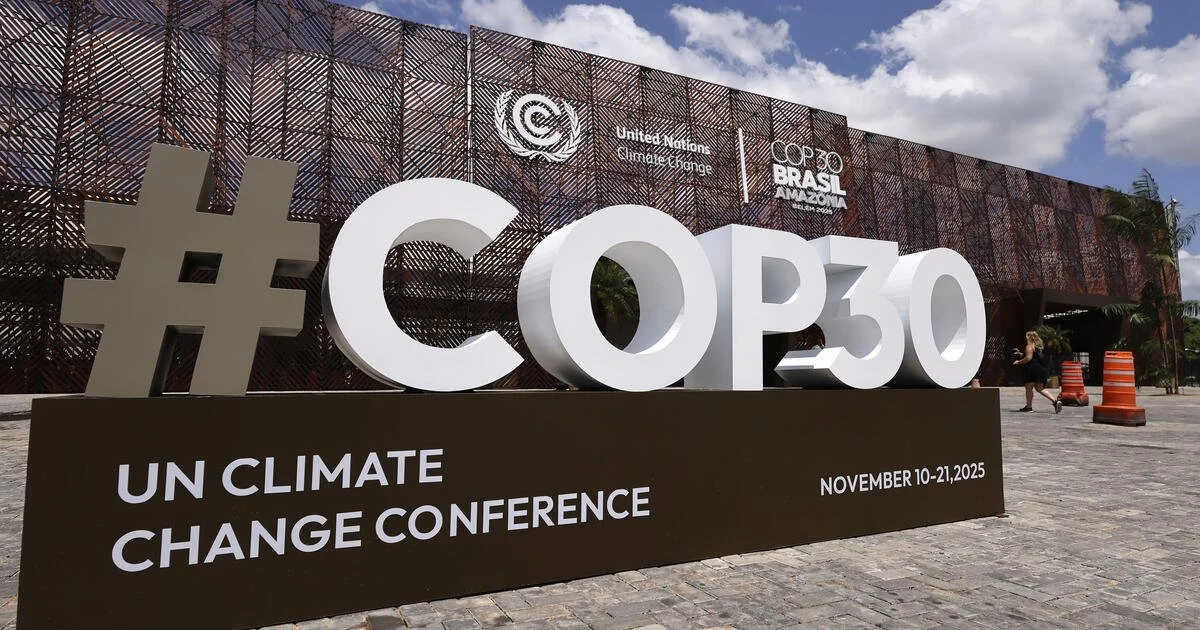
Thirty Years of Starters: Where’s the Main Course?
BY MARY KYANYI
When countries met at COP1 in Berlin, Germany, in 1995, the goal was to address the climate crisis by making new commitments and strengthening existing ones. Thirty years later, this spirit of committing to a just, fair, and secure climate future carries on.
While the COP process has delivered multiple notable agreements, one question lingers: what do strong commitments on paper mean in the absence of action and implementation?
Ten years since the Paris Agreement was adopted to combat climate change, countries have largely failed to fulfil this commitment. Emissions are rising, and so are climate disasters. In 2015, we committed to limiting global warming below 2°C above pre-industrial levels with an aspiration to keep it well below 1.5°C. Today, the world is dangerously off track and far from attaining the 1.5 degrees goal.
Various reports, including the 2025 NDC Synthesis Report and the UNEP Emissions Gap Report, warn that if urgent actions aren’t taken, our world could boil by 2100, putting all life on the planet on a dangerous precipice.
By adopting the Paris Agreement, developed countries committed to providing the Means of Implementation to support climate action in developing countries in both mitigation and adaptation. Article 9 of the agreement obligates developed countries to scale up public and grant-based resources towards their poor and climate-vulnerable counterparts.
The agreement further requires countries to strike a balance between mitigation and adaptation actions as the surest way to keep the 1.5 degrees goal alive, while reducing climate vulnerabilities in developing countries.
So far, the delivery of this support has been slow and insufficient, as frontline communities continue to lose lives, livelihoods, homes, and economies due to climate impacts. One of the broken promises of the COP process is the goal of providing climate finance of up to $100 billion annually by developed countries to developing countries, pledged in 2009 at COP15 in Copenhagen.
When the goal was finally met in 2022, its quality left a lot to be desired. The funds came in the form of loans rather than grants, which is inconsistent with the polluter pays principle. The polluter effectively transferred the burden to the climate change victims, yet went on to brag about fulfilling their obligations.
But the $100 billion goal is just one of the many commitments developed countries have backtracked on. By establishing the Loss and Damage Fund at COP27 and operationalizing it at COP28, world nations had struck a major milestone that would pave the way for a global response to climate-related losses and damages.
However, the $788 million pledged to the Loss and Damage Fund so far is insufficient to compensate for both economic and non-economic losses and damages suffered by developing countries, estimated to be approximately $400 billion per year.
Notably, less than $350 million of the pledges have been honoured to date. Until the initial call for proposals for the resources at COP30, the disbursement had been frightfully slow. The $250 million available for disbursement falls far short of the resources needed to address the growing needs of climate-impacted countries.
This has created uncertainties and delayed adequate responses, with vulnerable communities unable to prepare, prevent, and address climate disasters on time, even as climate shocks rise alarmingly.
In 2022 alone, more than 7.5 million people in Sub-Saharan Africa were displaced, the highest number ever recorded, and three times the number in 2021. Climate-induced extreme weather events – including the worst drought in 40 years in the Horn of Africa and a series of cyclones in Southern Africa – accounted for the bulk of the displaced populations, according to data from the Internal Displacement Monitoring Centre (IDMC). The number of climate-related displacements in Africa could hit 86 million people by 2050, as per World Bank estimates, given the current trajectory of surging temperatures.
By not resourcing the FRLD, are developed countries deliberately consigning populations in developing countries to death? This negligence is a red line for Africa that should never be crossed. Africa did not bring these tragedies upon itself. Historical polluters did. As such, they must provide the people of the continent with the necessary means of survival.
Their historical emissions created the climate crisis and contributed to environmental damage that disproportionately affects developing nations. As such, they must finance a just transition to low-carbon economies in the Global South. They must also facilitate this transition in a way that does not worsen existing socioeconomic inequalities. This is critical for addressing past climate injustices. In fact, taking this action is in their best interest. The cost of inaction may well undermine the collective GDP of the developed countries, which they seek to protect by denying poor countries the resources.
Being accountable for these injustices should start with honoring their past commitments and going further to facilitate technology transfer and building the technical and institutional capacities of developing countries to address climate change, based on their local realities and a comprehensive assessment of needs. It should not end there. Wealthy nations must significantly cut their emissions with the goal of eliminating them.
This is part of their historical responsibility that will remain a foundational and ethical principle in the global climate discourse. It is time that developed countries became responsible and accountable by delivering climate support where it’s needed most. The era of selfish national interests and blame games is long gone.
Adaptation to climate change is imperative to give dignity and hope for the future of the people on the continent. Credit to the UN climate regime; we now have a more inclusive climate process than we did in 1995.
The establishment of the Local Communities and Indigenous Peoples’ Platform (LCIPP) at COP21 in Paris is a case in point. Equally, integrating Non-State Actors (NSA) in climate negotiations was a big win for frontline communities and the planet, with the observer role by civil society and other rights groups helping to build the momentum for climate action over time, and even shape international agreements and policies.
Beyond country delegates, the UNFCCC has also integrated youth voices in climate negotiations through the YOUNGO platform. These provide policy input and interventions to shape outcomes of the climate multilateral process.
Today, climate negotiation rooms are filled with voices of reason and a sense of purpose and urgency. This is progressive. But the focus should be on the delivery of concrete outcomes for the people and the planet, rather than just commitments, bureaucracy, and procedural hindrances that delay action.
Only doing so will justify the last 30 years of climate commitments and negotiations.
Mary Kyanyi is a Climate Adaptation Fellow at Power Shift Africa