UNEA7: Kenya Must Mobilise Support for an International Minerals’ Treaty
BY MESHACK MBOYA
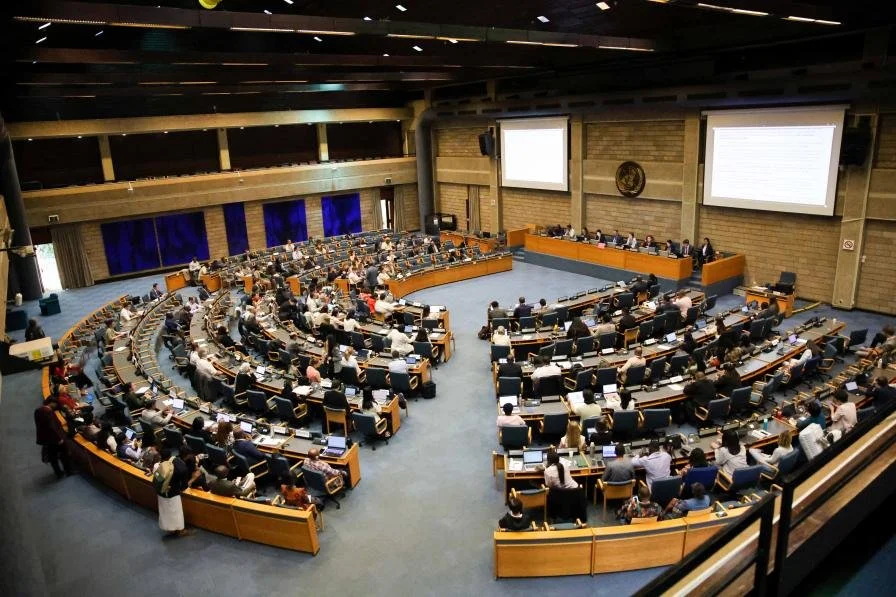
Countries meeting for the United Nations Environment Assembly (UNEA7) in Nairobi this week have begun discussing a proposal by Colombia to commence the process to adopt a potentially legally binding international minerals and metals treaty.
The UNEA is the world’s highest-level decision-making body for environmental matters. Its membership is universal, comprising all the 193 UN Member States.
Fronted by Colombia, the draft resolution calls for an Ad Hoc Open-Ended Working Group to identify options for international instruments, whether binding or not, for coordinated global action on the environmentally sound management of minerals and metals with a view to reducing environmental impacts.
If adopted, the treaty will include details on identifying the means of implementation under international response measures for capacity-building, technical assistance, technology transfer, and financial assistance for developing countries.
Notably, the proposal aligns closely with Kenya’s mining legislation, which mandates royalty contributions to county governments and host communities, local equity participation, preference for local procurement, and community development agreements.
As the host country for this year’s two-week UNEA meeting, Kenya must not only voice its support for the treaty but also mobilise other African countries behind the proposed resolution.
The proposal is also in tandem with the Africa Green Minerals Strategy, which recognises the need for Africa to move beyond the export of raw minerals and instead build stronger, integrated value chains that foster local beneficiation, job creation, and economic diversification.
Decades of poverty, neglect, and underdevelopment
Vulnerable communities inhabiting mining territories continue to endure decades of poverty, neglect, and underdevelopment. This undermines their ability to fully exercise their rights and fully and effectively participate in decision-making processes that affect them.
Despite repeated commitments, the mining industry has made no meaningful progress toward ending its extractive practices. Mines continue to collapse on poorly resourced miners; environmental harms, including contamination of water sources, are on the rise; traceability is still fictional; children remain trapped in dangerous mining work; and widespread human rights abuses go unchecked.
All this while the mining industry and wealthy nations involved look the other way and cash in on these tragedies. The 32 miners killed after a bridge caved in at a mine in the Democratic Republic of Congo is a case in point.
All is not lost, though. World countries participating in UNEA 7 have an opportunity to put a stop to mining harms such as pollution, contamination of water resources, labour rights abuses, violations of the rights of indigenous people, and war-related abuses fueled by conflict minerals.
There is a truly urgent need to strengthen global coordination, cooperation, and governance to advance the environmentally sound management of minerals and metals to reduce risks to human wellbeing and the environment. This is especially important given the central role of critical minerals to drive the global clean and just energy transition.
Home to 30 percent of the world’s transition-mineral reserves, Africa has a solid starting point in this journey. Considerable reserves of critical minerals such as cobalt, lithium, graphite, manganese, chromium, and platinum are found on the continent.
But to embark on a truly transformative journey, there is a lot to reverse and correct. Value addition for most of these minerals, for instance, happens in the Global North. The minerals are extracted and exported from Africa in raw form before being shipped back into the continent as finished products. While the DRC, for instance, accounts for more than 70 percent of cobalt, 60 percent of global cobalt is processed in China.
Reliable pathways for local value addition must be at the center of all mineral negotiations. These discussions must provide clear and enforceable rules across the full life cycle of minerals to protect communities and guarantee policy predictability. This is a mutually beneficial outcome for communities, producing countries, and investors.
Environmental and social risks in mining
By adopting this resolution, countries will have begun addressing the persistent environmental and social risks in mining, including human rights due diligence and traceability in the mineral value chain. This could also result in the development of global standards on transparency, traceability, and environmental protection as well as circularity while ensuring justice and equity for all.
While the resolution is welcome, an international minerals treaty is long overdue. This is especially so given the failure of voluntary measures to address these ills for decades. A global instrument presents an opportunity to cure environmental damage and social injustices in producing countries that years of glossy national strategies and schemes have failed to stop.
The world can finally set minimum global standards, including mainstreaming free prior and informed consent (FPIC), decent work and safe conditions, and water and biodiversity safeguards. Measures such as mandatory environmental and human rights will lead to more just and inclusive supply chains and enhance the protection of vulnerable communities.
A global legal framework for traceability, transparency, and accountability
Moreover, an international treaty could inspire countries to adopt or reform national legal frameworks that align with the minimum global standards, including traceability, transparency, and corporate accountability.
The 2024 UN Secretary-General Panel on Critical Energy Transition Minerals report sets out a pathway for reform by calling for a global, justice‑ and equity‑centered framework for the value‑chain of critical energy‑transition minerals. Essentially, it demands human rights, environmental protection, transparent governance, and fair benefit‑sharing from mining through to manufacturing and recycling of minerals.
This report is, however, not binding. Its principles and recommendations can only be enforced through an international legal framework, as proposed in the resolution.
The need to harness the full potential of critical minerals in a manner that benefits local communities was recognised in the outcomes of this year’s G20 Leaders’ Summit in South Africa. One of the notable developments at the summit in Johannesburg was the launch of China’s Green Mining and Minerals Initiative that seeks to provide a platform for fair and equitable collaboration between the manufacturing giant and resource-rich nations.
Together, these efforts underscore the growing consensus that global mineral governance must be reformed to deliver stronger economic, social, and environmental justice. Voluntary mechanisms with no legal backing, though, can only do so much to level the playing field.
Supporting countries to develop their own green industrialisation strategies is, therefore, vital. The proposed resolution for an international minerals’ treaty could just be the enabler that makes it possible for countries to realise their just transition ambitions.
Meshack Mboya is the Legal and Advocacy Fellow at Power Shift Africa