UNEA7: SIGNIFICANT STEPS, MINIMAL AMBITION
BY MARY KYANYI AND MESHACK MBOYA
“You will now return to the world outside the negotiation halls. A world in which people are dying, homes and livelihoods are being destroyed, economies are being damaged, and inequity is growing because action on environmental challenges has not been fast or strong enough.’’
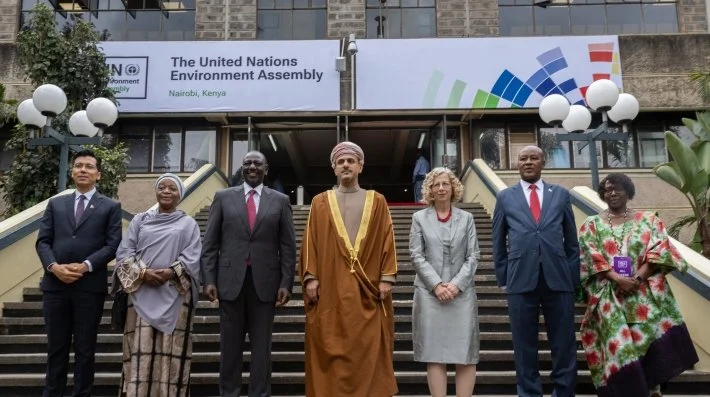
These were the solemn words of Inger Andersen, the executive director of the United Nations Environment Programme (UNEP), during the closing plenary of the five-day United Nations Environmental Assembly (UNEA-7) in Nairobi.
One of the major highlights of the assembly was the adoption of the resolution on the environmentally sound management of critical minerals. An earlier proposal by Colombia to establish a working group to identify options for international instruments, both binding and non-binding, for coordinated global action was, however, considerably revised.
Parties eventually adopted a version that only calls for ‘‘convening of dialogues’’ among countries.
Other resolutions adopted include the management of chemical waste and the need to accelerate global actions to promote the resilience of coral reefs.
At the same time, UNEA-7 recognised the importance of meaningful participation of youth in environmental governance and efforts to manage the rising climate-induced wildfires.
Of the 15 draft resolutions submitted for consideration at the assembly, 11 were adopted, some of them in significantly diluted form, exposing a troubling lack of ambition to advance a truly global just transition grounded in justice, equity, and human rights.
Ahead of the negotiations, UNEP hosted the Global Major Groups and Stakeholder Forum (GMGSF) to outline civil society priorities to shape the outcomes of the assembly. From the forum came a joint statement from the Major Groups, calling for a whole-of-society approach to environmental governance that is ‘‘rights-based, community-led and science-informed.’’
Read the joint statement here.
Under the United Nations, Major Groups include Indigenous Peoples groups, NGOs, children and youth, local authorities, business and industry, women, farmers, workers and trade unions, and the scientific and tech community.
Just like at COP30, the United States snubbed the negotiations, accusing the UNEA of straying beyond its core mandate, before disowning the outcomes.
Meanwhile, civil society organisations expressed concerns over the slow progress of negotiations and the weak language of the resolutions. Parties were divided over the participation of civil society organisations, particularly their demand to include submissions in the final text. This resulted in late informal consultations to promote consensus among Parties.
In the end, the Major Groups secured meaningful inclusion of their demands in the decision, but not without laying bare the troubling divide between observers and country delegations. Failure to factor in the positions of civil society and other rights groups in multilateral processes is a significant oversight and deeply concerning.
The world cannot claim to deliver solutions for a resilient planet while excluding some stakeholders. Thankfully, the 1992 Earth Summit recognised the importance of broad participation in driving global sustainability.
Only full inclusion of these diverse voices, unique perspectives, and expertise can lend credibility, legitimacy, and democratic spirit to global environmental governance processes and decisions.
In addition to the 11 resolutions, the meeting adopted three key decisions and a ministerial declaration to advance the multilateral work on environmental governance.
The declaration calls on countries to strengthen international cooperation among all stakeholders to advance equitable and integrated solutions to the ongoing environmental and planetary crises.
Read the ministerial declaration here.
Delegates from 186 countries participated in the process, underscoring the power of multilateralism to solve global challenges.
Said Ms Andersen: ‘‘We must now, together, hurry down this path to make good on our collective promise to deliver real solutions for a resilient planet and resilient people.”
UNEA-8 will be held in Nairobi in December 2027 under the leadership of Jamaica.