Why Africa’s adaptation actions are a theatre of contemporary contradictions in climate policy
Adaptation advocates have not successfully dispelled its three major deterrents: removing attention from the core mission of climate response, which is reducing of greenhouse gas emissions; removing the label of adaptation as a ‘public good’ that is not an easy fit for private sector investments; and opening a door for liability and financial consequences for developed countries for limited adaptive capacity of developing countries.
By Dr. Brian Mantlana
Climate change adaptation has become the theatre where the contradictions of the contemporary global climate policy are staged. Today, most people may not remember that as recent as two decades ago, climate change adaptation was perceived not as a policy objective, but an index that could be used to understand the extent to which societies could tolerate changes in climate. A lot has happened since them.
Here is a contradiction. On one hand, once derided and relegated to be a distant cousin to climate change mitigation, climate change adaptation has become a central response to climate change. Today, the prominence of climate change adaptation is visible in many areas. For example, at the global climate negotiations under the UNFCCC and its Paris Agreement, climate adaptation has secured a prominent seat indicated by a fully architecture in those negotiations.
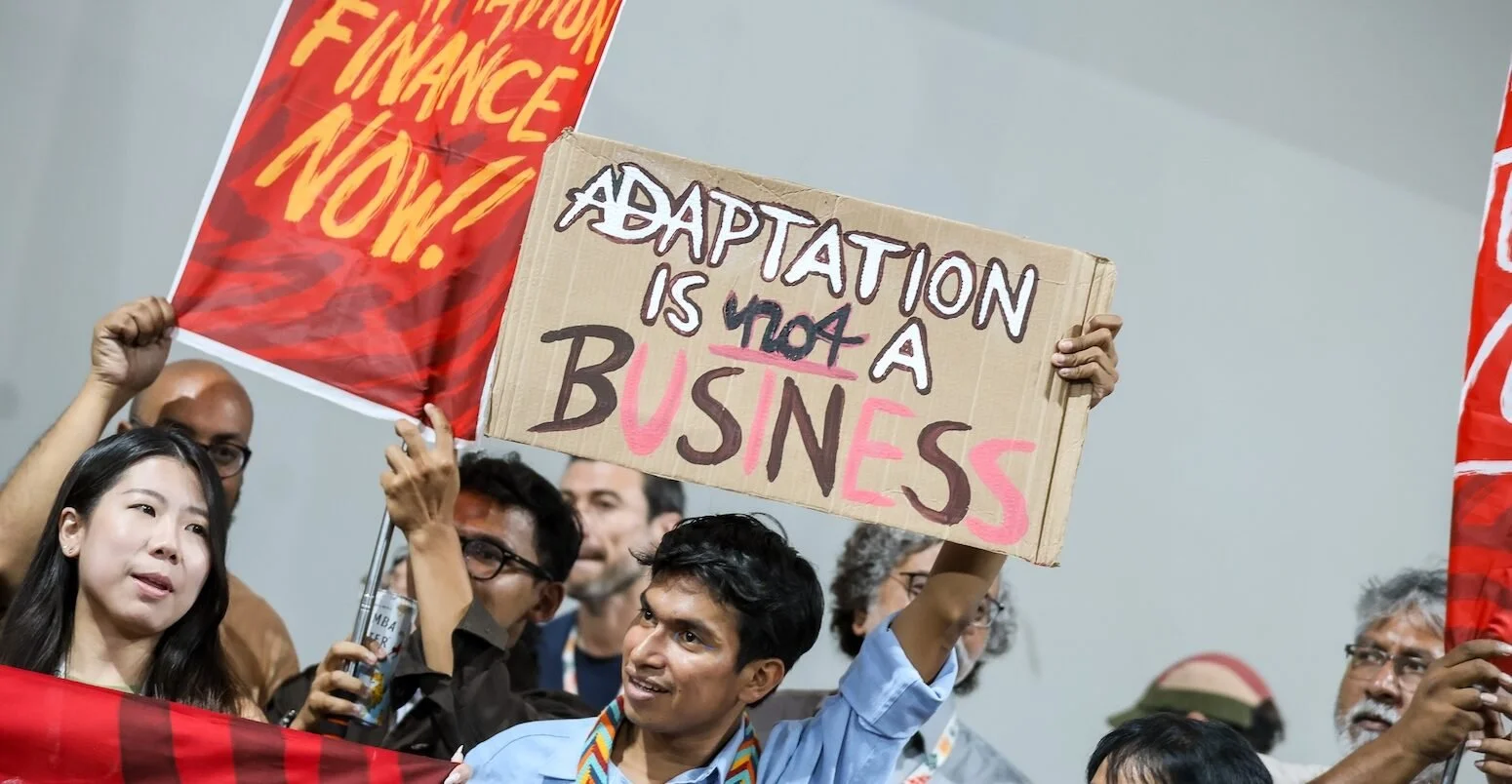
Protestors at COP30. Credit: IISD/ENB | Mike Muzurakis.
Internationally, there is an adaptation ISO standard (ISO 14090) established in 2019. Nationally, on the academic front, there are several climate adaptation specific journals, and the climate adaptation framings have shifted over time from climate change adaptation (CCA) to climate variability adaptation (CVA), and then to vulnerability-centred adaptation (VCA). Importantly, there are global funding mechanisms dedicated to climate adaptation.
All these unprecedented efforts are supported by extensive national and sub-national climate adaptation policies and strategies, most of which are Cabinet approved, where appropriate.
On the other hand, climate change adaptation remains ambiguous, conceptually. It is characterised by varying and evolving definitions, interpretations and framings of key adaptation concepts. Empirical evidence suggests that documented adaptation actions are generally fragmented, local, incremental, and show limited evidence of risk reduction outcomes.
The overall knowledge base of climate adaptation remains fragmented. There is limited understanding of the extent to which practical adaptation initiatives are equitably spread within and across countries. In any given context, there is inadequate understanding of what climate adaptation success would look like; what priorities to aim for, and how to evaluate progress toward intended outcomes.
These vague expressions of adaptation manifest the clearest in the adaptation section of Nationally Determined Contributions (NDCs), and unfortunately even in the NDCs of African countries. Because language is never neutral, the framings of adaptation used in national policy documents need considerable clarity.
Another venue of contradictions regarding climate change adaptation is the conflation of development with adaptation that is prevalent in the donor community, where funds allocated for development are labelled as support for climate adaptation; while international funding agencies regard adaptation as ‘the additional layer’ of actions to development initiatives to enhance societal resilience to impacts of climate change.
Policy makers in developing countries find themselves locked at the heart of these contradictions. They are aware that climate adaptation policies would be inadequate if they do not address the underlying socio-economic ‘structural deficits’ such as unemployment, poverty, and inequality. Yet, intentionally or not, policymakers have opted to operate within the confines of the narrow framings of climate adaptation that are contained in the UNFCCC and IPCC documents.
In these processes, adaptation is largely framed as “an adjustment” and is often defined away from the politically sensitive issues of access and control of natural resources. Policymakers are then left in a precarious position, constrained to unleash climate adaptation as a tool for effecting profound changes in the society.
In the 2020s, there is no doubt that climate change adaptation is more than ‘a glass half-empty’ in national and global climate policy formulation and implementation. However, adaptation advocates have not successfully dispelled its three major deterrents that are playing out in the theatre of global climate policy: removing attention from the core mission of climate response, which is reducing of greenhouse gas emissions; removing the label of adaptation as a ‘public good’ that is not an easy fit for private sector investments; and opening a door for liability and financial consequences for developed countries for limited adaptative capacity of developing countries.
My view is that the intersections between climate change adaptation and development provide the sweet spot for overcoming the above-described contradictions. Climate adaptation and development is ‘a two-way street’ where both actions become complementary and synergistic. Climate adaptation actions should address development challenges. While well planned and effectively implemented development actions should address multiple sources of climate vulnerability, including the underlying socio-economic structural sources of climate vulnerability like poverty, access to and control of resources.
Positioning development and adaptation as a two-pronged process with complementary and synergistic outputs and outcomes is not aimed at erasing the differences between adaptation and development.
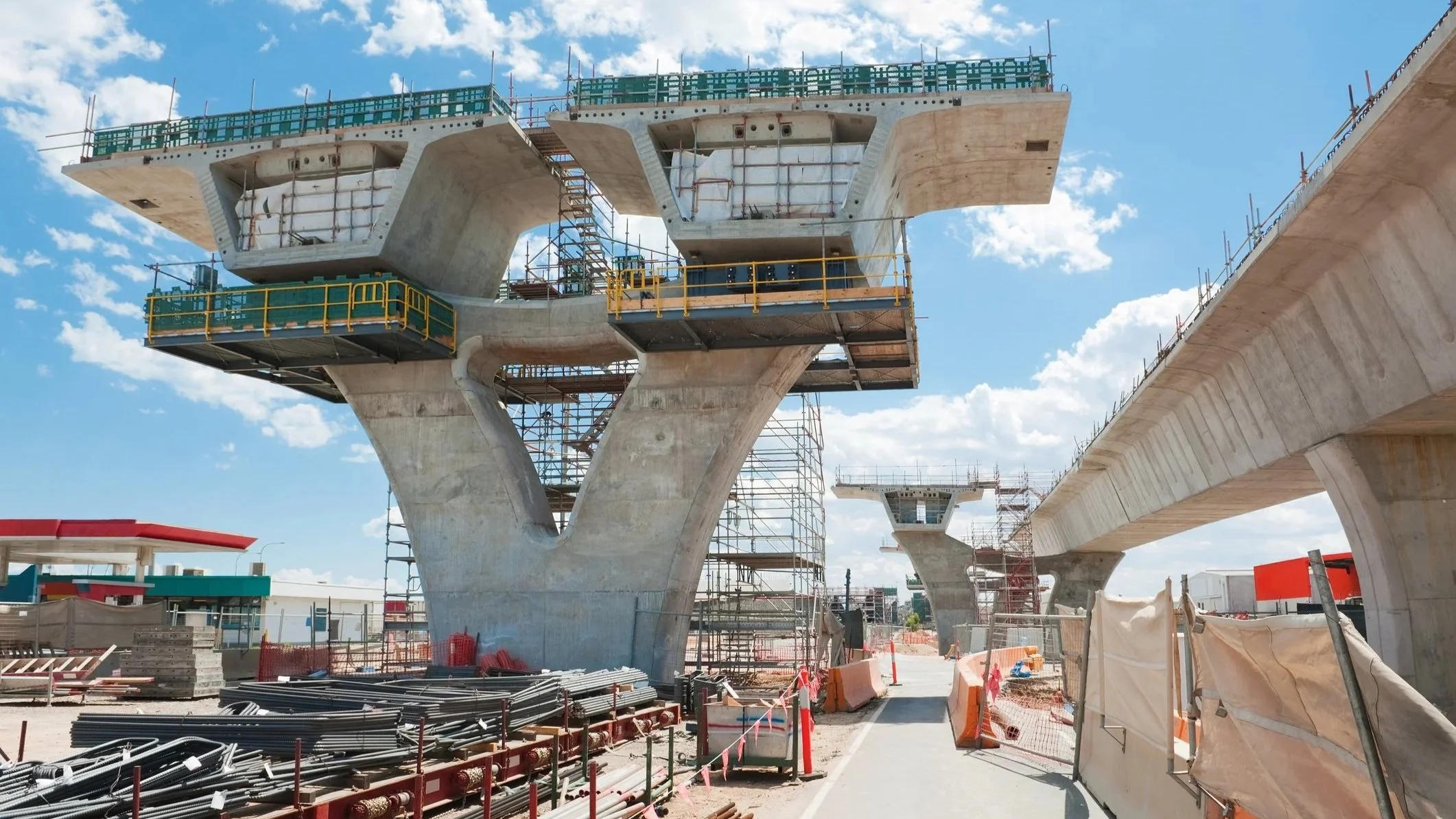
Also, I should note that linking development and adaptation is not without its complications. Firstly, pursuit of these linkages risks leaving countries that have extensive development deficits ravaged by perpetual lack of adaptation.
Secondly, realisation of development–adaptation linkages require explicit targeting of climate resilient investments by African governments for their societies.
Thirdly, as mentioned above, the donor community tends to, conveniently and erroneously, conflate development and adaptation. And, fourthly, donor support for development is not equal across African countries.
Importantly for African policy makers, climate adaptation and adaptation are not politically contested topics in Africa. It is possible that adaptation and development mean different things to different sections of the African society. Still, they remain politically uncontested issues. This reality provides several entry points for public-private partnerships and civil society–government partnerships to intentionally pursue actions that implement these interactions.
The adaptation concept occupies a prominent place in the African climate change policy landscape. However, adaptation remains plagued by several contradictions. The prioritisation of climate adaptation is essential to secure the development gains achieved by African countries.
The prevailing climate adaptation deficit in Africa, coupled with development challenges for many African countries, necessitates a government-led shift away from prioritising climate adaptation planning in African countries to implementation of climate adaptation actions that directly support development.
Dr Brian Mantlana holds a PhD in Terrestrial Ecosystem Ecology from Wageningen University in The Netherlands and Max Planck Institute for Biogeochemistry in Jena, Germany. He leads the Holistic Climate Change Impact Area at the Council for Scientific and Industrial Research in South Africa, and is also a commissioner on the South African Presidential Climate Commission. bmantlana@csir.co.za