5 Things to Watch Out For in the Just Transition Debate in 2026
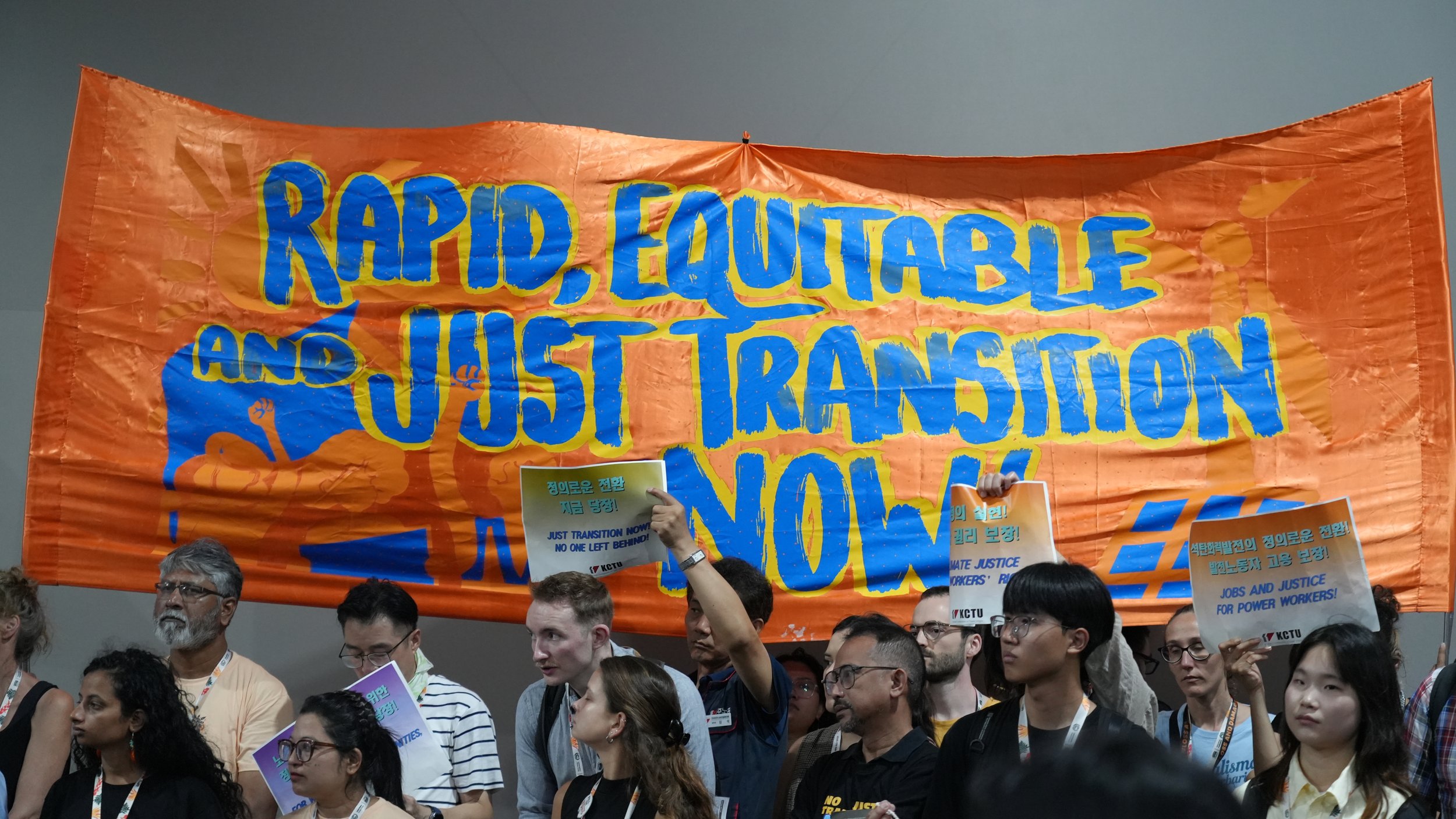
The just transition has been one of the most closely followed debates in climate talks in recent years. In a historic outcome at COP30 in Belem, Brazil, last year, world nations agreed to establish a mechanism to support equitable and inclusive shifts to low-carbon economies globally.
Called the Just Transition Mechanism (JTM), this framework is the ‘‘home’’ for just transition negotiations within the UN climate talks, aiming to centre human rights, decent work, and efforts to address socioeconomic inequalities in the transition debate.
It creates a dedicated space for countries to develop and deliver pathways, coordinate resources, and share best practices for transitioning away from fossil fuels in a manner that accommodates and benefits workers, Indigenous Peoples, youth, and vulnerable communities.
Its creation in Belem, though, is only the first step in a process that will continue throughout this year, with the operational details expected to be adopted at COP31 in Turkey.
So, how will the conversation evolve this year? This blog outlines 5 milestones that will define the process in 2026.
Just Transition Work Programme Operationalised. This year will be the most decisive yet for just transitions as focus shifts from political commitments to developing, implementing, and enforcing concrete national legal and regulatory frameworks for its rollout worldwide. Countries and observers have until the end of March to submit suggestions on how to effectively operationalise the JTM. At SB64 in Bonn in June, technical experts will recommend a draft decision based on the views collected. The draft on the modalities of implementation will then be adopted during November’s COP31 in Turkey. Thereafter, countries will decide on the future of the Just Transition Work Programme (JTWP) whose mandate ends this year.
Mobilisation of Adequate, Accessible Finance. To date, a negligible amount of finance is going to workers and frontline communities to support their transition into a clean, climate-compatible future. This study by ActionAid International reveals a shocking reality: only one in every $35 has been spent on just transitions in the developing world. In Belem, countries recognised that a just transition faces serious financial barriers, and emphasised the need to scale up new and additional grant-based finance for developing countries. This finance must also be provided in a manner that doesn’t accumulate debt or sideline development goals. This means that in Bonn and at COP31, the subject of financial commitments from developed to developing countries will be a key negotiation point.
Integrating Adaptation and Resilience into Transition Pathways. For most African and Global South countries, adapting to the impacts of climate change is an imperative. Building and boosting the resilience of communities, ecosystems, and economies is the difference between surviving the climate carnage and perishing. From Namibia to Central Africa, Indonesia, and Jamaica, droughts, floods, and heatwaves are becoming more aggressive, with losses running into billions of dollars annually. As the just transition debate gathers pace this year, climate change adaptation and resilience will be brought into sharper focus, as countries explore ways to help populations and infrastructure withstand worsening climate shocks.
Broadening the Scope to Include New Sectors and Social Groups. Historically, the just transition debate has been anchored in transforming the energy sector. In South Africa, it has focused on supporting communities and neighbourhoods affected by the transition away from coal. After a relentless push by civil society and worker groups for years, however, the conversation has now broadened from its original scope to include social protection, decent work and quality jobs, and universal rights for vulnerable communities in the developing world. This push will continue throughout 2026 to ensure the process incorporates other critical areas such as food systems and agriculture, manufacturing, and supply chains, with particular emphasis on the involvement of marginalised and vulnerable groups, including Indigenous Peoples, women, youth, and informal workers, in decision-making processes.
Monitoring, Reporting, and Accountability Mechanisms for the just transition are being developed with a focus on translating high-level principles into concrete, measurable, and transparent national and corporate frameworks and methodologies to track progress using social, economic, and environmental indicators. The debate will seek to establish clear metrics, key performance indicators (KPIs), and transparent reporting frameworks to measure the social impacts of the transition. These KPIs will seek to entrench distributive, restorative, procedural, and recognition justice in the process. Experts say standardised and enforceable measures are vital for ensuring government and corporate accountability in the just transition, and to move beyond voluntary reporting.