Is Global Security A Mirage?
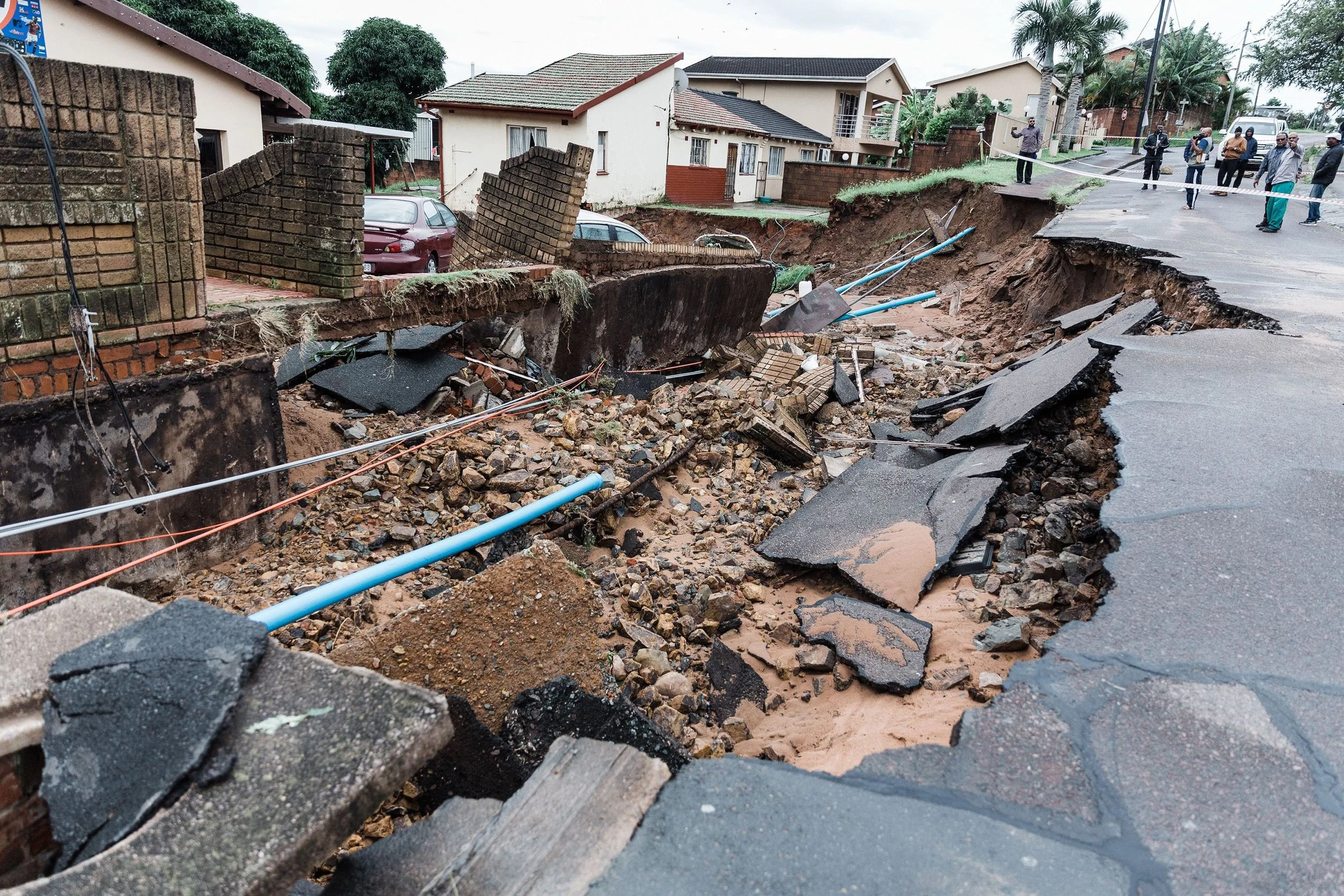
Roads destroyed in the floods in Durban, South Africa in 2022
“Instability does not respect borders. ”
What comes to mind when you think of security? Is it the lock on your door at night? A place to call home? Maybe it's access to healthcare and policing services. Or, perhaps, it’s the quiet privilege of living in a country not currently at war.
Writing about the Munich Security Conference earlier this year, former UN Secretary-General Ban Ki-moon argued that security goes far beyond national defense, noting that global stability and food security are inseparable.
He went on to say that an interconnected perfect storm of unrest, weather shocks, rising food prices, and migration is reshaping global security as we know it.
Based on this definition, it would appear that the world has had a feigned perception of security until now, and that ongoing conflicts and climate disasters have finally brought the message home.
The insecurities reshaping our world are not confined to any one region. In the West, communities are grappling with the rising cost of living, high energy prices, extreme heat events, catastrophic wildfires, and flooding that no longer feels as an exception.
In the Global South, the same forces arrive with greater frequency and far less cushion to absorb them. The droughts are lasting longer, floods are forcing millions to rebuild over and over again, and food systems are being pushed to their limits by unpredictable weather patterns. Health systems are being further destabilised as climate shocks redefine disease patterns and prevalence, damage health facilities, and trigger outbreaks of cholera and waterborne diseases that compound already fragile systems.
Between 2021 and 2025 alone, 221 million Africans were affected by the climate crisis, yet it remains a divisive political talking point in some developed countries, swaying every which way, depending on the leaders in power. Africans cannot afford to debate a reality they see before their eyes every day.
Whatever little security some communities have is already waning, as projections expect oil prices and, subsequently, food prices to skyrocket as the current conflict involving Iran, Israel and the US rages on, disrupting key oil supply routes, including the Strait of Hormuz.
So far, the world's response has been moving in the opposite direction. Britain recently joined an emerging list of western countries, including France, Germany, and the United States, who have pulled or slashed funding earmarked for climate. The UK announced it would slash aid to Africa by 56 percent, cutting support from £1.5 billion to £677 million by 2028, to increase its defense spending.
As Chi Onwurah, the chairperson of the All Party Parliamentary Group for Africa, warns:
The security of wealthy nations is not boosted by deepening insecurity elsewhere. Instability does not respect borders.
In a hugely globalised world, one country’s problems soon spill over to others. We are all affected by conflict, decisions, inaction, and the realities we are too afraid to face.
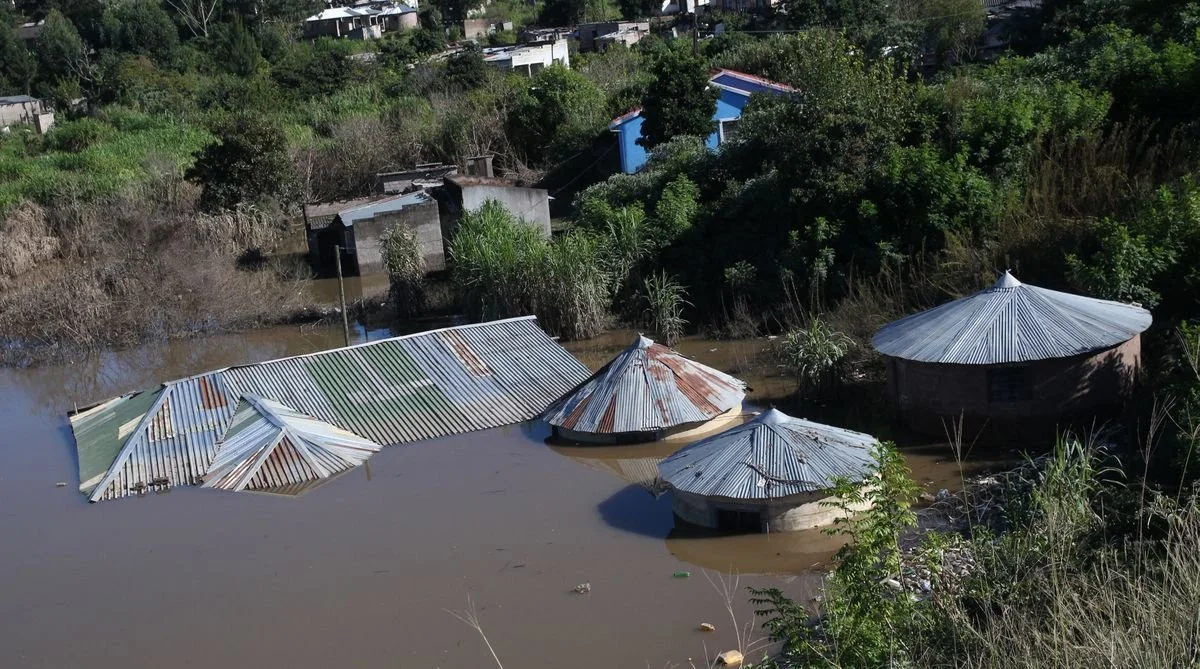
Insecurity is also rarely singular. When communities are displaced, the disaster is only the first layer. Beneath it lies everything else.
Power Shift Africa witnessed this firsthand in Mozambique, following the floods in January 2026. One woman gave birth five days before we met her, with no access to healthcare, sheltering in a church with no doors and no privacy. Another stood at a police barricade, unable to retrieve her passport from her flooded home, stranded, undocumented, and invisible to the system. Both women grappled with their newfound reality as best as they could. For them, a home was their security, their first line of defense. But that was stripped away by the floods.
The world is being forced to reckon with its own fragility. This reckoning is long overdue. While Western nations debate the size of their defense budgets, the future of their aid commitments, and the authenticity of the climate crisis, communities across Africa are not debating anything. They are barely surviving its impacts. Rebuilding. Every year.
The question this moment demands of all of us is neither whether climate change is real nor who bears historical responsibility. We are past that. The question is whether we are willing to redefine security in a way that leaves no one invisible to the global system.
Those two women in Mozambique, and millions of other vulnerable communities across Africa, are waiting for that answer.